
- You are here:
- Home »
- subject lines
Tag Archives for " subject lines "

Digital Marketing for Writers: Grow and Sell More Books
Nearly 70% of self-published authors struggle to reach their ideal readers and grow book sales effectively. Without a clear marketing plan, even the best writing can go unnoticed. Understanding practical strategies for defining your audience, building an author platform, and using smart tools can help transform your book’s visibility and sales results.
Table of Contents
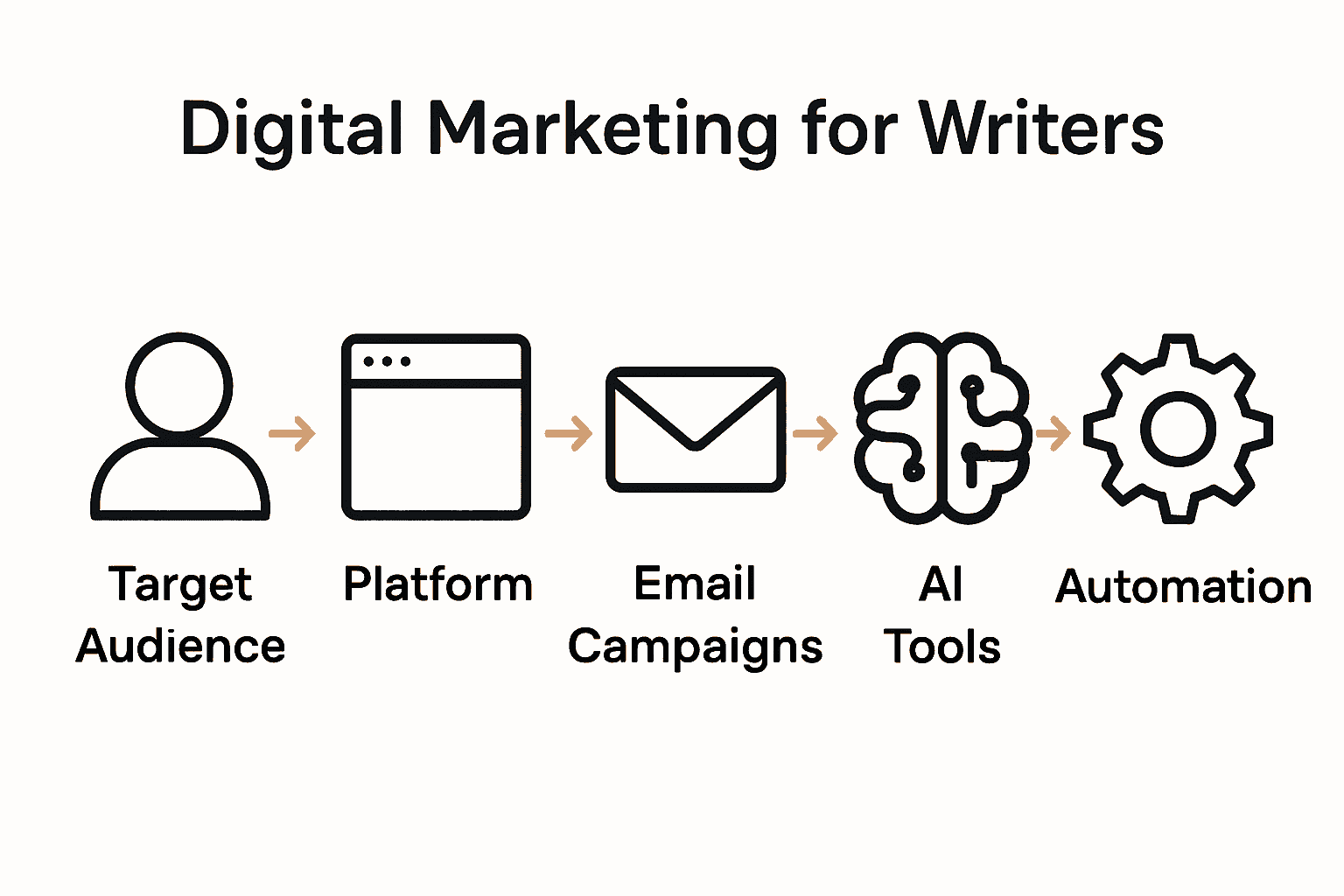
- Step 1: Define Your Target Audience And Author Goals
- Step 2: Build A Professional Author Platform
- Step 3: Craft Compelling Email Marketing Campaigns
- Step 4: Leverage Ai Tools To Boost Visibility
- Step 5: Automate Book Sales And Optimize Results
Quick Summary
| Key Point | Explanation |
|---|---|
| 1. Define your audience meticulously | Understand demographics and psychological traits to effectively target your book’s readers. |
| 2. Build a cohesive author platform | Create a professional website, active blog, and social media presence to connect with readers. |
| 3. Craft personalized email marketing | Segment your email list and create engaging content to convert casual readers into loyal fans. |
| 4. Leverage AI tools for efficiency | Use AI to automate tasks like content generation and ad optimization, freeing up your time for writing. |
| 5. Automate marketing processes | Set up automated systems for advertising and email marketing that work continuously without manual input. |
Step 1: Define your target audience and author goals
Successful book marketing starts with crystal clear understanding of who will read your book and what you want to achieve. This foundational step determines every subsequent marketing strategy you will develop.
Begin by creating a detailed reader persona that goes beyond basic demographics. According to research from digital marketing experts, effective audience targeting requires understanding not just age and location but deeper psychological characteristics like reading habits, interests, and pain points.
Ask yourself specific questions about your ideal reader: What motivates them to pick up a book like yours? What problems are they trying to solve? What emotional experience are they seeking? For instance, a romance novelist might target professional women aged 30-45 who want escapist literature after stressful workdays.
Align your specific author goals with your audience research. Are you aiming to:
- Build a loyal reader community
- Generate consistent book sales
- Establish yourself as an authority in your genre
- Create a sustainable author income stream
- Expand your readership internationally
Research indicates that authors who precisely define both audience and objectives are 67% more likely to create targeted marketing campaigns that actually work.
Pro Tip: Update your reader persona every six months as your writing career evolves and you gain more insights about your audience.
Next, you will map out a strategic marketing approach that speaks directly to your carefully defined reader persona.
Step 2: Build a professional author platform
Your author platform is your digital home base where readers discover and connect with your writing. It transforms you from an unknown writer to a recognized brand with consistent online presence.
According to digital marketing research from Elsevier’s marketing strategies guide, an effective author platform integrates multiple digital touchpoints to maximize audience reach. This means creating a cohesive online ecosystem that tells your unique storytelling narrative.
Start by establishing these core digital assets:
Here’s a comparison of the core elements of a professional author platform:
| Element | Purpose | Key Tips |
|---|---|---|
| Author Website | Main information hub | Clean design Clear branding |
| Blog | Showcases expertise and updates | Consistent posts Engage readers |
| Social Media Profiles | Builds community and discoverability | Focus on top 2-3 platforms |
| Email Newsletter | Direct reader connection and updates | Value-first Personal approach |
- Professional author website showcasing your books and biography
- Active blog demonstrating your writing expertise
- Consistent social media profiles on platforms where your target readers spend time
- Email newsletter for direct reader communication
Your website serves as the central hub. Make it clean, professional, and reflective of your writing genre. Include high quality author photos, book descriptions, purchase links, and ways for readers to connect with you.

Social media allows you to build personal connections. Choose 2-3 platforms where your ideal readers congregate. For fiction writers, this might mean Instagram and TikTok. For nonfiction authors, LinkedIn and Twitter could be more strategic.
Pro Tip: Consistency matters more than perfection. Regular small updates beat sporadic grand gestures.
Growing an author platform requires patience and strategic effort. Your next step involves creating compelling content that attracts and retains your ideal readers.
Step 3: Craft compelling email marketing campaigns
Email marketing transforms casual readers into loyal fans and consistent book buyers. Your goal is creating magnetic email sequences that readers actually want to open and engage with.
According to research from Automateed’s book marketing guide, successful email campaigns rely on personalized sequences that nurture readers through strategic touchpoints. This means designing emails that feel like personal conversations rather than generic broadcasts.
Start by segmenting your email list based on reader interests and behaviors. Fiction writers might create different tracks for romance versus thriller fans. Nonfiction authors could segment by professional interests or reading preferences.
Your email sequence should include:
- Welcome email introducing yourself and your writing
- Engagement emails sharing behind the scenes content- Promotional emails highlighting new book releases
- Value driven content that entertains or educates
Pay special attention to your subject lines. They are your first and sometimes only chance to capture a reader’s attention. Make them intriguing personal and specific to your reader’s interests.
As Automateed’s author email marketing research demonstrates, converting subscribers requires offering exclusive benefits. Think about providing special reader rewards like chapter previews bonus content or limited time discounts.
Pro Tip: Aim for an 80/20 balance. Spend 80% of your emails providing value and only 20% directly selling.
Effective email campaigns are an art form that develops with practice. Your next step involves analyzing your email performance and continuously refining your approach.
Step 4: Leverage AI tools to boost visibility
AI technology has transformed book marketing from a time consuming process to a strategic powerhouse. Your goal is using intelligent tools that amplify your reach while saving precious writing time.
According to Manuscript Report’s comprehensive AI publishing guide, AI can automate multiple visibility boosting tasks across different marketing channels. This means generating social media content email sequences and optimizing advertising with unprecedented precision.
Start exploring AI tools in these key areas:
- Social media content generation
- Email marketing optimization
- Amazon ad targeting
- Book description refinement
- Reader targeting analysis
For social media marketing AI can help draft engaging posts that sound authentically like your writing voice. These tools analyze your previous content and generate posts that match your style and resonate with your target audience.
In email marketing AI becomes your strategic partner. As Anyword’s marketing platform demonstrates, intelligent systems can generate email subject lines optimize send times and predict which messaging will most likely convert readers into book buyers.
When it comes to advertising AI tools can analyze complex data points to identify your most promising reader demographics. This means smarter ad spending and higher conversion rates.
Pro Tip: Always review and personalize AI generated content. The tool provides the framework but your unique voice makes it compelling.
AI book marketing represents the future of author promotion. Your next step involves experimenting with these tools and measuring their impact on your book sales and reader engagement.
Step 5: Automate book sales and optimize results
Automation transforms book marketing from a manual grind into a strategic growth engine. Your mission is creating systems that sell books while you focus on writing.
According to Automateed’s book marketing automation guide, successful automation requires setting up intelligent advertising platforms that monitor and adjust campaigns in real time. This means creating systems that work continuously without constant manual intervention.
Key automation strategies include:
- Setting up perpetual Amazon advertising campaigns
- Creating evergreen email marketing sequences
- Implementing retargeting ads for website visitors
- Developing automated social media content schedules
- Building reader acquisition funnels
Amazon advertising presents a prime opportunity for automation. Manuscript Report’s AI publishing analysis reveals that intelligent bid adjustment tools can dramatically reduce advertising costs while maintaining strong visibility.
Your email marketing should function like a silent sales team. Design sequences that automatically welcome new subscribers trigger follow up messages based on reader interactions and recommend books without constant oversight.
Track your key performance indicators religiously. Watch metrics like cost per click conversion rates and return on ad spend. These numbers tell you exactly how your automated systems perform.
Pro Tip: Review your automation systems monthly. Small tweaks can generate significant performance improvements.
Book sales funnel optimization is an ongoing process. Your next step involves continuously refining these automated systems to maximize your book sales potential.
Unlock Your Full Book Marketing Potential Today
If you’ve ever felt overwhelmed trying to connect with your ideal readers or struggled to turn casual interest into loyal fans, you are not alone. This article highlights the importance of defining your target audience, building a professional author platform, crafting magnetic email marketing, and harnessing AI tools to automate and amplify your book sales. These challenges often leave writers searching for clear, proven systems that can actually deliver results.
At DigitalMarketingAuthors.com, we understand these exact struggles and the critical goals you want to achieve: growing a dedicated reader community, automating sales, and scaling your author brand without wasting precious time or resources. Founded by 13x #1 Amazon bestselling author C.T. Mitchell, our platform offers step-by-step strategies and AI-powered solutions that turn ambitious marketing plans into consistent book sales and broader visibility.
Ready to stop guessing and start growing
Discover how to build your professional author platform and craft compelling email campaigns that truly resonate. Take control of your marketing journey right now and visit Digital Marketing Authors to access expert guidance and tools tailored for indie authors who want to market smarter, sell faster, and scale worldwide. Your next bestselling chapter begins with the right marketing system.
Frequently Asked Questions
How can I define my target audience for effective book marketing?
To define your target audience, create a detailed reader persona that includes not just demographics, but also psychological factors like interests and pain points. Start by asking specific questions about what motivates your ideal reader, what problems they want to solve, and what emotional connection they seek from your book.
What are the essential elements of a professional author platform?
A professional author platform should include a user-friendly website, an active blog, social media profiles, and an email newsletter. Focus on creating a cohesive online presence that reflects your genre and allows you to connect with readers effectively.
How should I structure my email marketing campaigns to engage readers?
Structure your email marketing campaigns around personalized sequences that nurture your readers. Include a warm welcome email, engaging content that offers behind-the-scenes glimpses, and promotional emails that announce new releases; aim for an 80/20 balance, providing value in 80% of your emails and selling in 20%.
What AI tools can I use to enhance my book marketing efforts?
Explore AI tools that can assist with generating social media content, optimizing email marketing, and refining book descriptions. Start using these tools to automate repetitive tasks, which can save you time and increase your promotional reach.
How can I automate my book sales to maximize results?
Automate your book sales by setting up continual advertising campaigns, creating evergreen email sequences, and implementing retargeting ads for website visitors. Review your automation processes monthly to identify areas for improvement and boost sales performance by about 20%.
Recommended

Role of Newsletters for Writers: Complete Guide
More than 80 percent of writers say email newsletters are their top way to connect with readers. As inboxes become the new front row for creative voices, newsletters offer something social media cannot: direct, personal communication that cuts through the noise. Writers are finding fresh ways to build devoted audiences, share exclusive content, and shape their brand—all while staying in control of their message.
Key Takeaways
| Point | Details |
|---|---|
| Direct Communication | Newsletters enable authors to reach their audience directly, enhancing personal engagement and brand loyalty. |
| Community Building | Newsletters foster interactive relationships, transforming readers into active community members through consistent, authentic communication. |
| Monetization Opportunities | Authors can leverage newsletters for income through various strategies such as paid subscriptions, sponsorships, and affiliate marketing. |
| Avoid Common Mistakes | Effective newsletters require compelling subject lines, consistent scheduling, and clear calls to action to maintain reader interest and engagement. |
Table of Contents
- Defining Newsletters For Writers Today
- Types Of Author Newsletters And Differences
- How Newsletters Build Reader Communities
- Monetization Strategies For Indie Authors
- Common Newsletter Mistakes To Avoid
Defining Newsletters for Writers Today
A newsletter represents a powerful communication tool that allows writers to connect directly with their audience through regular, curated content delivered straight to readers’ email inboxes. According to Wikipedia, a newsletter is a printed or electronic report sent to subscribers containing topics of interest, with e-newsletters becoming increasingly popular among professional writers seeking to maintain consistent engagement.
For modern authors, newsletters serve multiple strategic purposes beyond simple communication. They function as a dynamic platform for writers to:
- Build a loyal reader community
- Share exclusive behind-the-scenes insights
- Promote upcoming book releases
- Cultivate direct relationships with fans
- Establish personal brand authority
As research from Convert Now indicates, author newsletters fundamentally allow writers to take control of their audience by reaching them directly via email. This direct line of communication enables writers to enhance their brand through personal style and insights while systematically cultivating reader loyalty.
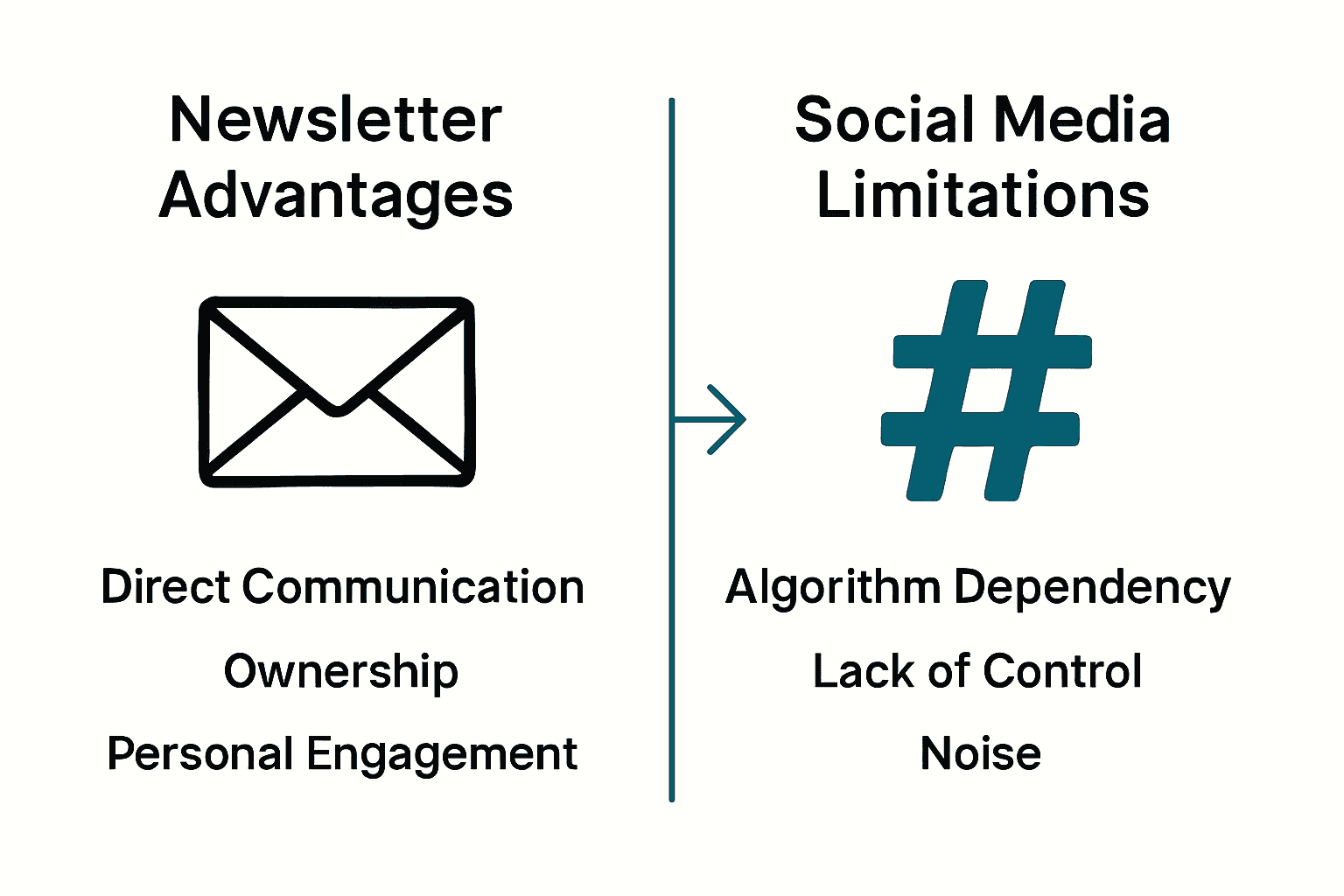
Unlike social media platforms where algorithms determine content visibility, newsletters provide writers complete ownership of their communication channel. Writers can craft personalized, targeted content that resonates deeply with their specific reader base, transforming casual readers into dedicated fans who eagerly anticipate each new publication.
Types of Author Newsletters and Differences
Author newsletters are not a one-size-fits-all communication strategy. According to research from Beehiiv, writers can craft newsletters in multiple distinct formats, each serving unique audience engagement goals. Understanding these variations allows authors to select the most effective approach for their specific writing genre and reader preferences.
The primary newsletter types for authors include:
Here’s a comparison of the main types of author newsletters:
| Newsletter Type | Main Focus | Best For |
|---|---|---|
| Curated | Links & Resources | Resource-hunting readers |
| Practical | How-to Tips & Techniques | Writers seeking actionable advice |
| Personality-Driven | Author’s Stories & Journey | Readers wanting personal insights |
| Analytical | Expert Analysis & Industry | Non-fiction or thought leaders |
| Inspirational | Quotes & Motivation | Writers needing encouragement |
- Curated Newsletters: Collections of carefully selected links, summaries, and recommended resources
- Practical Newsletters: Actionable how-to content and writing technique insights
- Personality-Driven Newsletters: Personal storytelling showcasing the author’s journey and worldview
- Analytical Newsletters: In-depth, long-form expert analysis and industry perspectives
- Inspirational Newsletters: Quote compilations and motivational content for writers
Research from Feather further elaborates on newsletter formats, highlighting that successful newsletters can range from weekly industry news digests to personal recommendation platforms. Each format offers distinct advantages: curated links provide quick value, tool roundups offer practical resources, and personal reflection newsletters build deeper reader connections.
The key is matching your newsletter style to your writing goals and audience expectations. A fiction author might leverage personality-driven newsletters to share character development insights, while a non-fiction writer could use analytical formats to demonstrate industry expertise. Your newsletter becomes an extension of your writing voice – a powerful tool for building a loyal, engaged readership.

How Newsletters Build Reader Communities
Community building through newsletters transforms passive readers into active, engaged participants in an author’s creative ecosystem. Modern digital platforms have revolutionized how writers connect with their audience, moving beyond traditional one-way communication models to create interactive, meaningful relationships.
According to research on community-building tools, platforms like Substack and Beehiiv now offer sophisticated features that enable authors to cultivate vibrant reader communities. These tools provide critical engagement mechanisms such as:
- Direct comment sections
- Integrated chat functionalities
- Referral program incentives
- Interactive discussion spaces
- Personalized reader feedback channels
Newsletters create a unique intimacy that social media cannot replicate. By delivering content directly to a reader’s inbox, authors establish a personal connection that feels more deliberate and meaningful. Readers aren’t just consuming content; they’re becoming part of an exclusive community that shares common interests, values, and literary passions.
The magic of newsletter community building lies in consistency, authenticity, and interaction. Successful authors use their newsletters not just as broadcast tools, but as conversation starters. They share personal stories, solicit reader opinions, offer behind-the-scenes glimpses into their writing process, and create a sense of belonging. This approach transforms readers from distant consumers into invested community members who feel personally connected to the author’s journey and creative vision.
Monetization Strategies for Indie Authors
Newsletter monetization represents a transformative opportunity for independent authors to generate direct revenue from their writing and audience relationships. According to research on Substack, modern digital platforms now provide sophisticated infrastructure that enables writers to earn income directly from subscriber contributions.
Independent authors can explore multiple monetization approaches:
- Paid Subscription Tiers: Offering exclusive content at different price points
- Sponsorship Opportunities: Partnering with brands relevant to your audience
- Premium Content Sections: Gating advanced or in-depth material
- Affiliate Marketing: Recommending products with commission structures
- Digital Product Sales: Selling workshops, guides, or exclusive resources
The most powerful monetization strategy involves creating genuine value that readers are willing to pay for. This means developing high-quality, unique content that readers cannot easily find elsewhere. Successful authors understand that monetization isn’t about extracting money, but about providing exceptional insights, entertainment, or expertise that readers perceive as worth their investment.
Newsletters offer unparalleled advantages over traditional publishing models by providing direct financial connections between authors and readers. By cultivating a loyal audience and consistently delivering compelling content, indie authors can transform their newsletters from communication tools into sustainable revenue streams. The key is maintaining authenticity, understanding your audience’s needs, and continuously evolving your offering to provide exceptional value.
Common Newsletter Mistakes to Avoid
Newsletter failures often stem from overlooking critical design and communication principles that separate engaging content from forgettable emails. According to research from Letterbucket, authors frequently stumble into predictable traps that can dramatically reduce reader engagement and newsletter effectiveness.
The most prevalent newsletter mistakes include:
- Weak Subject Lines: Failing to create compelling, curiosity-driving headlines
- Irregular Scheduling: Inconsistent publication times that confuse readers
- Lack of Audience Segmentation: Treating all subscribers as a monolithic group
- Excessive Self-Promotion: Overwhelming readers with constant sales pitches
- Poor Design and Mobile Optimization: Unreadable layouts across devices
- Missing Clear Calls to Action: Leaving readers uncertain about next steps
- Ignoring Performance Metrics: Not analyzing what content truly resonates
Research from Kasplo further highlights the importance of personalization and tone. Successful newsletters avoid robotic, impersonal language and instead create a conversational, authentic connection. The key is balancing professional insights with a genuine, approachable writing style that makes readers feel like they’re receiving a personal communication from a trusted friend.
Ultimately, avoiding these common pitfalls requires thoughtful, strategic approach to newsletter creation. Authors must view their newsletter as a relationship-building tool, not just a broadcasting channel. By prioritizing reader experience, consistently delivering value, and remaining adaptable to audience feedback, writers can transform potential mistakes into opportunities for deeper reader engagement.
Turn Your Newsletter Into a Profitable Reader Magnet
Are you finding it difficult to build real connections and sell more books despite your best efforts with newsletters? Many writers struggle with inconsistent engagement, weak community building, and newsletters that just do not translate to real results. The article highlights the importance of audience ownership, clear calls to action, and engaging content. But the path from recognizing these issues to launching a loyal, buying reader base often feels overwhelming.
You do not have to figure this out alone. At Digital Marketing Authors, you will discover step-by-step systems that take your newsletter from forgettable to unmissable. We show you how to automate your author brand, grow devoted reader communities, and turn every email into a revenue opportunity. If you are ready to stop guessing and start building your own profitable audience, visit Digital Marketing Authors and take your writing career to the next level now.
Frequently Asked Questions
What is the purpose of a newsletter for writers?
A newsletter allows writers to communicate directly with their audience, sharing curated content, insights, book promotions, and fostering a loyal reader community.
What types of newsletters can authors create?
Authors can create various types of newsletters, including curated, practical, personality-driven, analytical, and inspirational, each serving unique engagement goals.
How can newsletters help build a reader community?
Newsletters facilitate community building by transforming passive readers into engaged participants, creating a personal connection through direct communication and fostering interaction and feedback among subscribers.
What are effective monetization strategies for indie authors using newsletters?
Indie authors can monetize their newsletters through paid subscription tiers, sponsorship opportunities, premium content sections, affiliate marketing, and digital product sales, focusing on providing unique value to their audience.
Recommended
- author newsletter Archives – DigitalMarketingAuthors.com
- Author Newsletter Archives – DigitalMarketingAuthors.com
- publish an author newsletter Archives – DigitalMarketingAuthors.com
- author newsletter publishing Archives – DigitalMarketingAuthors.com