
- You are here:
- Home »
- author visibility
Tag Archives for " author visibility "

Influencer Marketing for Authors: Complete Guide
More than 60 percent of readers now discover new books through online personalities instead of traditional advertising, changing how authors reach their audience. As publishing grows more competitive, building real connections with readers is crucial for success. Understanding influencer marketing can empower authors to partner with credible voices, expand their visibility, and spark authentic interest in their stories.
Table of Contents
- Defining Influencer Marketing for Authors
- Types of Influencers in Book Promotion
- How Influencer Collaborations Work for Authors
- Benefits and Drawbacks for Indie Authors
- Legal, Ethical, and Disclosure Requirements
- Avoiding Common Mistakes and Pitfalls
Key Takeaways
| Point | Details |
|---|---|
| Strategic Partnerships | Influencer marketing empowers authors to collaborate with content creators who genuinely connect with their audience, enhancing book visibility. |
| Target Audience Alignment | Successful influencer campaigns necessitate careful selection of influencers who align with the author’s target demographic and literary sensibilities. |
| Content Authenticity | Authentic recommendations from influencers lead to deeper engagement and trust from potential readers, making genuine connections crucial. |
| Legal and Ethical Compliance | Authors must adhere to legal guidelines and ethical standards in influencer partnerships to maintain transparency and audience trust. |
Defining Influencer Marketing for Authors
Influencer marketing transforms how authors connect with potential readers by leveraging individuals with established audiences and credible platforms. According to research from hmjournals.com, this marketing strategy involves collaborating with prominent individuals who can authentically promote books and build strong audience connections.
At its core, influencer marketing for authors means partnering with content creators, book reviewers, social media personalities, and literary thought leaders who can introduce your work to their engaged followers. These influencers aren’t just random promoters – they’re strategic allies who understand storytelling, reader preferences, and how to spark genuine interest in your writing.
Key Components of Author Influencer Marketing
Successful influencer partnerships typically involve several strategic approaches:
- Authentic Recommendations: Influencers who genuinely appreciate your genre and writing style
- Targeted Reach: Connecting with audiences most likely to enjoy your specific type of book
- Credible Storytelling: Creating narrative-driven content that goes beyond simple book promotion
As computational studies from arxiv.org suggest, effective influencer marketing requires nuanced research considering contextual factors. For authors, this means finding influencers who align not just numerically with your target audience, but who share similar literary sensibilities and reader engagement styles.
Ultimately, influencer marketing represents a powerful way for authors to transcend traditional promotional boundaries. Content marketing strategies for authors can amplify these efforts, creating a comprehensive approach to building readership and book sales.
Types of Influencers in Book Promotion
Book influencers represent a diverse ecosystem of content creators who can dramatically impact an author’s visibility and sales potential. From traditional book reviewers to emerging digital platforms, these influencers offer unique pathways to connect with potential readers across multiple channels.
Digital Platform Influencers
In the digital age, social media platforms have become powerful book promotion channels. Wikipedia highlights BookTok as a prime example, where TikTok users share book reviews and recommendations that can significantly influence book sales and popularize specific titles. This platform demonstrates how short-form video content can create viral book trends almost overnight.
Key Types of Book Promotion Influencers
Authors can leverage several distinct influencer categories:
Here’s a summary of common influencer types and their unique strengths for book promotion:
| Influencer Type | Platform Focus | Strengths |
|---|---|---|
| Book Bloggers | Websites & Blogs | In-depth reviews SEO impact |
| BookTubers | YouTube | Visual storytelling Wide reach |
| BookTok Creators | TikTok | Viral trends Young audiences |
| Instagram Reviewers | Visual appeal Quick engagement |
|
| Goodreads Influencers | Goodreads | Trusted reviews Reader communities |
| Podcast Hosts | Podcasts | In-depth discussions Loyal listeners |
- Book Bloggers: Long-form review specialists who provide deep literary analysis
- BookTubers: YouTube creators who create video reviews and literary discussions
- BookTok Creators: Short-form video content specialists on TikTok
- Instagram Book Reviewers: Visual content creators sharing book recommendations
- Goodreads Influencers: Community-driven reviewers with established reader followings
- Podcast Hosts: Literary discussion platforms with dedicated listener bases
When selecting influencers, authors must consider audience alignment, engagement rates, and genuine passion for their specific genre. Cross-promotion strategies for authors can help writers maximize these collaborative opportunities and expand their reader reach effectively.
Successful book promotion through influencers isn’t about sheer numbers – it’s about finding passionate storytellers who can authentically connect your work with readers who will genuinely appreciate your writing.
How Influencer Collaborations Work for Authors
Influencer collaborations transform traditional book marketing by creating authentic connections between authors and potential readers through strategic partnerships. These relationships go far beyond simple promotional transactions, developing nuanced engagement strategies that leverage the influencer’s established credibility and audience trust.
The Mechanics of Book Influencer Partnerships
Research from mdpi.com reveals how BookTubers interact with subscribers, demonstrating that successful collaborations involve multimodal content creation. This means authors can work with influencers across various formats – from video reviews and live discussions to Instagram stories and podcast features.
Collaboration Strategies
Effective influencer partnerships typically involve several key approaches:
- Advanced Screening: Identifying influencers whose audience matches your book’s target demographic
- Content Co-Creation: Developing unique, engaging content that feels natural to the influencer’s style
- Mutual Value Exchange: Ensuring both the author and influencer benefit from the collaboration
- Performance Tracking: Measuring engagement, reach, and potential book sales generated
According to research from arxiv.org, the most successful collaborations prioritize visual congruence between the author’s brand and the influencer’s content style. This alignment creates more authentic and compelling promotional experiences.
Author alliance strategies can help writers navigate these complex partnerships, turning influencer connections into powerful marketing opportunities. The goal isn’t just selling books – it’s about building lasting relationships with readers who are genuinely excited about your work.
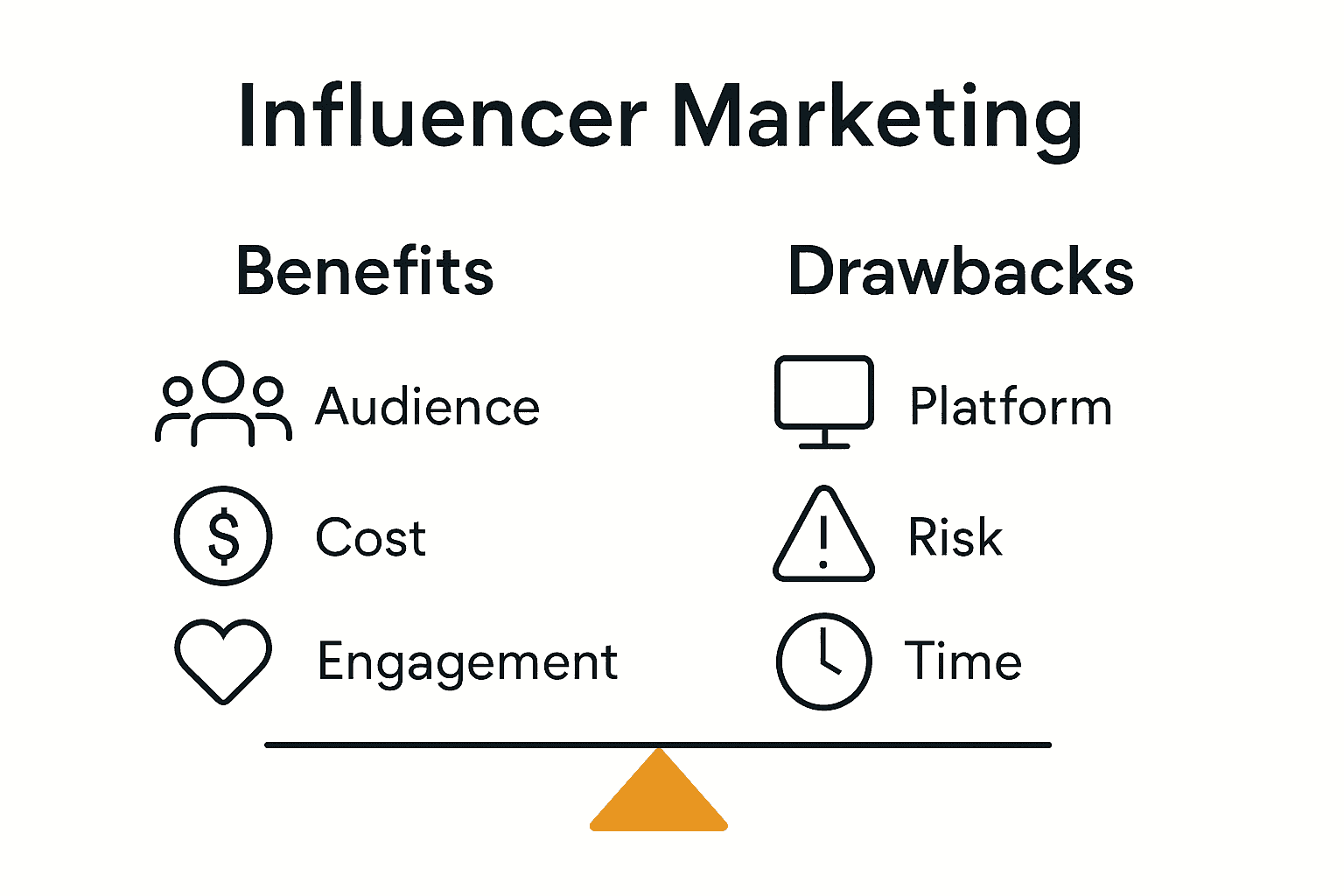
Benefits and Drawbacks for Indie Authors
Influencer marketing presents a complex landscape for indie authors, offering tremendous opportunities alongside significant challenges. The potential to rapidly expand readership comes with nuanced considerations that require strategic navigation.
Potential Benefits for Independent Authors
Research from Wikipedia highlights how platforms like BookTok have become powerful promotional channels, enabling indie authors to reach wider audiences without traditional publishing constraints. These digital platforms democratize book discovery, allowing writers to bypass conventional marketing barriers.
Strategic Advantages and Potential Risks
Key benefits and challenges include:
- Rapid Audience Expansion: Direct access to engaged reader communities
- Cost-Effective Marketing: Lower financial investment compared to traditional advertising
- Authentic Engagement: Personal connections with potential readers
- Platform Dependency: Risk of algorithm changes impacting visibility
- Inconsistent Results: Unpredictable promotional outcomes
- Time-Intensive Management: Significant effort required to maintain relationships
According to computational research from arxiv.org, indie authors must develop sophisticated methodologies for evaluating influencer performance.
 This involves carefully tracking engagement metrics, understanding audience alignment, and maintaining realistic expectations about collaboration outcomes.
Publishing independence strategies can help authors balance these complex dynamics, transforming potential challenges into strategic opportunities for building sustainable author brands.
Legal, Ethical, and Disclosure Requirements
Influencer marketing for authors demands rigorous adherence to legal and ethical standards that protect both content creators and their audiences. Transparency isn’t just a recommended practice – it’s a fundamental requirement in building trust and maintaining professional integrity.
Disclosure and Transparency Guidelines
According to research from the Journal of Public Policy & Marketing, marketing collaborations must prioritize clear communication about the nature of promotional relationships. For authors, this means explicitly disclosing any financial arrangements, free book copies, or potential conflicts of interest in influencer partnerships.
Key Legal and Ethical Considerations
Authors must navigate several critical compliance areas:
- Financial Transparency: Clearly indicate sponsored content or paid promotions
- Intellectual Property Rights: Ensure proper attribution and usage permissions
- Platform-Specific Regulations: Follow individual social media platform guidelines
- Authentic Representation: Maintain genuine enthusiasm and honest recommendations
- Audience Protection: Avoid misleading or manipulative marketing tactics
The landscape of ethical publishing requires constant vigilance. As Wikipedia highlights, unethical practices can undermine scholarly communication and reader trust, making transparent marketing crucial for long-term success.
Author brand growth strategies can help writers develop robust, ethical marketing approaches that respect both legal requirements and audience expectations. The goal is creating genuine connections, not exploitative promotions.
Avoiding Common Mistakes and Pitfalls
Influencer marketing for authors requires strategic navigation through complex promotional landscapes. Success demands more than simply connecting with popular content creators – it requires sophisticated understanding of potential missteps that can derail collaborative efforts.
Strategic Error Prevention
Research from Celebrity Studies highlights the critical importance of understanding nuanced interactions between authors and influencers. The most common mistakes often stem from misaligned expectations, inappropriate partnership selections, and inadequate communication strategies.
Critical Pitfalls to Avoid
Key mistakes indie authors frequently encounter include:
- Mismatched Audience Alignment: Partnering with influencers whose followers don’t match your book’s demographic
- Inauthentic Collaborations: Forcing relationships that feel transactional rather than genuine
- Unclear Performance Metrics: Failing to establish concrete collaboration goals
- Inconsistent Brand Representation: Allowing influencers to misrepresent your author brand
- Neglecting Legal Compliance: Overlooking disclosure and contractual requirements
According to computational research from arxiv.org, emerging technologies like generative AI are transforming marketing landscapes, emphasizing the need for ethical compliance and strategic human-technology collaboration. Authors must remain adaptable and informed about evolving marketing dynamics.
Email marketing strategies can complement influencer efforts, providing additional channels to mitigate potential promotional risks and create more comprehensive outreach approaches.
Unlock the Full Potential of Influencer Marketing for Your Author Brand
If you are struggling to build authentic connections with readers or feeling overwhelmed by the complex influencer landscape described in “Influencer Marketing for Authors: Complete Guide,” you are not alone. Many indie authors face challenges like finding the right influencers who truly align with their genre, managing collaborations that feel genuine, and navigating legal and ethical requirements. You want to grow your audience, boost book sales, and build lasting reader relationships without wasting precious time or money on trial and error.
At Digital Marketing Authors, founded by 13x #1 Amazon bestselling author C.T. Mitchell, we specialize in helping authors like you master influencer marketing and integrate it with powerful digital strategies. From crafting targeted influencer collaborations to leveraging AI tools that amplify your reach and automate your email marketing, our proven systems empower you to market smarter, sell faster, and scale your readership worldwide.
Don’t let the complexities of influencer marketing hold your author career back. Visit Digital Marketing Authors now to explore our game-changing strategies and start transforming your book promotion. When you combine authentic influencer partnerships with expert marketing guidance, success is within reach. Take control of your author brand and watch your audience grow today.
Frequently Asked Questions
What is influencer marketing for authors?
Influencer marketing for authors involves collaborating with content creators, book reviewers, and social media personalities to promote books to their engaged audiences, helping authors connect with potential readers authentically.
How do I find the right influencers for my book?
To find the right influencers, analyze their audience demographics, engagement rates, and alignment with your book’s genre and themes. Look for influencers who have a genuine passion for storytelling and a strong connection with their followers.
What are the benefits of collaborating with book influencers?
Collaborating with book influencers can provide rapid audience expansion, cost-effective marketing solutions, authentic engagement with potential readers, and increased visibility without traditional publishing constraints.
What legal and ethical considerations should I keep in mind when working with influencers?
When working with influencers, ensure financial transparency, proper attribution of intellectual property, adherence to platform-specific regulations, and maintain authentic representation in your marketing efforts.
FREE Resource – Build Your Reader Army
Download Reader Army Growth Free
Recommended
- Digital Marketing for Authors Guide: Boost Book Sales Fast – DigitalMarketingAuthors.com
- TikTok for authors Archives – DigitalMarketingAuthors.com
- writing journey Archives – DigitalMarketingAuthors.com
- social media marketing for writers Archives – DigitalMarketingAuthors.com
- 7 Top Digital Trends 2025 You Must Know for Growth

Cross-Promotion for Authors: Complete Guide
Did you know that authors who work together can see up to 40 percent more engagement from readers compared to those who go it alone? Finding new fans is a challenge for any writer, and even the best stories can get lost without the right support. Cross-promotion has become a smart way for authors to lift each other up and reach fresh audiences, making every book launch more powerful and every connection count.
Table of Contents
- Defining Cross-Promotion For Authors
- Major Types And Key Distinctions
- How Cross-Promotion Works In Practice
- Proven Strategies And Real-World Examples
- Benefits, Risks, And Common Mistakes
Key Takeaways
| Point | Details |
|---|---|
| Cross-Promotion Strategy | Authors can enhance book visibility by collaborating with peers to leverage each other’s audiences. |
| Collaborative Techniques | Effective methods include joint newsletters, book bundles, and reciprocal recommendations to expand reach. |
| Mutual Benefits | Successful cross-promotion offers reduced marketing costs and increased networking opportunities among authors. |
| Cautions and Mistakes | Authors should avoid incompatible partnerships and ensure clear expectations to maximize the effectiveness of their collaborations. |
Defining Cross-Promotion for Authors
Cross-promotion represents a strategic marketing approach where authors collaborate to expand their collective readership and amplify book visibility. Cross-promotion involves mutually beneficial advertising techniques that leverage each author’s existing audience to introduce new potential readers to multiple works.
According to Merriam-Webster, cross-promotion is fundamentally about “advertising or publicizing something by means of another product or service.” For authors, this translates into creative partnerships that allow writers to reach readers who might not have discovered their books through traditional marketing channels.
The core mechanics of cross-promotion for authors typically involve several collaborative strategies:
- Sharing newsletter subscriber lists with permission
- Recommending each other’s books in author bios or afterwords
- Creating joint promotional events or book bundles
- Hosting collaborative online or in-person author panels
- Writing guest blog posts or featuring reciprocal book reviews
Unlike traditional advertising, cross-promotion focuses on building genuine connections between authors with complementary writing styles or genres. This approach creates a win-win scenario where multiple authors can organically expand their reach without significant additional marketing expenses. By strategically partnering with fellow writers, authors can tap into new reader communities and create mutually beneficial promotional ecosystems.

Major Types and Key Distinctions
Cross-promotion for authors encompasses several strategic approaches, each offering unique opportunities for expanding readership and building collaborative networks. Understanding these distinct types can help writers make informed decisions about their marketing strategies.
Here’s a summary of the major types of cross-promotion for authors:
| Type | Main Method | Author Benefits |
|---|---|---|
| Cobranding | Joint projects Shared campaigns |
Combined audiences Enhanced credibility |
| Brand Licensing | Leveraging reputation Audience trust |
Access to established reader base Increased exposure |
| Cross Marketing | Reciprocal promotions Multi-channel efforts |
Broader reach Diversified promotion |
| Cross-Media Marketing | Multi-platform campaigns Interconnected channels |
Multiple touchpoints Wider audience engagement |
According to research on brand alliances, three primary types of collaborative marketing emerge that authors can adapt to their promotional efforts:
- Cobranding: Joint book projects or shared promotional campaigns where multiple authors combine their audiences
- Brand Licensing: Authors leveraging each other’s established reader recognition and reputation
- Cross Marketing: Reciprocal promotion through multiple channels and platforms
Cross-media marketing adds another sophisticated dimension to cross-promotion. As defined by Wikipedia, this approach goes beyond traditional advertising techniques by creating multiple touchpoints and appeals across different media platforms.
For authors, this might translate into diverse promotional strategies like simultaneous podcast interviews, coordinated social media campaigns, shared newsletter features, or collaborative online events that reach audiences through multiple interconnected channels.
The goal remains consistent: expanding reach, creating value for readers, and building mutually beneficial professional relationships that extend beyond individual book marketing efforts.
How Cross-Promotion Works in Practice
Cross-promotion transforms traditional marketing by creating strategic partnerships that amplify authors’ collective reach. According to GrowANN, this approach involves two or more entities promoting each other’s products to maximize their individual strengths and audience potential.
In practical terms for authors, cross-promotion manifests through several collaborative techniques:
- Reciprocal book recommendations in each other’s works
- Joint email newsletter features
- Coordinated social media campaigns
- Shared book launch events or online panels
- Cross-genre anthology projects
- Bundled book promotions
The mechanics of successful cross-promotion rely on finding authors with complementary audiences and aligned genres. Wikipedia emphasizes that the core principle involves mutual benefit, where each participant gains expanded visibility without significant additional marketing investment.
Effective cross-promotion requires careful partner selection, clear communication, and a genuine commitment to creating value for readers. By thoughtfully connecting with fellow authors, writers can break through traditional marketing limitations, reach new reader communities, and build sustainable promotional ecosystems that extend far beyond individual book marketing efforts.
Proven Strategies and Real-World Examples
Cross-promotion offers authors multiple innovative approaches to expand their readership and create meaningful collaborative opportunities. According to BookBub Insights, authors have several strategic methods to cross-promote their work effectively.
Some of the most powerful cross-promotion strategies include:
- Multi-author book bundle giveaways
- Joint video interviews
- Collaborative author panel discussions
- Virtual book launch events
- Reciprocal newsletter features
- Co-authored book projects
From IPPY Awards research, successful cross-promotion often involves creative collaborations that go beyond traditional marketing approaches. By strategically bundling books, organizing shared events, and creating interconnected promotional campaigns, authors can significantly amplify their collective visibility.
The key to successful cross-promotion lies in finding compatible authors with complementary audiences, establishing clear mutual expectations, and designing strategies that provide genuine value to readers. When executed thoughtfully, these collaborative efforts can transform individual marketing attempts into powerful, community-driven promotional ecosystems that benefit everyone involved.
Benefits, Risks, and Common Mistakes
Cross-promotion presents a powerful yet nuanced marketing strategy for authors that requires careful navigation. While the potential rewards are significant, writers must approach collaborative efforts with strategic awareness and professional caution.
The primary benefits of cross-promotion include:
- Expanded audience reach
- Reduced individual marketing costs
- Enhanced networking opportunities
- Increased credibility through peer associations
- Diversified promotional channels
- Potential for long-term collaborative relationships
According to Book Bolt, leveraging platforms like Amazon’s KDP Select Program can provide additional promotional tools that amplify cross-promotion efforts. Similarly, Writer’s Life suggests that collaborative content creation, such as joint blog posts or articles, can effectively expose authors to new audiences.
Common mistakes to avoid include selecting incompatible promotional partners, failing to establish clear expectations, neglecting audience alignment, and overlooking potential legal or intellectual property considerations. Successful cross-promotion requires thoughtful partner selection, mutual respect, and a genuine commitment to creating value for readers beyond individual marketing objectives.
Unlock Your Book’s Full Potential with Smart Cross-Promotion
Authors often face the challenge of expanding their readership without overspending on marketing or relying on luck. This guide highlights key pain points such as finding compatible partners, creating authentic connections, and managing multiple promotional channels effectively. If you want to elevate your cross-promotion efforts using proven digital marketing and AI-powered strategies, there is a clear path forward.
At DigitalMarketingAuthors.com, we specialize in teaching writers how to harness cutting-edge tools to automate book sales, grow loyal reader communities, and build profitable author brands. From crafting magnetic email sequences that engage your audience to leveraging AI systems that save time and boost your book’s visibility, our methods turn these challenges into opportunities.
Looking to break through traditional marketing limits? Discover how to cross-promote smarter by visiting Digital Marketing Authors. Start building sustainable, value-driven partnerships that will expand your reach and sales.
Take control of your book marketing today with strategies designed specifically for indie authors. Visit DigitalMarketingAuthors.com now and learn how you can market smarter, sell faster, and scale your readership worldwide.
Frequently Asked Questions
What is cross-promotion for authors?
Cross-promotion for authors is a marketing strategy where writers collaborate to promote each other’s works, leveraging their existing audiences to gain new readers and expand book visibility.
How does cross-promotion work in practice?
Cross-promotion works through various collaborative techniques like reciprocal book recommendations, joint email newsletter features, coordinated social media campaigns, and shared book launch events that amplify each author’s reach.
What are the benefits of cross-promotion for authors?
The benefits of cross-promotion include expanded audience reach, reduced marketing costs, enhanced networking opportunities, increased credibility, and the potential for long-term collaborative relationships.
What common mistakes should authors avoid in cross-promotion?
Authors should avoid selecting incompatible partners, failing to establish clear expectations, neglecting audience alignment, and overlooking legal or intellectual property considerations when engaging in cross-promotion.
Recommended
Top Social Media Tools for Book Marketing – Expert Comparison 2025
Every author wants to reach more readers and sell more books, but finding the right tools and advice can feel overwhelming. There are platforms out there promising shortcuts, easy wins, or expert coaching, yet it can be tough to know which actually delivers. Some focus on smart marketing systems, some make book design a breeze, and others offer powerful ways to build your audience and stay connected without getting lost in technical details. Imagine discovering a resource built just for writers that puts practical ideas within reach, whether you want to polish your book cover, grow your email list, or plan your next big release. The real question is which solution best matches your goals and energy. Each offers a different path to success and hidden advantages waiting to be uncovered.
Table of Contents
Digital Marketing Authors
At a Glance
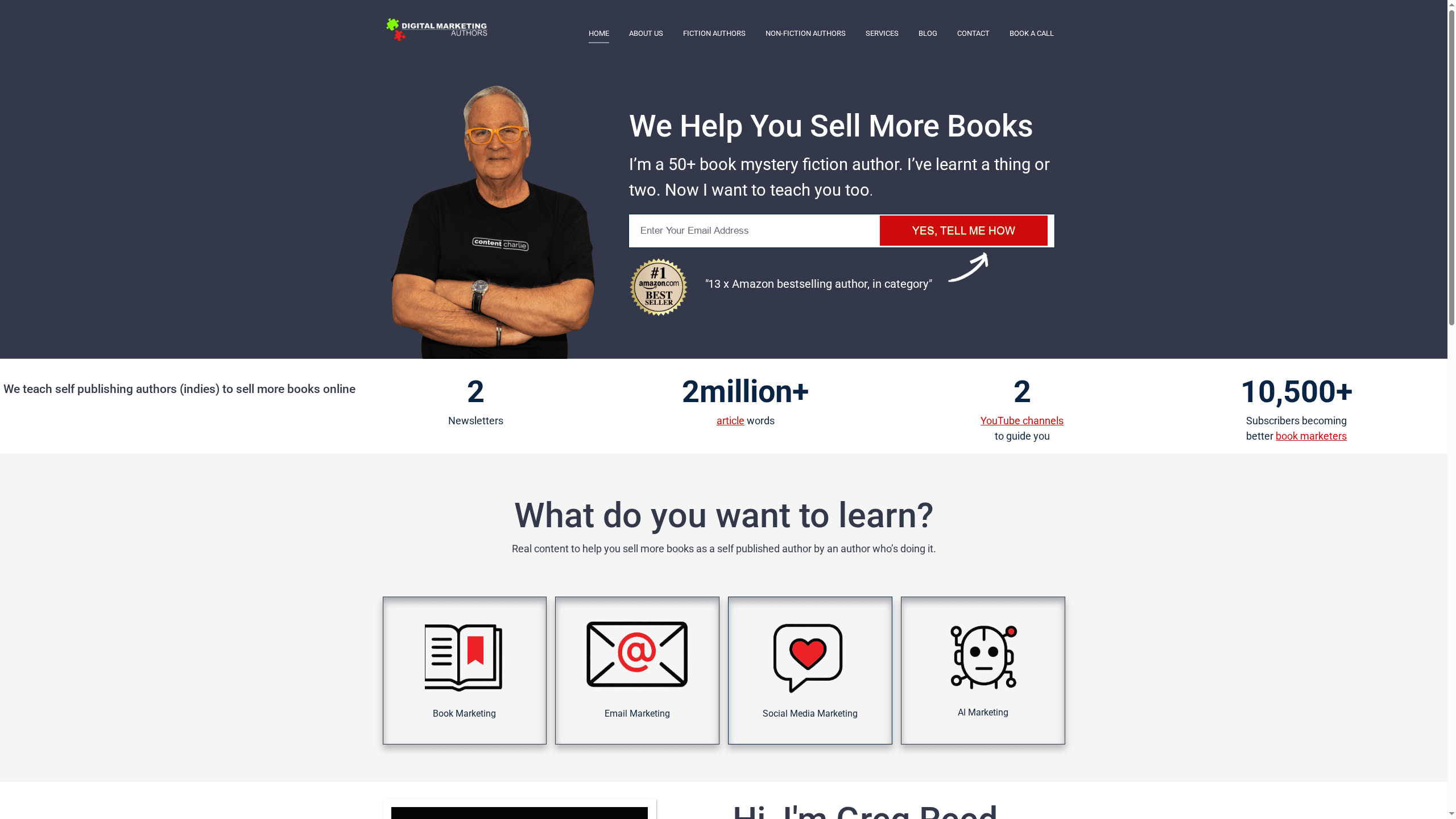
Digital Marketing Authors is a focused, author-first marketing resource that gives indie and self-published writers repeatable systems to sell more books. Founded by 13x #1 Amazon bestselling author C.T. Mitchell, the platform pairs author credibility with practical tactics in email, social media, and AI-driven marketing. If you want training, checklists, and step-by-step guidance aimed specifically at authors (not generic marketers), this is built for you. Expect hands-on strategies rather than vague theory.
Core Features
Digital Marketing Authors delivers targeted guides and training on email marketing, social media promotion, AI-assisted marketing, and content creation designed for book launches and ongoing audience growth. The site bundles strategic playbooks — like list-building funnels and magnetic email sequences — with resource articles such as marketing checklists and tool comparisons. Training materials emphasize automation and reader-community building, helping authors move from one-off promotions to scalable systems that consistently convert readers into repeat buyers.
Pros
- Led by a proven author-marketer: The platform is founded by 13x #1 Amazon bestselling author C.T. Mitchell, so guidance is grounded in real publishing experience and measurable results.
- Author-specific focus: Materials are tailored for self-published and indie writers, meaning examples, templates, and timelines reflect book marketing realities rather than broader corporate campaigns.
- Comprehensive, practical resources: The site includes checklists, tool comparisons, and step-by-step tutorials that let you implement tactics immediately rather than spending weeks learning theory.
- Modern marketing with AI integration: Training explicitly covers AI-powered techniques to save time and boost discoverability, keeping your marketing current and efficient.
- Proven sales and engagement methods: The platform prioritizes systems that grow email lists, automate sales funnels, and nurture a loyal reader base—methods proven to increase book sales over time.
Who It’s For
Digital Marketing Authors is ideal for self-published and indie authors who want to take control of their book marketing with systems that scale. If you write fiction or nonfiction and are committed to learning and applying practical tactics—email funnels, social media promotion, and AI-assisted content creation—this platform will accelerate your results. It’s particularly useful for authors who prefer actionable templates and checklists over academic marketing advice.
Unique Value Proposition
Digital Marketing Authors stands out because it combines frontline author credibility with explicit, execution-focused marketing systems. Unlike generic marketing platforms, it translates book marketing into repeatable playbooks: list-building tactics, automated email sequences, social media content calendars, and AI workflows tailored to book discovery. The emphasis on building a loyal reader army and automating sales moves authors away from one-hit launches and toward sustainable revenue. Backed by a bestselling author, the guidance is both strategic and granular — from subject-line formulas to promotion timing — making it superior for authors who need results without reinventing the wheel.
Real World Use Case
An independent mystery author uses the platform to grow an email list via targeted lead magnets, schedules a four-week social campaign for a new release, and deploys AI to create promotional copy and audience segments. The result: higher open rates, more preorders, and a measurable uplift in long-term reader engagement.
Pricing
Not specified on the website.
Website: https://digitalmarketingauthors.com
Kindlepreneur
At a Glance
Kindlepreneur is a deep repository of free education and hands-on tools created for self-publishing authors who want practical, Amazon-focused book marketing help. Founded and curated by Dave Chesson, it combines more than 500 articles, 150+ videos, and a collection of free utilities that authors can use without a credit card. If you sell (or plan to sell) through Amazon KDP, Kindlepreneur delivers high-value, actionable material; outside Amazon, its relevance tapers off. Bottom line: a must-visit hub for Amazon-centric indie authors.
Core Features
Kindlepreneur’s core is educational content plus utility tools: free courses on self-publishing and book marketing, a library of over 500 written guides, 150+ instructional videos, and practical tools such as an Amazon sales rank calculator, book description generator, and QR code creator. The site also hosts resources on branding, cover design, editing, formatting, and publishing workflows—packaged to move an author from confusion to measurable action steps.
Pros
- Extensive free content: Kindlepreneur offers hundreds of articles and many videos so you can learn multiple aspects of publishing without immediate cost.
- Practical tools for Amazon sellers: Tools like the sales rank calculator and description generator give you quick, usable metrics and assets to improve listings.
- Authored by an experienced strategist: Guidance comes from a recognized self-publishing expert, which helps the advice feel grounded and credible.
- Supports all experience levels: Whether you’re writing your first indie novel or you’re a seasoned indie marketer, the site includes beginner courses and advanced tactics.
- Large engaged audience: A community of over 325,000 subscribers signals ongoing value and regular updates.
Cons
- Amazon-centric focus can limit applicability: The content and tools primarily target Kindle Direct Publishing, which reduces usefulness for authors pursuing other retailers or non-Amazon strategies.
- Some features behind paywalls: While most resources are free, certain advanced tools or courses may require payment or upgrades to access full functionality.
- Variable fit depending on skill level: The quality and usefulness of specific articles or tools can vary based on where you are in your author journey and your prior knowledge.
Who It’s For
Kindlepreneur is ideal for indie authors, self-publishers, and indie marketers who rely on—or plan to rely on—Amazon KDP as a primary sales channel. If you want step-by-step tutorials, free calculators, and tactical advice that you can apply the same day, this site was built for you.
Unique Value Proposition
Kindlepreneur stands out by pairing deep, free educational content with immediately actionable tools focused on Amazon performance. That combination lets authors both learn strategic concepts and run the tiny experiments that move visibility and sales.
Real World Use Case
An indie author uses Kindlepreneur’s Amazon sales rank calculator to estimate daily sales, applies learnings from articles to refine their Amazon Ads, and follows a free course to tighten book descriptions and metadata—resulting in clearer listings and measurable uplift in visibility.
Pricing
Free tier available; some premium tools and services may require payment.
Website: https://kindlepreneur.com
Book Brush
At a Glance
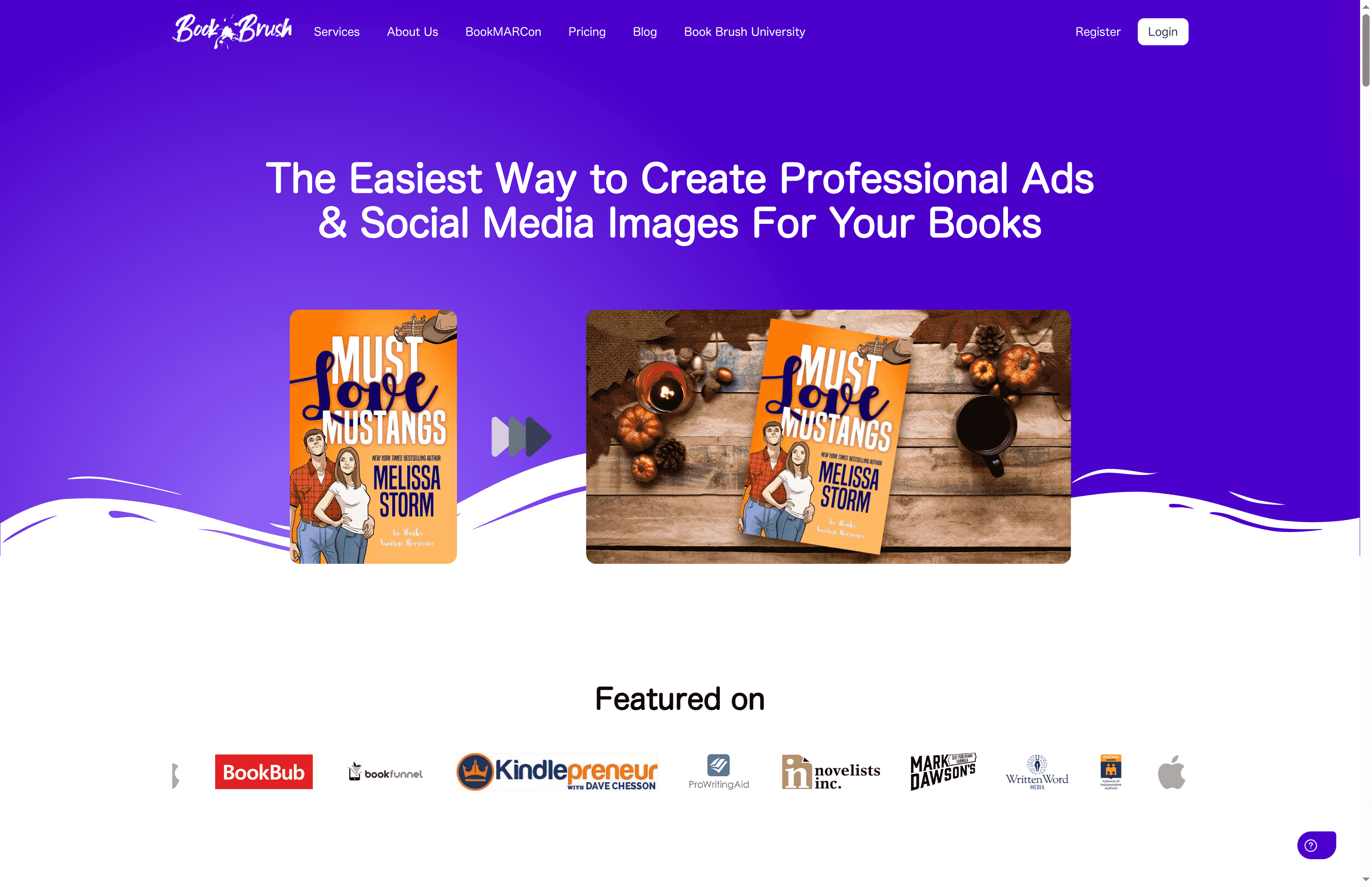
Book Brush is a purpose-built visual toolkit that helps authors produce professional covers, ads, mockups, and animated promos without hiring a designer. Its template library and 3D mockup options accelerate campaign-ready assets, making it a practical choice for busy indie authors and small publishers. It’s not a full-featured photo editor, though — expect convenience over pixel-perfect control.
Core Features
Book Brush bundles a large template library (over 3,000 templates) organized by platform and genre, a cover creator with hundreds of templates, and more than 200 fully customizable 3D book templates for instant mockups. The platform supports box set creation with spine options and uploads for print, ebook, audio, and other formats, and produces animated mockups and social-media-ready videos. Additional capabilities include a reader hub for sharing images, brand-consistent custom design integration, social media management services, and full-service author branding and design services.
Pros
- User-friendly interface with a wide variety of customizable templates: The platform’s organized template library lets you find genre-appropriate layouts quickly so you can build promos in minutes.
- Time-saving tools such as instant mockups and cover creators: Instant mockups and pre-built cover templates dramatically reduce the hours spent assembling campaign images.
- Affordable alternative to hiring graphic designers: For authors on a budget, Book Brush bundles many design needs into one subscription, which commonly costs less than multiple freelance jobs.
- Comprehensive suite of marketing tools tailored for authors: From covers to animated videos to box sets, the feature set maps closely to the typical tasks of book launches and ongoing promotions.
- Ability to create a consistent brand presence across multiple formats: Integration of custom designs and templated assets helps maintain cohesive branding across social posts, ads, and storefront imagery.
Cons
- Limited information on advanced editing features or unique customization options: The platform appears to favor templated workflows over deep, pixel-level editing, which may frustrate authors who want fine-grained control.
- Pricing plans may be expensive for some individual authors or small publishers: Annual plans starting at $149 may be a stretch for authors just testing paid promotion or those with very tight budgets.
- Potential learning curve for new users unfamiliar with graphic design tools: While templates simplify many tasks, authors new to visual tools may still need time to master branding consistency and animation options.
Who It’s For
Book Brush is ideal for indie authors, self-published writers, and small publishers who want fast, polished visual assets without outsourcing. If you run your own book launches and need social ads, mockups, and cover variants produced quickly, Book Brush gives you the assembly line you need.
Unique Value Proposition
Book Brush’s strength is convenience: it packages author-specific design templates, 3D mockups, animated social content, and basic brand services into a single, author-focused platform—so you can move from concept to campaign in hours instead of days.
Real World Use Case
An author preparing a release uses Book Brush to design the book cover, create promotional social graphics, generate animated teaser videos, and produce consistent box set imagery for retailer pages and ad campaigns.
Pricing
Plans range from $149/year for the Plus plan to $246/year for the Platinum plan, with higher tiers offering unlimited downloads, trailer creators, additional mockups, and webinars.
Website: https://bookbrush.com
StoryOrigin
At a Glance
StoryOrigin is an all-in-one author marketing hub built to help indie and traditionally published authors grow mailing lists, manage reviews, and run collaborative promotions without juggling half a dozen separate tools. It combines list-building, reviewer outreach, newsletter swaps, and universal links into a single platform, which can save time and reduce manual follow-up. That breadth is StoryOrigin’s biggest strength — but the payoff requires a learning curve and, for many useful features, a paid plan.
Core Features
StoryOrigin’s capabilities center on streamlining author workflows: build email lists with reader magnets and landing pages; find, vet, and distribute review copies for ebooks and audiobooks; create and coordinate newsletter swaps and group promos; and generate universal links that send readers to the best store per country or preference. It also offers audiobook promo code distribution, beta reader feedback with embedded questionnaires, built-in calendars and campaign planners, writing goal tracking, and automation for reviewer follow-up and download delivery.
Not everything is surface-level. Many tasks that usually require spreadsheets or separate services—review tracking, universal links, and promo coordination—are automated inside the platform. That saves mental overhead. And yes, you can build a basic author website here, too. Small wins add up.
Stop. Think.
Pros
- All-in-one platform reduces tool sprawl: By combining list-building, review management, promotions, and universal links, StoryOrigin cuts the need to cobble together multiple services. This centralization saves time and reduces errors.
- User-friendly interface with depth: The platform is described as easy to use while still offering a long feature list, making it approachable for authors who want more than a single-purpose app.
- Strong community and positive social proof: The product benefits from a supportive author community, which can accelerate learning and provide promo partners.
- Flexible promotional options: Newsletter swaps, group promos, and automated reviewer workflows give authors multiple ways to reach readers and coordinate with other authors.
- Comprehensive review and feedback tracking: From ARC distribution to embedded beta-reader questionnaires, StoryOrigin helps you collect and manage feedback systematically.
Cons
- Complex for new users: Because StoryOrigin bundles many features, initial navigation can feel overwhelming, especially for authors who prefer minimal tools.
- Key features behind paid tiers: Several of the most useful capabilities—group promos, newsletter swaps, and advanced review management—require the Standard plan, limiting the free tier’s practicality.
- Limited free features: The free basic plan exists, but most authors aiming for real list growth and promo coordination will need to upgrade to access value-driving tools.
Who It’s For
StoryOrigin suits authors and indie writers who are serious about growing an audience and managing promotions efficiently. If you run newsletter swaps, share ARCs, or coordinate multi-author promos, StoryOrigin streamlines those tasks and reduces back-and-forth. It’s less ideal for authors who want a single, ultra-simple tool without any setup.
Unique Value Proposition
StoryOrigin’s unique value lies in packing multiple author-specific marketing tools into one platform tailored to the book ecosystem: reviewer discovery, ARC distribution, universal links for global sales, and campaign planning live together so you can coordinate launches and promos without spreadsheets.
Real World Use Case
An indie author uses StoryOrigin to organize newsletter swaps, distribute ARC copies to vetted reviewers, and create universal links for a recent release. The result: smoother ARC delivery, clearer review tracking, and a stronger mailing list ready for launch announcements.
Pricing
Starting at Free; Standard plan $10/month or $100/year, with an optional guided setup that involves a setup fee.
Website: https://storyoriginapp.com
Publer
At a Glance
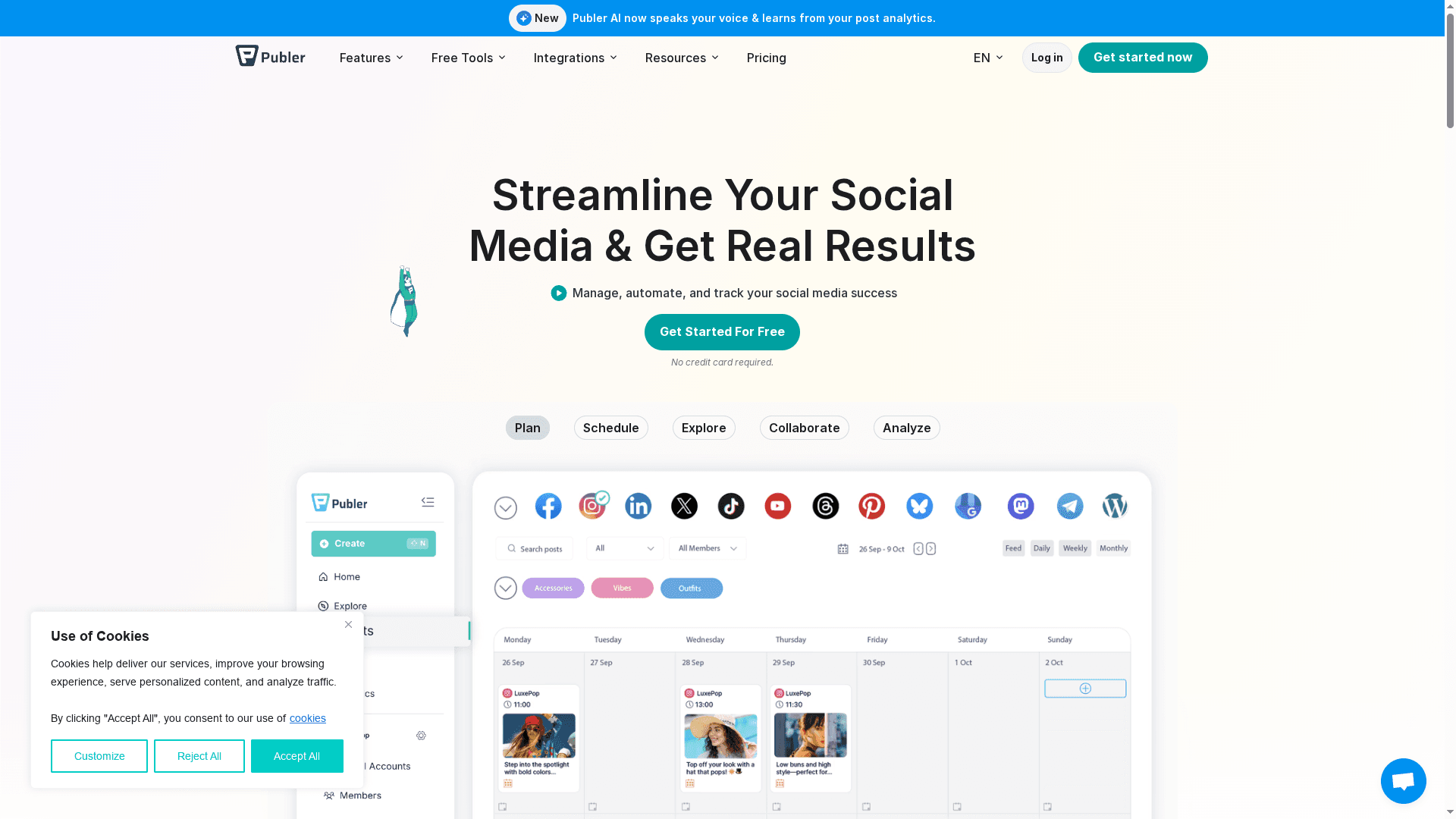
Publer is a full-featured social media management platform built to simplify scheduling, automation, and analytics across multiple networks. For authors and book marketers, it offers practical tools—bulk scheduling, content recycling, and AI-assisted writing—that reduce repetitive work and keep your feed consistent. It’s approachable for solo authors but scalable enough for agencies and marketing teams. Expect a short learning curve for advanced automation, and consider paid plans for larger teams or heavy feature use.
Core Features
Publer centers on cross-platform social media scheduling and automation, with built-in content creation and editing tools so you can craft posts without leaving the app. It supports analytics and insights to track performance, collaboration and approval workflows for teams and clients, and bulk uploading via CSV or a multi-post scheduler for rapid campaign setup. Additional capabilities include AI content generation, link-in-bio management, content recycling, and integrations with popular design and storage tools.
Pros
- User-friendly interface with a drag-and-drop calendar makes planning weeks of posts quick and visual. This lowers the friction for authors who prefer visual scheduling over spreadsheets.
- Comprehensive automation tools including auto-schedule and recycling reduce manual reposting and keep evergreen content working for you. Save time and maintain presence without constant oversight.
- Deep analytics provide the data you need for better decision-making about what content actually drives engagement. That’s crucial when every promotional post should move the needle on visibility or sales.
- Integration with tools like Canva and Google Drive streamlines content creation and asset management. You can pull visuals and drafts into Publer without broken workflows.
- Flexible plans cater to individuals, businesses, and enterprises so you can scale as your audience grows. Start small and upgrade when you need team features.
Cons
- Some features are limited in free plans, which can frustrate users who want to trial advanced automation and analytics. You may hit restrictions before you’ve tested the tool fully.
- Pricing can be high for larger teams or advanced features, making it a significant monthly commitment for agencies managing many client accounts. Budget accordingly.
- There is a learning curve for extensive automation options, so expect to invest time to set up complex recycling or approval workflows correctly. Don’t assume everything will work optimally out of the box.
Who It’s For
Publer is ideal for social media managers, small business owners, content creators, agencies, and enterprise marketing teams who need an integrated platform to schedule, automate, and analyze social content. If you manage multiple author profiles or client accounts and value bulk operations and collaboration, Publer fits well.
Unique Value Proposition
Publer’s value lies in combining practical automation—bulk scheduling, recycling, and AI content assistance—with collaboration and analytics in one interface. For authors, that means less time juggling posts and more time writing, while teams gain clearer approval workflows and measurable performance data.
Real World Use Case
A digital marketing agency uses Publer to schedule and analyze posts across several clients’ accounts, automate content recycling for evergreen promotions, and share drafts with clients for approval—streamlining campaign workflows and reducing manual coordination.
Pricing
Free tier available; paid plans include Professional, Business, and Enterprise with varying features and custom options.
Website: https://publer.io
Author Marketing Tools Comparison
Here’s a comprehensive comparison of popular author marketing tools, showcasing their unique features, pros, cons, and pricing to help authors make informed decisions.
| Tool | Key Features | Pros | Cons | Pricing |
|---|---|---|---|---|
| Digital Marketing Authors | Email, Social Media, AI Marketing Templates & Checklists for Authors |
Proven Author Insights Comprehensive Resources Modern with AI Integration |
Pricing not specified | Not specified |
| Kindlepreneur | Amazon-focused Tools & Courses 500+ Articles, 150+ Videos |
Extensive Free Content Amazon Tools for Sellers Large Audience |
Amazon-centric Focus Some Paywalls |
Free, Some Paid Features |
| Book Brush | 3,000+ Templates Cover Creator, 3D Mockups, Animation |
User-Friendly Time-Saving Tools Affordable Design Solutions |
Limited Advanced Editing Learning Curve Pricing High for Some |
$149-$246/year |
| StoryOrigin | Email & Review Management Newsletter Swaps, Universal Links |
All-in-One Platform User-Friendly Strong Community |
Complex for New Users Most Features Paid |
$0-$10/month |
| Publer | Social Media Management Automation, Bulk Scheduling |
User-Friendly Interface Comprehensive Automation Deep Analytics |
Limited Free Features High Pricing for Advanced Features |
Free, Paid Plans Available |
Master Social Media Marketing for Your Books with Proven Systems
Social media marketing can feel overwhelming when you face scattered tools and unclear strategies. This article highlights the challenge of finding the right platforms and automation to save time while boosting book visibility and sales. If you are struggling to manage posts, engage readers consistently, and turn casual followers into loyal fans, you are not alone. Key goals include simplifying scheduling, maximizing engagement, and leveraging AI-powered content creation to work smarter not harder.
At Digital Marketing Authors, we understand these struggles deeply. Founded by 13x #1 Amazon bestselling author C.T. Mitchell, our platform focuses exactly on helping authors build scalable, repeatable marketing systems—from magnetic email sequences to AI-enhanced social media workflows. We give you templates, checklists, and step-by-step playbooks tailored for authors who want to stop guessing and start selling more books.
Tap into expert strategies that transform your social media chaos into a streamlined engine for growth.
Ready to stop spinning your wheels and grow a loyal reader community with less stress? Explore our proven author marketing frameworks and AI tools now at Digital Marketing Authors. Start marketing smarter today and watch your book sales accelerate with actionable guidance designed for indie authors just like you.
Frequently Asked Questions
What are the essential social media tools for book marketing in 2025?
To effectively market books in 2025, essential social media tools include scheduling platforms for posts, analytics software for performance tracking, and audience engagement tools. Begin by assessing your needs for automation and analytics to select tools that promote consistent engagement with readers.
How do I automate my social media posts for book marketing?
To automate social media posts, utilize a scheduling tool that allows you to queue up multiple posts in advance. Set aside time weekly to create content and schedule posts, ensuring you maintain a steady online presence without daily management.
What metrics should I track to measure my book marketing success on social media?
Key metrics to track include engagement rates, follower growth, and post reach. Focus on monthly reports to analyze trends; for example, aim for a 10% increase in engagement over the next quarter by refining your content strategy.
How can I grow my audience using social media tools?
Use audience engagement tools to create interactive content, such as polls or giveaways, that encourages followers to participate and share. Aim for a campaign that targets a 15% increase in followers within 30 days by offering engaging visuals and dynamic posts.
What types of content should I share on social media to promote my books?
Share a mix of engaging content like behind-the-scenes insights, reader testimonials, and excerpts from your book. Plan a content calendar with at least one promotional post per week to keep your audience engaged and informed.
Can I collaborate with other authors using social media tools?
Yes, many social media tools facilitate collaboration by allowing content sharing and coordinated campaigns. Establish partnerships and plan joint promotions to expand your reach, aiming to increase collective followership by up to 25% within a couple of months.
Recommended

Digital Marketing for Writers: Grow and Sell More Books
Nearly 70% of self-published authors struggle to reach their ideal readers and grow book sales effectively. Without a clear marketing plan, even the best writing can go unnoticed. Understanding practical strategies for defining your audience, building an author platform, and using smart tools can help transform your book’s visibility and sales results.
Table of Contents
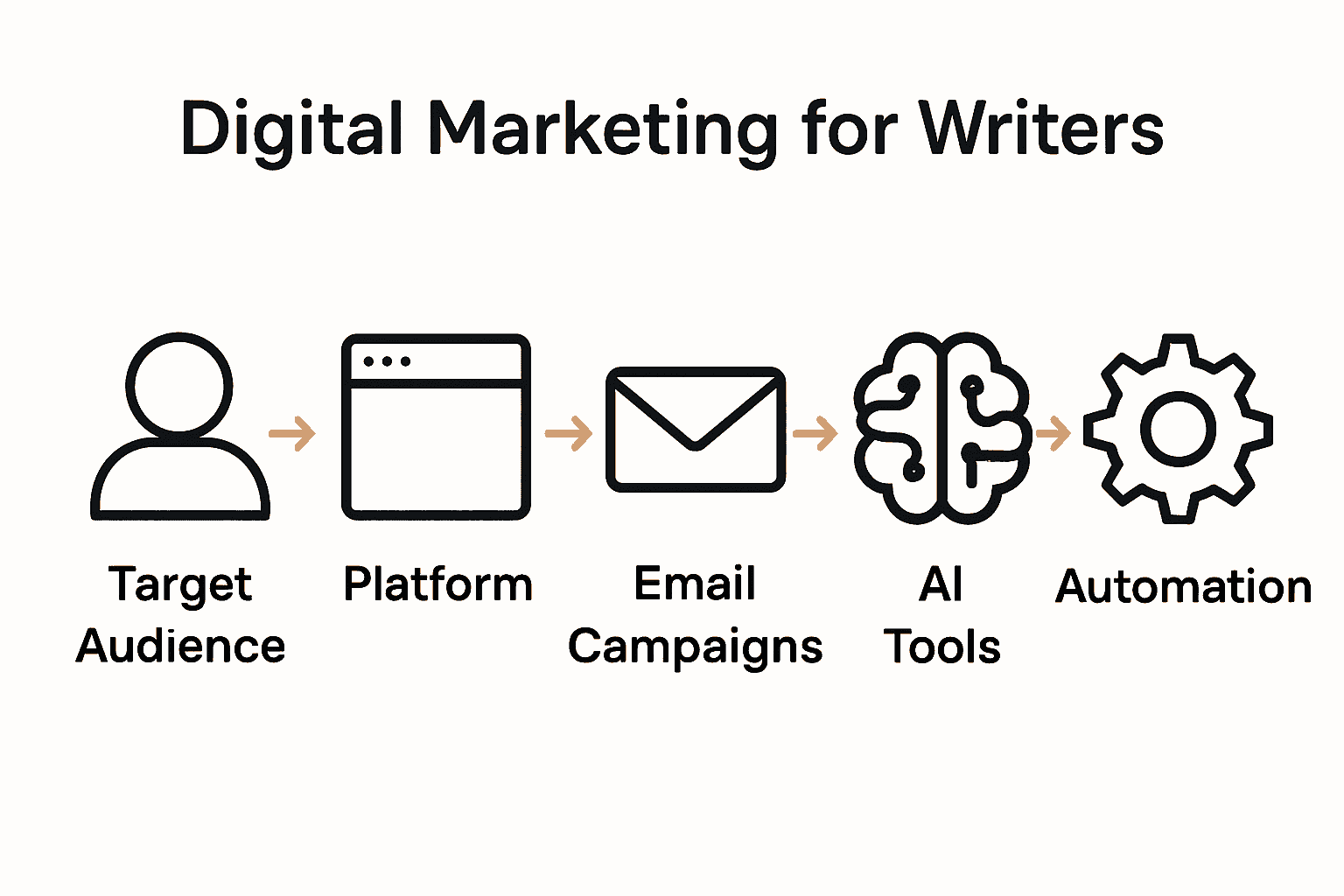
- Step 1: Define Your Target Audience And Author Goals
- Step 2: Build A Professional Author Platform
- Step 3: Craft Compelling Email Marketing Campaigns
- Step 4: Leverage Ai Tools To Boost Visibility
- Step 5: Automate Book Sales And Optimize Results
Quick Summary
| Key Point | Explanation |
|---|---|
| 1. Define your audience meticulously | Understand demographics and psychological traits to effectively target your book’s readers. |
| 2. Build a cohesive author platform | Create a professional website, active blog, and social media presence to connect with readers. |
| 3. Craft personalized email marketing | Segment your email list and create engaging content to convert casual readers into loyal fans. |
| 4. Leverage AI tools for efficiency | Use AI to automate tasks like content generation and ad optimization, freeing up your time for writing. |
| 5. Automate marketing processes | Set up automated systems for advertising and email marketing that work continuously without manual input. |
Step 1: Define your target audience and author goals
Successful book marketing starts with crystal clear understanding of who will read your book and what you want to achieve. This foundational step determines every subsequent marketing strategy you will develop.
Begin by creating a detailed reader persona that goes beyond basic demographics. According to research from digital marketing experts, effective audience targeting requires understanding not just age and location but deeper psychological characteristics like reading habits, interests, and pain points.
Ask yourself specific questions about your ideal reader: What motivates them to pick up a book like yours? What problems are they trying to solve? What emotional experience are they seeking? For instance, a romance novelist might target professional women aged 30-45 who want escapist literature after stressful workdays.
Align your specific author goals with your audience research. Are you aiming to:
- Build a loyal reader community
- Generate consistent book sales
- Establish yourself as an authority in your genre
- Create a sustainable author income stream
- Expand your readership internationally
Research indicates that authors who precisely define both audience and objectives are 67% more likely to create targeted marketing campaigns that actually work.
Pro Tip: Update your reader persona every six months as your writing career evolves and you gain more insights about your audience.
Next, you will map out a strategic marketing approach that speaks directly to your carefully defined reader persona.
Step 2: Build a professional author platform
Your author platform is your digital home base where readers discover and connect with your writing. It transforms you from an unknown writer to a recognized brand with consistent online presence.
According to digital marketing research from Elsevier’s marketing strategies guide, an effective author platform integrates multiple digital touchpoints to maximize audience reach. This means creating a cohesive online ecosystem that tells your unique storytelling narrative.
Start by establishing these core digital assets:
Here’s a comparison of the core elements of a professional author platform:
| Element | Purpose | Key Tips |
|---|---|---|
| Author Website | Main information hub | Clean design Clear branding |
| Blog | Showcases expertise and updates | Consistent posts Engage readers |
| Social Media Profiles | Builds community and discoverability | Focus on top 2-3 platforms |
| Email Newsletter | Direct reader connection and updates | Value-first Personal approach |
- Professional author website showcasing your books and biography
- Active blog demonstrating your writing expertise
- Consistent social media profiles on platforms where your target readers spend time
- Email newsletter for direct reader communication
Your website serves as the central hub. Make it clean, professional, and reflective of your writing genre. Include high quality author photos, book descriptions, purchase links, and ways for readers to connect with you.

Social media allows you to build personal connections. Choose 2-3 platforms where your ideal readers congregate. For fiction writers, this might mean Instagram and TikTok. For nonfiction authors, LinkedIn and Twitter could be more strategic.
Pro Tip: Consistency matters more than perfection. Regular small updates beat sporadic grand gestures.
Growing an author platform requires patience and strategic effort. Your next step involves creating compelling content that attracts and retains your ideal readers.
Step 3: Craft compelling email marketing campaigns
Email marketing transforms casual readers into loyal fans and consistent book buyers. Your goal is creating magnetic email sequences that readers actually want to open and engage with.
According to research from Automateed’s book marketing guide, successful email campaigns rely on personalized sequences that nurture readers through strategic touchpoints. This means designing emails that feel like personal conversations rather than generic broadcasts.
Start by segmenting your email list based on reader interests and behaviors. Fiction writers might create different tracks for romance versus thriller fans. Nonfiction authors could segment by professional interests or reading preferences.
Your email sequence should include:
- Welcome email introducing yourself and your writing
- Engagement emails sharing behind the scenes content- Promotional emails highlighting new book releases
- Value driven content that entertains or educates
Pay special attention to your subject lines. They are your first and sometimes only chance to capture a reader’s attention. Make them intriguing personal and specific to your reader’s interests.
As Automateed’s author email marketing research demonstrates, converting subscribers requires offering exclusive benefits. Think about providing special reader rewards like chapter previews bonus content or limited time discounts.
Pro Tip: Aim for an 80/20 balance. Spend 80% of your emails providing value and only 20% directly selling.
Effective email campaigns are an art form that develops with practice. Your next step involves analyzing your email performance and continuously refining your approach.
Step 4: Leverage AI tools to boost visibility
AI technology has transformed book marketing from a time consuming process to a strategic powerhouse. Your goal is using intelligent tools that amplify your reach while saving precious writing time.
According to Manuscript Report’s comprehensive AI publishing guide, AI can automate multiple visibility boosting tasks across different marketing channels. This means generating social media content email sequences and optimizing advertising with unprecedented precision.
Start exploring AI tools in these key areas:
- Social media content generation
- Email marketing optimization
- Amazon ad targeting
- Book description refinement
- Reader targeting analysis
For social media marketing AI can help draft engaging posts that sound authentically like your writing voice. These tools analyze your previous content and generate posts that match your style and resonate with your target audience.
In email marketing AI becomes your strategic partner. As Anyword’s marketing platform demonstrates, intelligent systems can generate email subject lines optimize send times and predict which messaging will most likely convert readers into book buyers.
When it comes to advertising AI tools can analyze complex data points to identify your most promising reader demographics. This means smarter ad spending and higher conversion rates.
Pro Tip: Always review and personalize AI generated content. The tool provides the framework but your unique voice makes it compelling.
AI book marketing represents the future of author promotion. Your next step involves experimenting with these tools and measuring their impact on your book sales and reader engagement.
Step 5: Automate book sales and optimize results
Automation transforms book marketing from a manual grind into a strategic growth engine. Your mission is creating systems that sell books while you focus on writing.
According to Automateed’s book marketing automation guide, successful automation requires setting up intelligent advertising platforms that monitor and adjust campaigns in real time. This means creating systems that work continuously without constant manual intervention.
Key automation strategies include:
- Setting up perpetual Amazon advertising campaigns
- Creating evergreen email marketing sequences
- Implementing retargeting ads for website visitors
- Developing automated social media content schedules
- Building reader acquisition funnels
Amazon advertising presents a prime opportunity for automation. Manuscript Report’s AI publishing analysis reveals that intelligent bid adjustment tools can dramatically reduce advertising costs while maintaining strong visibility.
Your email marketing should function like a silent sales team. Design sequences that automatically welcome new subscribers trigger follow up messages based on reader interactions and recommend books without constant oversight.
Track your key performance indicators religiously. Watch metrics like cost per click conversion rates and return on ad spend. These numbers tell you exactly how your automated systems perform.
Pro Tip: Review your automation systems monthly. Small tweaks can generate significant performance improvements.
Book sales funnel optimization is an ongoing process. Your next step involves continuously refining these automated systems to maximize your book sales potential.
Unlock Your Full Book Marketing Potential Today
If you’ve ever felt overwhelmed trying to connect with your ideal readers or struggled to turn casual interest into loyal fans, you are not alone. This article highlights the importance of defining your target audience, building a professional author platform, crafting magnetic email marketing, and harnessing AI tools to automate and amplify your book sales. These challenges often leave writers searching for clear, proven systems that can actually deliver results.
At DigitalMarketingAuthors.com, we understand these exact struggles and the critical goals you want to achieve: growing a dedicated reader community, automating sales, and scaling your author brand without wasting precious time or resources. Founded by 13x #1 Amazon bestselling author C.T. Mitchell, our platform offers step-by-step strategies and AI-powered solutions that turn ambitious marketing plans into consistent book sales and broader visibility.
Ready to stop guessing and start growing
Discover how to build your professional author platform and craft compelling email campaigns that truly resonate. Take control of your marketing journey right now and visit Digital Marketing Authors to access expert guidance and tools tailored for indie authors who want to market smarter, sell faster, and scale worldwide. Your next bestselling chapter begins with the right marketing system.
Frequently Asked Questions
How can I define my target audience for effective book marketing?
To define your target audience, create a detailed reader persona that includes not just demographics, but also psychological factors like interests and pain points. Start by asking specific questions about what motivates your ideal reader, what problems they want to solve, and what emotional connection they seek from your book.
What are the essential elements of a professional author platform?
A professional author platform should include a user-friendly website, an active blog, social media profiles, and an email newsletter. Focus on creating a cohesive online presence that reflects your genre and allows you to connect with readers effectively.
How should I structure my email marketing campaigns to engage readers?
Structure your email marketing campaigns around personalized sequences that nurture your readers. Include a warm welcome email, engaging content that offers behind-the-scenes glimpses, and promotional emails that announce new releases; aim for an 80/20 balance, providing value in 80% of your emails and selling in 20%.
What AI tools can I use to enhance my book marketing efforts?
Explore AI tools that can assist with generating social media content, optimizing email marketing, and refining book descriptions. Start using these tools to automate repetitive tasks, which can save you time and increase your promotional reach.
How can I automate my book sales to maximize results?
Automate your book sales by setting up continual advertising campaigns, creating evergreen email sequences, and implementing retargeting ads for website visitors. Review your automation processes monthly to identify areas for improvement and boost sales performance by about 20%.
Recommended

Book Preorder Strategies Explained: Complete Guide
Did you know that authors who use preorders can see up to 30 percent more sales during their book’s launch week? Preorder campaigns are quickly becoming a favorite strategy because they help writers build excitement, measure interest, and earn revenue before release day. By learning how effective preorders work, authors can improve their book’s visibility and connect with readers months before the first copy ships.
Table of Contents
- Defining Book Preorders And Their Benefits
- Types Of Preorder Campaigns For Authors
- Step-By-Step Process For Preorder Success
- Leveraging Email, Social, And AI Tools
- Risks, Costs, And Common Preorder Mistakes
Key Takeaways
| Point | Details |
|---|---|
| Strategic Preorders | Book preorders help authors generate early sales, create buzz, and improve visibility on platforms like Amazon. |
| Campaign Types | Authors can utilize various campaign types including direct platform preorders and social media blitzes to maximize engagement. |
| Marketing Execution | Effective preorder strategies rely on compelling metadata, exclusive incentives, and a multi-channel marketing approach. |
| Avoiding Pitfalls | Common mistakes such as poor timing and inadequate audience targeting can undermine preorder success; authors should navigate these risks carefully. |
Defining Book Preorders and Their Benefits
A book preorder represents a strategic marketing approach where readers can purchase and reserve a book before its official release date. This powerful technique allows authors to generate excitement, build anticipation, and secure advanced sales that can significantly impact initial book rankings and visibility.
Book preorders offer multiple strategic advantages for authors. According to the University of California Press, effective preorder campaigns leverage critical metadata like precise publication dates, compelling book descriptions, and targeted keywords to optimize online discoverability. These advanced sales not only help authors gauge reader interest but also provide crucial momentum for launch week performance.
Key benefits of book preorders include:
- Generating early revenue before official publication
- Creating buzz and anticipation around your upcoming release
- Potentially improving initial book rankings on platforms like Amazon
- Providing authors with early sales data and reader engagement metrics
- Allowing readers to secure their copy in advance of the official launch
For independent authors, preorders represent more than just a sales strategy. They are a powerful tool for building reader engagement and creating a sense of community around your upcoming book. Book launch strategies can be significantly enhanced by implementing a well-planned preorder campaign that connects directly with your target audience.
Types of Preorder Campaigns for Authors
Authors can leverage several strategic preorder campaign types to maximize book visibility and reader engagement. These campaigns range from direct platform-based approaches to more complex multi-channel marketing strategies designed to build anticipation and drive early sales.
According to the Self-Publishing Advice Center, independent authors have multiple promotional avenues to explore. Platform-exclusive preorders typically involve focusing on specific retail channels like Amazon KDP, where authors can offer early purchase options with special incentives. These campaigns often include limited-time pricing, exclusive bonus content, or signed edition opportunities to entice early buyers.
Key preorder campaign strategies include:
Here’s a comparison of popular preorder campaign types for authors:
| Campaign Type | Key Features | Best For |
|---|---|---|
| Direct Platform Preorders | Platform exclusivity Easy setup |
Wide reach Amazon focus |
| Email List Campaigns | Personalized offers Direct connection |
Engaged audiences |
| Social Media Preorder Blitz | Viral potential Short-term buzz |
Brand building |
| Influencer Partnership | Third-party endorsement Wider exposure |
Niche audiences |
| Early Bird Discount Campaign | Limited-time pricing Urgency creation |
Value-driven readers |
- Direct Platform Preorders: Using Amazon, Barnes & Noble, and other book retailer platforms
- Email List Campaigns: Targeting existing readers with exclusive preorder opportunities
- Social Media Preorder Blitz: Creating time-limited promotional events across digital channels
- Influencer Partnership Preorders: Collaborating with book reviewers and content creators
- Early Bird Discount Campaigns: Offering reduced pricing for readers who preorder early
For authors seeking comprehensive marketing approaches, book marketing strategies for authors can provide additional insights into creating successful preorder campaigns that connect meaningfully with your target audience and drive initial book sales.

Step-by-Step Process for Preorder Success
Successful book preorder campaigns require meticulous planning and strategic execution. Authors must approach their preorder strategy as a comprehensive marketing journey that begins months before the actual book launch, carefully crafting each stage to maximize reader engagement and potential sales.
According to the University of California Press, the foundation of any successful preorder campaign starts with compelling metadata. This includes creating an attention-grabbing book description, selecting strategic keywords, and ensuring all publication details are accurate and enticing. Research indicates that authors who invest time in developing high-quality metadata significantly improve their book’s online discoverability and potential for early sales.
The comprehensive preorder process typically involves these critical steps:
- Develop Compelling Book Metadata: Create an irresistible book description
- Build Anticipation: Start promoting 3-6 months before release date
- Create Exclusive Preorder Incentives: Design special bonuses for early buyers
- Leverage Multiple Marketing Channels: Utilize email, social media, and author networks
- Track and Adjust: Monitor preorder performance and adapt strategies
Independent authors looking to refine their marketing approach can find additional insights through bestselling author strategy resources that provide advanced techniques for turning preorder campaigns into powerful book launch mechanisms.
Leveraging Email, Social, and AI Tools
Modern book preorder strategies demand a sophisticated approach that integrates digital marketing channels with cutting-edge technological tools. Authors now have unprecedented opportunities to connect with readers and create targeted, personalized promotional campaigns that extend far beyond traditional marketing methods.
According to the University of California Press’s promotional toolkit, effective author marketing requires a multi-channel strategy that seamlessly combines email outreach, social media engagement, and emerging AI technologies. Email marketing remains a powerful tool, allowing authors to develop direct relationships with readers by creating segmented lists, crafting personalized preorder communications, and designing automated follow-up sequences that build anticipation for upcoming book releases.
Key strategies for leveraging digital tools include:
- Targeted Email Campaigns: Segment reader lists and create personalized preorder invitations
- Social Media Countdown: Use platforms like Instagram and Twitter to build excitement
- AI-Powered Content Creation: Generate engaging promotional materials and social media posts
- Automated Marketing Sequences: Design multi-step communication strategies
- Performance Tracking: Use analytics to refine and optimize preorder approaches
Authors looking to stay ahead of the marketing curve can explore AI strategies for book marketing to unlock advanced techniques for transforming their preorder campaigns into highly effective reader engagement mechanisms.
Risks, Costs, and Common Preorder Mistakes
Book preorder campaigns, while powerful, come with potential pitfalls that can derail an author’s marketing strategy. Understanding these risks is crucial for developing a robust and successful preorder approach that minimizes financial exposure and maximizes reader engagement.
According to the Self-Publishing Advice Center, authors must carefully navigate the financial and strategic risks associated with promotional programs. Platform exclusivity can be a significant constraint, particularly with programs like KDP Select, which may limit an author’s ability to distribute their book across multiple sales channels. The University of California Press warns that neglecting critical elements like metadata optimization can severely impact a book’s online discoverability and potential preorder success.
Common preorder mistakes authors should avoid include:
- Insufficient Metadata Preparation: Incomplete or poorly crafted book descriptions
- Unrealistic Pricing Strategies: Setting prices too high or offering inconsistent discounts
- Lack of Audience Targeting: Failing to identify and reach the right reader demographic
- Poor Timing: Starting preorder campaigns too early or too late
- Inadequate Marketing Follow-through: Not maintaining consistent promotional momentum
Independent authors seeking to mitigate risks and optimize their marketing approach can find valuable guidance through book marketing strategies for authors, which provide comprehensive insights into avoiding common preorder campaign pitfalls.
Unlock the Full Potential of Your Book Preorder Campaigns
If you are struggling with building buzz, optimizing metadata, or creating engaging preorder incentives you are not alone. Many authors find it challenging to navigate the complexities of preorder strategies such as email list segmentation, AI-powered content creation, and managing multi-channel marketing efforts. The pain of launching without a strong preorder plan can lead to missed sales and lost momentum.
At DigitalMarketingAuthors.com, founded by 13x #1 Amazon bestselling author C.T. Mitchell, we understand these challenges and offer proven systems designed to help you market smarter and sell faster. Whether you want to craft magnetic email sequences, leverage AI tools for effective promotions, or build a loyal reader community that drives demand before your book’s release, we provide step-by-step support tailored to your goals.
Ready to stop guessing and start growing your preorder success? Visit DigitalMarketingAuthors.com today to explore powerful book marketing strategies for authors and bestselling author strategy resources. Take control of your book launch and watch your preorder sales soar.
Frequently Asked Questions
What are the main benefits of book preorders for authors?
Book preorders help authors generate early revenue, create buzz around their release, improve initial book rankings, provide early sales data, and allow readers to secure their copy ahead of launch.
What types of preorder campaigns can authors implement?
Authors can use various preorder campaign types, including direct platform preorders, email list campaigns, social media preorder blitzes, influencer partnerships, and early bird discount campaigns to maximize visibility and engagement.
What are the critical steps for a successful preorder campaign?
A successful preorder campaign involves developing compelling book metadata, building anticipation leading up to the release, creating exclusive incentives for early buyers, leveraging multiple marketing channels, and tracking performance to adjust strategies as needed.
What common mistakes should authors avoid when setting up preorder campaigns?
Authors should avoid mistakes such as insufficient preparation of metadata, unrealistic pricing strategies, lack of audience targeting, poor timing in campaign launches, and inadequate follow-through in marketing efforts.
Recommended

AI Strategies for Book Marketing: Boost Sales with Proven Steps
Over 80 percent of authors who use AI in their marketing see a significant rise in reader engagement. Connecting your book with its perfect audience can feel overwhelming, yet targeted strategies and smart tools make the difference between missed opportunities and true fan connection. Discover how authors are using data and AI techniques to craft authentic marketing that increases discoverability, builds loyalty, and drives sales.
Quick Summary
| Key Point | Explanation |
|---|---|
| 1. Understand Your Author Brand | Analyze your author brand and audience data to create targeted marketing strategies. |
| 2. Leverage AI for Targeting | Use AI tools to segment your audience and provide personalized marketing messages. |
| 3. Create Automated Email Sequences | Develop automated, engaging email sequences tailored to reader interactions for better conversions. |
| 4. Optimize Book Listings with AI | Utilize AI writing tools to enhance your book descriptions for improved visibility in searches. |
| 5. Monitor and Adjust Your Campaigns | Regularly track performance metrics and refine your strategies based on reader engagement and feedback. |
Table of Contents
- Step 1: Assess Your Author Brand And Audience Data
- Step 2: Integrate AI Tools For Reader Targeting
- Step 3: Automate Email Sequences Using AI Insights
- Step 4: Optimize Book Listings With AI-Powered Content
- Step 5: Monitor Results And Refine AI Marketing Campaigns
Step 1: Assess Your Author Brand and Audience Data
Successful book marketing begins with understanding your unique author brand and knowing exactly who your readers are. This step helps you create targeted strategies that connect authentically with your audience.
Start by conducting a comprehensive audience analysis using AI-powered tools. According to a 2024 research study from the author visibility online archives, personalization at scale allows authors to tailor their narrative precisely to audience context and preferences.
Gather data through multiple channels. Examine your existing reader demographics from social media insights, email subscriber information, and book review platforms. Look for patterns in age groups, reading preferences, geographic locations, and engagement levels. The SOMONITOR framework suggests using explainable AI to analyze audience personas and refine your brand strategy based on actual campaign data.
Create a detailed reader persona that goes beyond basic demographics. What are their reading habits? What emotional needs do your books fulfill? What challenges might prevent them from discovering your work?
Pro Tip: AI analysis tools can help uncover nuanced insights about your audience that traditional market research might miss.
Once you have a clear picture of your audience, you can start crafting marketing messages that resonate deeply and authentically. Your next step will be developing a targeted marketing approach based on these insights.
Step 2: Integrate AI Tools for Reader Targeting
Now that you understand your audience, its time to leverage AI tools to precisely target and engage your potential readers. This step will help you transform audience insights into strategic marketing actions.
Start by exploring AI powered tools designed for reader targeting. According to a 2024 academic study on marketing personalization, AI can leverage consumer behavior patterns to deliver highly targeted recommendations. AI tools for writers can help you analyze reader preferences with unprecedented accuracy.
Implement AI driven segmentation strategies. Adobe research indicates that brands can now tailor messages based on user activity and profile characteristics. For authors, this means creating laser focused marketing campaigns that speak directly to specific reader segments. Consider using AI platforms that can track reader interactions across multiple channels like social media, book review sites, and email platforms.

Utilize predictive analytics to understand reader interests. AI algorithms can help you anticipate reading preferences by analyzing patterns in genre selection, reading speed, and engagement metrics. This allows you to craft marketing messages that resonate on a deeply personal level.
Pro Tip: Always balance AI insights with your authentic author voice to maintain genuine reader connections.
By integrating these AI targeting strategies, you transform generic marketing into a precision instrument for reader engagement. Your next step involves developing personalized content that speaks directly to these identified reader segments.
Step 3: Automate Email Sequences Using AI Insights
Transform your reader communication by creating smart, automated email sequences that engage and convert potential readers. This step will help you build a powerful marketing system that works continuously without constant manual intervention.
Begin by mapping out a strategic email sequence using insights from artificial intelligence marketing for authors. According to FriesenPress, a successful email automation flow typically includes multiple stages: a welcome email with a free chapter, a delayed follow-up prompting purchase, and subsequent messages that encourage series continuation.
Leverage AI tools to personalize each email touchpoint based on reader interactions. This means crafting emails that dynamically adjust content depending on how readers have previously engaged with your books or marketing materials. An author marketing resource suggests creating automated post-purchase sequences that include follow-ups and review prompts triggered by specific purchase events.
Design your email sequence to feel conversational and authentic. Use AI to help analyze language patterns that resonate with your specific reader segments. This allows you to create messages that sound personal and engaging rather than generic and automated.
Pro Tip: Always include an easy unsubscribe option and respect reader preferences to maintain trust.
By implementing these AI-powered email automation strategies, you create a sophisticated marketing system that nurtures reader relationships effortlessly.
Your next step involves tracking and refining these email sequences based on reader engagement metrics.
Step 4: Optimize Book Listings with AI-Powered Content
Make your book stand out in a crowded marketplace by leveraging AI technologies to create compelling and searchable book listings. This step will transform your book description from generic text to a strategic marketing tool that attracts and converts potential readers.
Utilize AI writing tools to craft metadata and descriptions that maximize discoverability. AI-powered book promotion strategies can help you analyze keyword trends and optimize your book listing for search algorithms used by platforms like Amazon.
Generate multiple description variations using AI to test which resonates most with your target audience. AI can help you analyze language patterns that trigger reader interest by examining successful book descriptions in your genre. This means creating metadata that not only describes your book but also speaks directly to your ideal reader.
Implement AI-driven keyword optimization to improve your book visibility. Focus on long-tail keywords that precisely match potential reader search intentions. Consider using AI tools that can suggest semantically related terms that expand your book’s discoverability without feeling forced or unnatural.
Pro Tip: Always review and personalize AI generated content to maintain your unique author voice.
By strategically applying these AI optimization techniques, you create book listings that are both algorithmically intelligent and authentically compelling. Your next step involves tracking listing performance and continuously refining your approach.
Step 5: Monitor Results and Refine AI Marketing Campaigns
Transform your book marketing approach from guesswork to precision by implementing systematic tracking and continuous optimization of your AI powered campaigns. This step will help you understand what truly drives reader engagement and sales.
Leverage advanced campaign tracking tools to monitor your marketing performance in real time. According to the SOMONITOR explainable AI framework, continuous analytics enable authors to interpret campaign data and refine messaging strategies dynamically.
Set up comprehensive tracking dashboards that capture key performance indicators such as email open rates, click through rates, book listing conversions, and reader engagement metrics. AI platforms like AI Amazon Listings offer performance tracking features that can automatically recommend optimization strategies based on your current campaign data.
Implement a systematic approach to campaign refinement. This means regularly analyzing your metrics not just for surface level numbers but for deeper insights into reader behavior. Look for patterns in how different audience segments respond to your marketing messages and adjust your strategies accordingly.
Pro Tip: Treat your marketing campaigns like scientific experiments continuous testing and incremental improvements will yield the best results.
By adopting this data driven approach to marketing, you transform your book promotion from a static process to a dynamic intelligent system. Your next step involves integrating these insights into an evolving marketing strategy that grows more effective with each campaign.
Here’s a comparison of key AI strategies for each step of author book marketing:
| Step | Main AI Strategy | Primary Benefits |
|---|---|---|
| Assess Brand & Audience | Audience analysis tools | Deep reader insights Persona refinement |
| Reader Targeting | Segmentation & predictive analytics | Targeted messaging Higher engagement |
| Automate Emails | AI-driven sequences | Personalized emails Improved conversions |
| Optimize Listings | AI content & keyword tools | Better visibility Higher discoverability |
| Monitor & Refine | Campaign tracking & analytics | Real-time adjustments Continuous improvement |
Ready to Turn Data Into Book Sales?
Tired of wondering if your book promo is reaching the right readers? The article above reveals a problem many authors face: generic marketing and missed connections leave promising books languishing in obscurity. Discover how AI-driven audience analysis, tailored messaging, and automated campaigns can finally break the cycle so your work finds the loyal fans it deserves. If you crave a system that transforms insights into real reader engagement, you are in the right place.
At Digital Marketing Authors you can access proven frameworks for AI-powered book marketing. Founded by an Amazon bestselling author, our platform teaches you to personalize every campaign, automate your email outreach, and amplify your author brand. Master the same strategies featured in our AI tools for writers resources to boost your visibility and finally scale your readership.
Visit Digital Marketing Authors today and unlock smart systems built for indie authors ready to grow now. Take action and watch your book sales thrive with targeted AI solutions.
Frequently Asked Questions
How can I analyze my audience effectively for book marketing?
To analyze your audience effectively, use AI-powered tools to collect data from various channels such as social media and email subscribers. Track demographics, reading preferences, and engagement levels to create a detailed reader persona that informs your marketing strategies.
What are the benefits of using AI tools for reader targeting?
Using AI tools for reader targeting allows you to deliver personalized marketing messages based on consumer behavior patterns. Implement AI-driven segmentation to craft campaigns that speak directly to specific reader segments, potentially increasing engagement by over 30%.
How can I automate my email marketing sequences?
You can automate your email marketing sequences by mapping out a strategic flow that includes welcome messages, follow-ups, and post-purchase communications. Use AI to personalize content for each email based on reader interactions, which can significantly improve conversion rates within the first few weeks after implementation.
What should I include in my book listing descriptions to optimize visibility?
To optimize your book listing descriptions, focus on crafting compelling metadata using AI tools. Incorporate relevant long-tail keywords that match potential reader search intentions, which can enhance discoverability and increase your book’s visibility in search results.
How can I monitor and refine my AI marketing campaigns?
You can monitor and refine your AI marketing campaigns by setting up tracking dashboards that assess key performance indicators such as email open rates and engagement metrics. Analyze these metrics regularly to make data-driven adjustments, enhancing campaign effectiveness by around 20% over time.
What steps should I take for ongoing optimization of my marketing strategies?
For ongoing optimization, implement a systematic approach to regularly analyze campaign data for insights on audience response. Treat your marketing campaigns as continuous experiments, allowing you to test and adjust strategies for gradual improvement.
Recommended

Book Marketing Strategies 2025: Sell More Books Globally
Over 4 million books are published each year, making it more challenging than ever for authors to capture readers’ attention. Standing out in such a saturated market takes more than great storytelling. Authors now need smart branding, reliable audience connections, and innovative marketing tactics to build real visibility. Discover practical strategies and evidence-based tips for growing your author platform and turning readers into lifelong fans.
Quick Summary
| Key Point | Explanation |
|---|---|
| 1. Define Your Unique Author Brand | Understand your writing style and core message to stand out in the marketplace. |
| 2. Identify Your Target Audience | Pinpoint demographics like age and genre preferences to tailor your approach effectively. |
| 3. Build an Engaging Email List | Use reader magnets and automation to convert casual readers into loyal fans effortlessly. |
| 4. Utilize AI for Marketing Strategies | Leverage AI tools to create compelling content and enhance your marketing efficiency. |
| 5. Track Metrics for Continuous Improvement | Monitor key performance indicators to optimize your marketing efforts and adapt strategies as needed. |
Table of Contents
- Step 1: Define Your Author Brand And Target Audience
- Step 2: Build Your Reader Email List With Automation
- Step 3: Create AI-Powered Book Marketing Campaigns
- Step 4: Leverage Global Platforms For Wider Reach
- Step 5: Track Metrics And Optimize Marketing Efforts
Step 1: Define your author brand and target audience
Your author brand is your secret weapon for standing out in a crowded book marketplace. Think of it as your literary fingerprint – the unique combination of your writing style, personality, and core message that distinguishes you from every other writer out there.
To start defining your author brand, first understand who you are as a writer. What themes consistently appear in your work? What emotional experience do you want readers to have? Your brand goes far beyond book genre it represents your authentic storytelling voice.
Identifying your target audience requires strategic thinking. According to research from AuthorHouse, you need to map out precise demographic details like age group, reading interests, and genre preferences.
Are you writing young adult fantasy for 14 to 22 year olds? Romance novels for women aged 35 to 55? Nonfiction business books for entrepreneurs? Each audience segment demands a tailored approach.
Visual consistency becomes crucial in building recognition. This means developing a cohesive look across your author website, social media profiles, and book covers.
Pick colour schemes and design elements that reflect your brand personality. A sci-fi author might use sleek metallic tones while a children’s book writer could opt for playful bright colors.
Pro Tip: Create an audience persona document that details your ideal reader’s characteristics, challenges, and reading motivations.
Research indicates that consistent branding increases reader trust and loyalty. By delivering a predictable yet compelling experience, you transform casual readers into committed fans who eagerly anticipate your next release.
As you refine your brand, remember authenticity matters most. Readers can sense when an author is genuinely passionate versus trying to manufacture an image. Stay true to your unique voice and storytelling strengths.
Here’s a summary of the elements to define your author brand and audience:
| Element | Key Considerations | Examples |
|---|---|---|
| Writing Style | Tone Voice Consistency |
Humorous Dark Conversational |
| Core Message | Themes Emotional experience |
Empowerment Adventure Hope |
| Target Audience | Age Gender Genre preferences |
Teens 14–22 Women 35–55 |
| Visual Identity | Color scheme Design elements |
Metallic tones Bright colors |
| Authenticity | Genuine voice Personal strengths |
Unique perspective Passion |
In the next step, we will explore how to communicate your brand effectively across different marketing channels and create a compelling narrative that attracts your ideal readers.
Step 2: Build your reader email list with automation
Building an email list is your most powerful tool for turning casual readers into loyal fans who will buy every book you publish. Automated email systems can transform how you connect with your audience making list growth almost effortless.
Start by creating an irresistible reader magnet something that provides genuine value and makes potential subscribers think “I absolutely need this”. This could be a free short story related to your book series, an exclusive chapter preview, or a comprehensive guide relevant to your genre. According to research from KDP Kit, the key is designing a signup process that feels seamless and offers clear immediate value.
Place your signup forms strategically across your digital platforms. Your website should have prominent opt in areas above the fold where visitors cant miss them. Consider embedding signup forms in your book back matter social media profiles and even within blog content. The goal is making subscription feel like an exciting opportunity rather than an obligation.
Pro Tip: Keep signup forms minimal asking only for essential information like name and email address.
Once someone subscribes your welcome sequence becomes critical. Design an automated email flow that delivers value over the first week. Send a welcome message introducing yourself share your reader magnet immediately and create anticipation for future communications. Each email should feel personal engaging and aligned with your author brand.
Automation tools can help you segment subscribers based on interests allowing you to send targeted content. A romance author might create different tracks for contemporary versus historical romance readers. A nonfiction writer could segment by professional interests.
Remember that growing an email list is about relationship building. Every subscriber represents a potential lifelong reader who might recommend your books to others. Treat them like valued friends not just potential sales.
In our next section we will explore how to craft compelling email content that keeps readers eagerly opening every message you send.
Step 3: Create AI-powered book marketing campaigns
AI has transformed book marketing from a complex guessing game into a precise strategic operation. Your marketing toolkit now includes powerful AI technologies that can generate compelling content craft targeted campaigns and dramatically increase your book’s visibility.
Start by exploring AI tools designed specifically for authors. According to research from Keemiya Creatives, platforms like ChatGPT Jasper and Canva AI can help you generate everything from book blurbs to social media graphics. Imagine creating multiple ad variations in minutes instead of hours testing different messaging and visuals to see what resonates most with your audience.
For book cover design and marketing graphics use AI image generation tools like MidJourney or Adobe Firefly. These platforms can create stunning visuals that match your book’s genre and mood helping you stand out in crowded online marketplaces. You can generate dozens of design concepts quickly and affordably.
Pro Tip: Always review and customize AI generated content to maintain your unique author voice and brand.
Predictive analytics become your secret weapon for targeting readers. As highlighted by research from Nancy Rubin marketing platforms now use AI to analyze reader behaviors predict engagement patterns and create hyper personalized content. This means your marketing messages can be tailored precisely to readers most likely to enjoy your specific book.
Chatbots powered by AI can transform reader interaction on your website. They can answer questions recommend books provide personalized reading suggestions and capture contact information seamlessly. These intelligent assistants work 24/7 helping you build relationships with potential readers without constant personal intervention.
A/B testing becomes incredibly efficient with AI. Generate multiple campaign versions test them simultaneously and let machine learning algorithms identify which messaging graphics and approaches generate the best results. This data driven approach eliminates guesswork and helps you optimize your marketing spend.

In our next section we will explore how to integrate these AI tools into a comprehensive author marketing strategy that feels authentic and engaging.
Step 4: Leverage global platforms for wider reach
Breaking out of your local book market and reaching readers worldwide requires strategic platform selection and smart international marketing approaches. Global digital platforms can transform your book from a local publication into an international sensation.
BookBub stands out as a powerful global book discovery service. According to Wikipedia research BookBub offers authors incredible promotional tools across multiple countries including the US UK Canada and Australia. Their personalized newsletters and featured deals can dramatically increase your international visibility making your book discoverable to millions of potential readers.
Consider diverse distribution platforms that support multilingual and multinational book publishing. The African Books Collective provides an excellent model for international distribution offering print on demand and electronic book services that connect publishers with global audiences. These platforms understand the nuanced needs of authors seeking to expand beyond traditional publishing boundaries.
Pro Tip: Optimize your book metadata with keywords in multiple languages to improve international searchability.
International book platforms like Amazon Kindle Direct Publishing Kobo Writing Life and Apple Books provide direct access to global markets. Each platform offers unique features for international authors including translation services localized marketing and region specific promotional opportunities.
Understand cultural nuances when marketing internationally. What works in one country might not resonate in another. Research reader preferences in your target markets and adjust your book description cover design and marketing language accordingly.
Engage with international reader communities through Goodreads NetGalley and similar platforms.
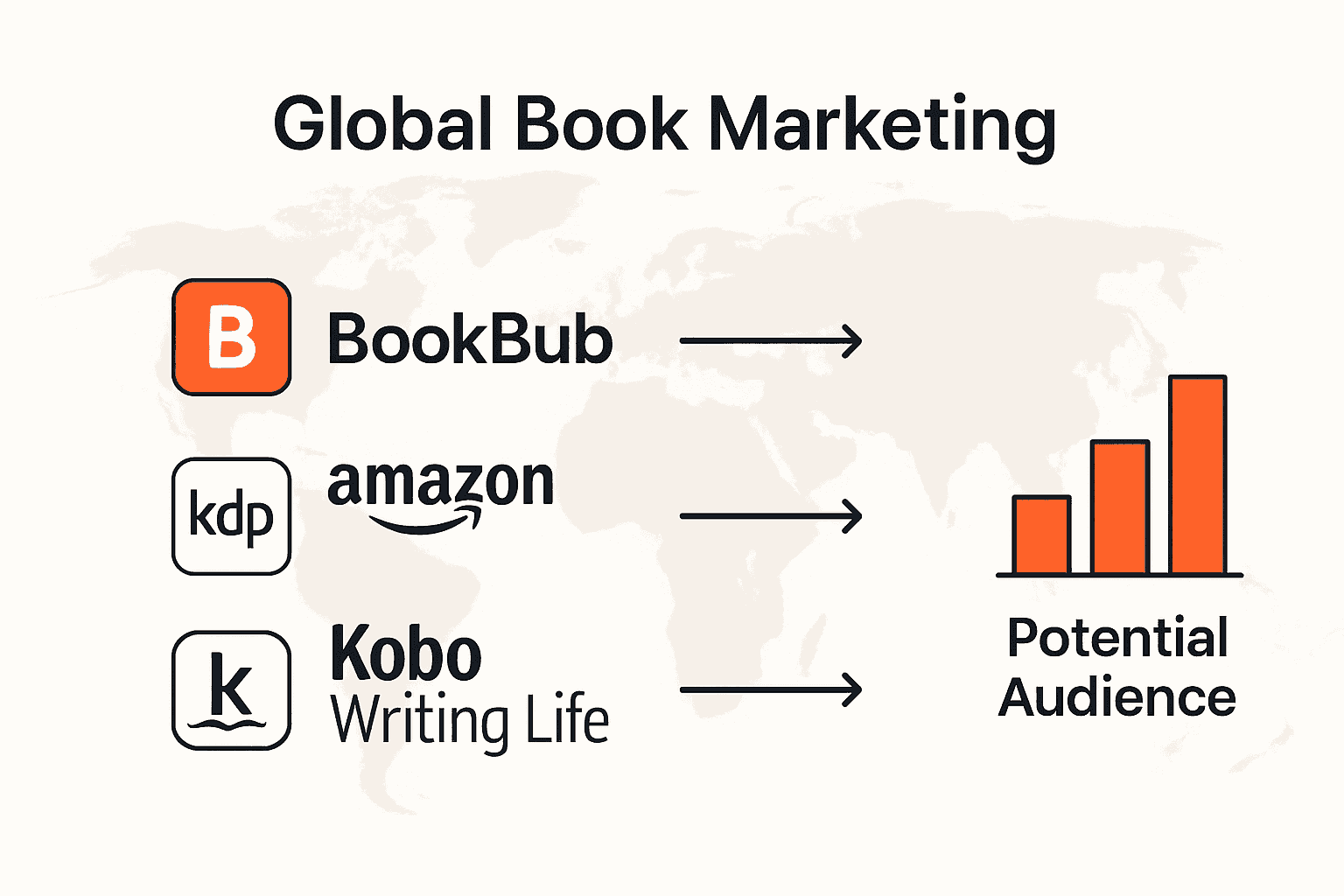 These websites connect authors directly with readers across different countries allowing you to build a truly global fan base.
In our next section we will explore how to create compelling multilingual marketing content that speaks directly to international readers.
Step 5: Track metrics and optimize marketing efforts
Transforming raw data into actionable marketing insights is how successful authors turn good books into bestsellers. Tracking the right metrics allows you to understand exactly what resonates with your readers and continuously improve your marketing strategy.
AI powered predictive analytics have revolutionized performance tracking. According to research from Nancy Rubin these advanced tools can increase email open rates by 25 to 30% and boost conversions up to 50%. This means you are not just collecting data you are gaining intelligent insights that help you make smarter marketing decisions.
Start by setting up comprehensive tracking for your email campaigns. According to KDP Kit monitoring performance of signup forms email sequences and automation is crucial. Pay attention to metrics like open rates click through rates subscriber growth and conversion rates. Each of these numbers tells a story about how effectively you are connecting with potential readers.
Pro Tip: Use UTM parameters in your marketing links to track exactly which channels and content drive the most engagement.
Dont just collect metrics analyze them strategically. Look for patterns in when readers engage most with your content. Are morning emails more effective? Do certain subject lines generate higher open rates? Do readers from specific demographics respond better to particular types of content?
Segmentation becomes your secret weapon. Break down your audience into smaller groups based on reading preferences purchasing behavior and engagement levels. This allows you to create hyper targeted marketing messages that feel personal and relevant.
Regularly review and adjust your marketing strategies based on these insights. What worked six months ago might not work today. The book marketing landscape evolves rapidly and your ability to adapt quickly will set you apart from other authors.
In our final section we will explore how to build a sustainable long term author marketing ecosystem that grows with your career.
Ready to Transform Your Book Sales Strategy for 2025?
Are you feeling overwhelmed by the challenges of building an author brand, developing a loyal global audience, and mastering complex AI marketing tools? The latest article highlighted the crucial steps to succeed in the fast-changing book market. Topics like email automation, predictive analytics, and international outreach can feel daunting without clear guidance. But you do not have to figure this out alone.
Take the next step to sell more books worldwide. Discover proven systems and hands-on support at Digital Marketing Authors, where 13x #1 Amazon bestselling author C.T. Mitchell teaches you how to automate reader list-building, leverage AI for smarter campaigns, and create a brand that truly stands out. Go beyond guesswork. Start building your enduring author business today with step-by-step training and expert resources. Don’t let another month slip by—visit Digital Marketing Authors now and gain the real competitive edge.
Frequently Asked Questions
How can I define my author brand to reach a global audience?
To define your author brand, identify the unique aspects of your writing style, core message, and visual identity. Create an audience persona document that outlines the demographics and interests of your ideal readers, focusing on how you can resonate with them globally.
What types of reader magnets work best for building my email list?
Effective reader magnets include free short stories, exclusive chapter previews, or genre-specific guides. Develop a compelling reader magnet that provides immediate value to potential subscribers, encouraging them to join your email list within days of your book’s release.
How can I effectively use AI for my book marketing campaigns?
Utilize AI tools to generate engaging content, create targeted ad campaigns, and design eye-catching graphics for your book. Start by experimenting with AI-generated ads and analyze which variations drive the most engagement, optimizing your approach over a month-long testing period.
What should I include in my international book marketing strategy?
In your international strategy, focus on diverse distribution platforms, cultural preferences, and localized marketing content. Research and adapt your book’s metadata and marketing language to resonate with different cultures, aiming for a significant increase in global visibility.
How do I track the success of my book marketing efforts?
Track engagement metrics such as email open rates, click-through rates, and subscriber growth to gauge your marketing success. Set up a review process every month to analyze this data, allowing you to refine your strategies based on what resonates best with your audience.
What are the best practices for optimizing my book’s metadata?
Optimize your book’s metadata by using relevant keywords, including those in multiple languages if targeting international readers. Review and update your metadata regularly to improve searchability and visibility across various platforms, aiming for an increase in visibility in global markets.
Recommended
- How To Sell More Books In 2018
- bestselling author strategy Archives – DigitalMarketingAuthors.com
- book marketing Archives – DigitalMarketingAuthors.com
- book marketing strategies for authors Archives – DigitalMarketingAuthors.com
- Top Content Promotion Strategies for 2025 Success
- DIY Artbook Publishing: Create Stunning Visual Collections – The Mansion Press

7 Essential Types of Book Marketing Every Author Should Know
Did you know that over 70 percent of readers discover new authors through digital channels? In a world where your next fan could be scrolling on their phone, mastering book marketing is no longer an option, it is the difference between being seen and being overlooked. Whether you are just starting out or looking to grow your presence, the right strategies can help you build loyal readers, boost your visibility, and turn your passion into a thriving author brand.
Quick Summary
| Takeaway | Explanation |
|---|---|
| 1. Build an authentic author brand on social media. | Utilize platforms where your readers are active. Focus on quality content that reflects your personality and writing journey. |
| 2. Cultivate a dedicated email reader list. | Treat your email list as a personal community. Offer valuable content to engage and connect with readers directly. |
| 3. Optimize your Amazon metadata for visibility. | Use precise keywords and compelling descriptions to help readers discover your book among many options. |
| 4. Generate genuine book reviews for trust. | Focus on authentic feedback from readers. Utilize strategies like advance copies and engaging with book communities to build trust. |
| 5. Leverage AI tools to automate marketing tasks. | Use AI as an assistant for content generation and data analysis, but maintain your unique voice in marketing efforts. |
Table of Contents
- Social Media Marketing For Author Branding
- Email Marketing To Build Loyal Reader Lists
- Amazon Optimization For Increased Book Visibility
- Leveraging Book Review Strategies For Trust
- Paid Advertising To Drive Book Sales Fast
- Collaboration And Cross-Promotion With Other Authors
- Using Ai Tools For Smarter Book Marketing Automation
1. Social Media Marketing for Author Branding
Social media is no longer optional for authors. It’s a powerful platform to build your brand, connect with readers, and transform casual followers into dedicated fans.
Your author brand transcends book sales. It represents your unique voice, writing style, personality, and the emotional connection you create with readers. Social media platforms like Instagram, Twitter, and Facebook offer unprecedented opportunities to showcase who you are beyond your written work.
Building an authentic social media presence requires strategic thinking. Start by selecting platforms where your target readers spend time. A fiction romance writer might find more engagement on Instagram, while a technical nonfiction author could thrive on LinkedIn. Choose quality over quantity.
Content strategy matters more than follower count. Share behind the scenes glimpses of your writing process, book research, personal inspirations, and character development. Learn more about creating a magnetic author brand that keeps readers coming back.
Effective author social media marketing involves:
- Consistent posting schedule
- Authentic storytelling
- Engaging visual content
- Direct interaction with followers
- Sharing relevant industry insights
Remember readers want connection. They want to know the human behind the books. Show your personality. Be genuine. Share your writing struggles, celebrate your wins, and create a community that feels personally invested in your journey.
Pro tip: Invest time in understanding each platform’s unique audience and content style. What works on TikTok will differ dramatically from LinkedIn. Tailor your approach accordingly.
2. Email Marketing to Build Loyal Reader Lists
Your email list represents the most powerful marketing asset an author can develop. Unlike social media platforms where algorithms control visibility, an email list gives you direct communication with readers who genuinely want to hear from you.
Building a reader list is about quality over quantity. You want passionate readers who are excited about your writing journey and upcoming books. Think of your email list as a private community where fans feel personally connected to your work.
Start by creating an irresistible lead magnet something that provides genuine value. This could be a free short story, exclusive chapter preview, character backstory, or writing resource that aligns with your book genre. Explore advanced strategies for building your reader list and convert casual readers into dedicated fans.
Effective email marketing for authors involves:
- Consistent communication
- Personalized content
- Exclusive reader rewards
- Transparent relationship building
- Strategic book launch announcements
Your email content should feel like a personal conversation. Share writing updates, behind the scenes glimpses, character inspirations, and book research journeys. Readers want to feel invested in your creative process.
Pro tip: Segment your email list based on reader interests. A fantasy writer might create different tracks for hardcore fantasy fans versus casual genre readers. Personalization increases engagement and loyalty.
Remember email marketing is a relationship building tool. Treat your subscribers like valued friends. Be authentic. Be generous. And most importantly be the storyteller they cannot wait to hear from.
3. Amazon Optimization for Increased Book Visibility
Amazon is not just a bookstore. It is a sophisticated search engine where strategic optimization can mean the difference between becoming a bestseller or remaining undiscovered. Your book’s success depends on understanding Amazon’s complex algorithm and positioning your work strategically.
Metadata is your secret weapon. Every single detail from your book title and subtitle to keywords and categories can dramatically impact your discoverability. Think of metadata as the digital GPS that helps readers find your book among millions of competing titles.
Explore advanced book promotion tactics that can transform your Amazon presence. Your goal is to signal to Amazon’s algorithm that your book is relevant and engaging.
Key strategies for Amazon optimization include:
- Selecting precise book categories
- Writing compelling book descriptions
- Using all 7 available keyword slots
- Encouraging genuine reader reviews
- Maintaining consistent book pricing
Your book cover is your first marketing weapon. Professional design signals quality and attracts potential readers scrolling through search results. A great cover communicates genre, mood and promises the reading experience potential buyers can expect.
Understand Amazon’s ranking system. The more books you sell within a short timeframe the higher you climb in category rankings. This visibility creates a powerful snowball effect where increased visibility leads to more sales.
Pro tip: Update your book metadata periodically. Amazon algorithms change and so do reader search patterns. Stay flexible and willing to experiment with different keyword combinations and category placements.
4. Leveraging Book Review Strategies for Trust
Book reviews are the digital currency of reader trust. Potential readers scan reviews before making purchasing decisions a critical factor that can make or break your book’s success.
Authentic reviews are more valuable than paid endorsements. Readers can quickly spot manufactured praise. Your goal is to cultivate genuine feedback from readers who truly connected with your work. Discover effective strategies to build reader trust quickly and transform casual readers into loyal fans.
Reviews serve multiple purposes beyond social proof. They provide valuable feedback about your writing, help Amazon’s recommendation algorithms, and signal credibility to potential readers. A book with multiple thoughtful reviews looks more professional and trustworthy.
Strategies for generating authentic book reviews include:
- Offering advance reader copies
- Engaging with book blogger communities
- Creating a simple review request process
- Targeting readers in your specific genre
- Encouraging honest feedback
Never purchase fake reviews. Amazon regularly purges artificial reviews and can penalize authors who attempt to game the system. Authentic connections matter more than inflated numbers.
Reach out to readers who have enjoyed similar books in your genre. Book review groups on Goodreads social media platforms and specialized reader forums can be excellent resources for finding genuine reviewers.
Pro tip: Make leaving a review as easy as possible. Provide direct links. Write clear instructions. Show appreciation for every single review readers take time to write.
5. Paid Advertising to Drive Book Sales Fast
Paid advertising represents a powerful accelerator for book sales when executed strategically. Unlike organic marketing which builds slowly paid advertising allows authors to reach targeted readers rapidly and precisely.
Targeted advertising is about smart spending not massive budgets. You do not need thousands of dollars to create effective book promotions. Explore advanced book advertising techniques that maximize your return on investment.
The most effective platforms for book advertising include Facebook Ads Amazon Ads BookBub Ads and targeted social media campaigns. Each platform offers unique advantages for different book genres and reader demographics.
Effective paid advertising strategies involve:
- Precise audience targeting
- Compelling visual creatives
- Clear call to action messaging
- Tracking and analyzing performance
- Continuous campaign refinement
Understand your target reader deeply. What are their interests? What other books do they read? What online communities do they frequent? The more precisely you can define your audience the more efficient your advertising spend becomes.
Start with small test budgets. Most platforms allow you to spend as little as five dollars per day. Experiment with different ad variations track your results and double down on what works. Successful advertising is about continuous learning and optimization.
Pro tip: Create multiple ad variations to test different images copy and targeting. What resonates with romance readers might not work for science fiction fans. Be willing to pivot quickly based on real data.
6. Collaboration and Cross-Promotion with Other Authors
Authors are not competitors. They are potential allies in a collaborative ecosystem where mutual support can exponentially expand reader reach. Cross promotion transforms individual marketing efforts into a powerful network of shared opportunities.
Strategic author collaboration multiplies your visibility. Explore innovative cross-platform promotion strategies that can transform your book marketing approach and connect you with broader audiences.
Think beyond traditional networking. Modern author collaboration involves creative exchange of reader audiences platforms and marketing resources. Your fellow genre writers are not rivals they are potential partners in building a robust reading community.
Effective collaboration strategies include:
- Joint newsletter features
- Bundled book promotions
- Shared social media takeovers
- Collaborative podcast or video interviews
- Anthology or boxset contributions
Target authors writing in similar genres or complementary writing styles. A science fiction writer might collaborate with a technology blogger. A romance novelist could partner with writers exploring relationship dynamics.
Reach out professionally. Offer genuine value. Show how collaboration benefits both parties. Be specific about what you bring to the partnership. Demonstrate your understanding of their audience and brand.
Pro tip: Build relationships before you need them. Engage authentically in author communities. Comment on their posts. Share their work. Genuine connections create natural collaborative opportunities.
7. Using AI Tools for Smarter Book Marketing Automation
Artificial intelligence is transforming book marketing from a time consuming manual process into a streamlined strategic approach. AI tools can help authors work smarter not harder by automating repetitive tasks and providing data driven insights.
AI is your marketing assistant not a replacement for human creativity. Learn advanced strategies to automate book sales and reclaim hours of productive writing time.
Modern AI tools can assist authors in multiple marketing dimensions. They can generate social media content analyze reader demographics craft targeted email sequences and even predict potential book market trends.
Practical AI marketing applications include:
- Content generation for social posts
- Personalized email marketing
- Audience segmentation
- Predictive sales analytics
- Targeted advertising optimization
Start with user friendly AI tools that integrate seamlessly into your existing marketing workflow. Experiment with generative AI for creating book descriptions social media captions and newsletter content. But always review and personalize the output to maintain your unique voice.
Understand that AI is a tool for enhancement not a complete replacement for human creativity. Your personal storytelling authentic connection and unique perspective remain the core of successful book marketing.
Pro tip: Treat AI as your marketing assistant. Use it to generate ideas draft initial content and provide strategic insights. Your human touch transforms AI generated content into something truly compelling.
Below is a comprehensive table summarizing the key strategies and considerations for author branding and marketing through various digital platforms discussed in the article.
| Topic | Strategies & Implementation | Benefits/Outcomes |
|---|---|---|
| Social Media Marketing | Select platforms based on target audience; Focus on authentic content like writing process and storytelling. | Build author brand; Connect with readers; Create engaged fanbase. |
| Email Marketing | Develop quality email list; Use lead magnets like free stories; Segment list for personalized content. | Direct communication with fans; Build loyalty; Higher engagement. |
| Amazon Optimization | Use metadata precisely; Select accurate categories; Keep book covers professional. | Increase book visibility; Improve discoverability; Boost sales rankings. |
| Book Review Strategies | Offer advance copies; Engage with book bloggers; Simplify review requests. | Gain reader trust; Enhance credibility; Better Amazon recommendations. |
| Paid Advertising | Target audience precisely; Use compelling creatives; Test ad variations. | Rapid reach to readers; Increase book sales; Optimize ad spend efficiency. |
| Collaboration | Partner with authors in similar genres; Joint promotions and newsletters. | Expand audience reach; Mutual promotion benefits; Community building. |
| AI Tools for Marketing | Automate tasks like content generation; Analyze reader data; Optimize advertising. | Save time; Data-driven insights; Enhance strategies with AI. |
Turn Book Marketing Knowledge into Real Sales and Loyal Readers
Are you feeling overwhelmed by all the moving parts of modern book marketing? You are not alone. Many authors struggle to build an authentic online presence, grow a loyal reader list, and get discovered on platforms like Amazon. The article highlights essential but complex areas such as social media branding, email marketing, Amazon optimization, and AI-powered automation. Without a proven system, the process can feel intimidating and time-consuming.
Take the next step and experience what focused, expert-backed support can do for your author career.
If you are ready to automate book sales, grow a passionate readership, and master everything from book promotion tactics to AI tools, now is your chance. Join other successful indie authors who have learned the secrets at Digital Marketing Authors. Visit our home page today and start building the profitable author brand you deserve.
Frequently Asked Questions
What types of social media marketing should I use for my author brand?
Effective social media marketing for your author brand includes platforms where your target readers engage, such as Instagram for fiction or LinkedIn for nonfiction. Start by identifying the platform that best suits your audience and create a consistent posting schedule to share insights about your writing process and personal journey.
How can I build an email list to connect with my readers?
Building an email list involves creating a valuable lead magnet, like a free short story or exclusive content, to encourage sign-ups. Aim to gather 100 passionate subscribers by offering regular updates and personal insights that make them feel part of your writing journey.
What are the best strategies for optimizing my book on Amazon?
To optimize your book on Amazon, focus on detailed metadata including your title, keywords, and categories. Revise your book’s description to highlight compelling elements that will draw readers in, updating this periodically to improve discoverability.
How can I generate authentic book reviews from readers?
You can generate authentic book reviews by offering advance reader copies to targeted audiences and simplifying the review process with clear instructions. Engage with specific reader communities to reach individuals who are likely to resonate with your work and ask for honest feedback.
What should I consider when using paid advertising for my book?
When using paid advertising, focus on precise audience targeting and compelling visuals to draw attention. Start with a small test budget, spending as little as five dollars a day, and analyze which variations yield the best engagement to refine your approach continuously.
How do I collaborate with other authors for cross-promotion?
To collaborate with other authors, identify those who write in similar genres and propose ideas for joint promotions like shared email newsletters or social media takeovers. Build genuine relationships by engaging with their content, which will make your collaboration proposal more appealing.
Recommended
- book marketing strategies for authors Archives – DigitalMarketingAuthors.com
- book marketing steps Archives – DigitalMarketingAuthors.com
- book marketing guide Archives – DigitalMarketingAuthors.com
- book marketing checklist Archives – DigitalMarketingAuthors.com
- 7 Content Curation Strategies Every Business Owner Needs – My Blog

Understanding What is Digital Marketing for Writers
Writers today are tapping into digital marketing for writers to take control of their success. More than 70 percent of self-published authors say online platforms have helped them reach new audiences and boost sales. It might sound like digital marketing is just about more tweets and flashy book covers, but that barely scratches the surface. The real shift is that writers can now bypass the old publishing gatekeepers and build lasting careers by connecting with readers directly—something that was almost impossible just a decade ago.
Table of Contents
- Defining Digital Marketing In The Context Of Writing
- The Importance Of Digital Marketing For Writers
- Key Concepts In Digital Marketing For Authors
- How Writers Utilize Digital Marketing Strategies
- Real-World Examples Of Successful Digital Marketing In Writing
Quick Summary
| Takeaway | Explanation |
|---|---|
| Build an author website or blog. | A central hub helps you connect with readers directly and showcase your work effectively. |
| Utilize social media for engagement. | Engaging on social platforms keeps your audience updated and fosters community-building. |
| Implement targeted email marketing. | Email campaigns nurture reader relationships and personalize communication with your audience. |
| Create diverse content to attract readers. | Offering various content types maintains reader interest and addresses their specific needs and preferences. |
| Control your marketing and distribution. | Digital marketing empowers you to engage directly with audiences, bypassing traditional publishing barriers. |
Defining Digital Marketing in the Context of Writing
Digital marketing for writers represents a strategic approach to promoting, distributing, and monetizing written content through online channels. Unlike traditional publishing methods, digital marketing empowers authors to directly connect with readers, build audiences, and create sustainable writing careers.
Core Components of Digital Marketing for Writers
At its foundation, digital marketing for writers encompasses several interconnected strategies designed to increase visibility and engagement. These strategies leverage digital platforms to transform how authors reach and interact with potential readers. According to Nielsen Norman Group’s content strategy research, effective digital marketing requires understanding audience needs and creating targeted content experiences.
To help clarify the essential elements of digital marketing for writers, the table below outlines the core components featured in the article.
| Core Component | Description |
|---|---|
| Author Website or Blog | Serves as a central hub for connecting with readers and showcasing work. |
| Social Media Engagement | Platforms for sharing updates, building a following, and communicating directly with readers. |
| Email Marketing | Campaigns and newsletters that nurture relationships and provide personalized communication. |
| Content Marketing | Creating and sharing valuable content that highlights writing expertise and attracts target readers. |
| Platform-specific Strategy | Tailoring content to suit the unique characteristics and audiences of each digital platform used. |
Key digital marketing approaches for writers include:
- Building an author website or blog as a central hub for connecting with readers
- Utilizing social media platforms to share writing updates and engage with audiences
- Creating email marketing campaigns to nurture reader relationships
- Developing content marketing strategies that showcase writing expertise
Strategic Online Presence
Successful digital marketing transcends mere self-promotion. It involves creating genuine connections and providing value to potential readers. Writers must think strategically about their online presence, understanding that each digital interaction represents an opportunity to build credibility and trust. Learn more about building your author platform and transforming casual readers into dedicated fans.
By mastering digital marketing techniques, writers can expand their reach beyond traditional publishing constraints, control their narrative, and create sustainable writing careers in an increasingly digital marketplace.
The Importance of Digital Marketing for Writers
Digital marketing has revolutionized how writers connect with audiences, transforming traditional publishing paradigms and creating unprecedented opportunities for independent authors. By understanding and implementing strategic digital marketing techniques, writers can significantly enhance their visibility, reader engagement, and potential income streams.
Breaking Traditional Publishing Barriers
Historically, writers depended on publishing houses to distribute and market their work. Digital marketing dismantles these traditional barriers, allowing authors to become their own publishers and marketers. Research from the American Library Association indicates that digital platforms enable writers to bypass traditional gatekeepers and directly reach their target audiences.
Critical advantages of digital marketing for writers include:
- Complete control over publishing and distribution channels
- Direct relationship building with readers
- Cost-effective marketing strategies
- Global reach without geographical limitations
Economic and Professional Empowerment
Digital marketing is not just about promotion but represents a comprehensive strategy for professional growth. Writers can monetize their skills through multiple digital channels, creating diverse revenue streams beyond traditional book sales. Discover advanced author marketing strategies that transform writing from a passion into a sustainable career.
By embracing digital marketing, writers unlock the potential to build personal brands, cultivate loyal reader communities, and establish themselves as authoritative voices in their respective genres. The digital landscape offers writers unprecedented opportunities to turn their creative talents into successful, self-directed careers.
This table highlights key advantages of digital marketing for writers, making it easy to compare its benefits over traditional publishing methods.
| Advantage | Explanation |
|---|---|
| Direct Control | Writers have full ownership of publishing, marketing, and distribution channels. |
| Relationship Building | Enables direct communication and stronger connections with readers. |
| Cost Efficiency | Digital strategies reduce dependency on expensive traditional marketing and distribution models. |
| Global Reach | Authors can access readers worldwide without geographic barriers. |
| Multiple Revenue Streams | Supports diversification of income through e-books, merchandise, and online courses beyond book sales. |
Key Concepts in Digital Marketing for Authors
Digital marketing for authors involves a sophisticated set of strategies and tools designed to create meaningful connections between writers and their potential readers. Understanding these core concepts transforms digital platforms from mere communication channels into powerful author engagement mechanisms.
Content Strategy and Audience Targeting
Successful digital marketing begins with developing a precise content strategy that resonates with specific reader demographics. According to Content Marketing Institute’s research, targeted content that addresses reader interests dramatically increases engagement and conversion rates.
Essential audience targeting principles include:
- Identifying precise reader persona characteristics
- Understanding reader preferences and consumption habits
- Creating content that solves reader problems or fulfills specific needs
- Analyzing audience engagement metrics continuously

Digital Channel Optimization
Modern authors must strategically leverage multiple digital channels to maximize their visibility and reader interaction. Each platform offers unique opportunities for building author brands and connecting with potential readers. Learn more about optimizing your author marketing channels and expanding your digital presence effectively.
Key digital marketing channels for authors include social media platforms, personal websites, email newsletters, and content marketing blogs.
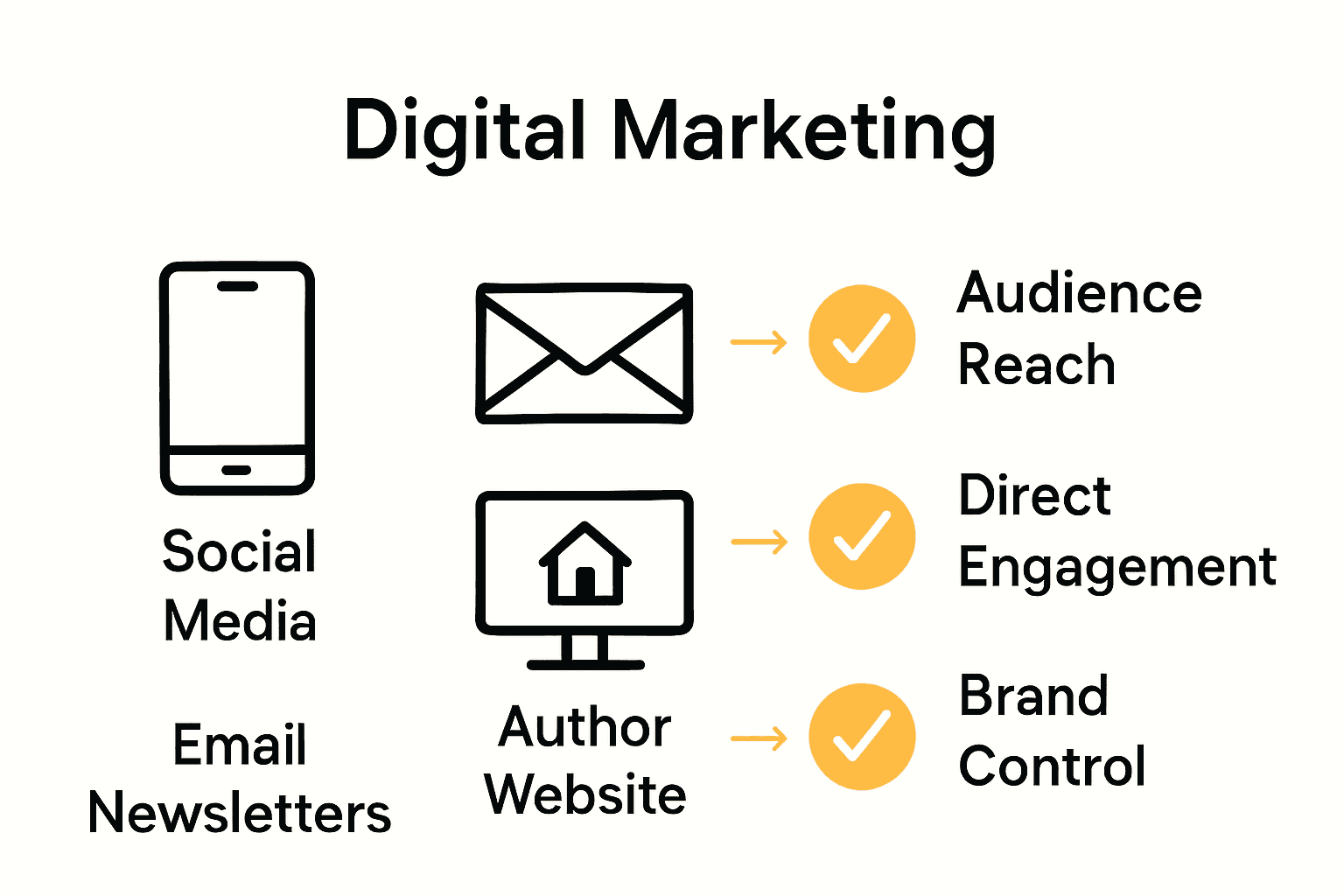 Successful writers understand how to craft platform-specific content that attracts and retains reader attention, transforming casual browsers into dedicated fans and long-term supporters of their writing journey.
How Writers Utilize Digital Marketing Strategies
Digital marketing strategies provide writers with sophisticated tools to transform their writing careers from isolated creative pursuits into dynamic, interactive reader experiences. By implementing targeted approaches, authors can effectively amplify their reach and build sustainable professional platforms.
Content Distribution and Community Building
Modern writers leverage digital platforms to create comprehensive engagement ecosystems around their work. Research from the University of Nebraska–Lincoln demonstrates that authors who strategically collaborate with influencers and use targeted advertising can significantly enhance their professional visibility.
Strategic content distribution techniques include:
- Creating serialized content across multiple digital platforms
- Developing consistent brand messaging
- Engaging directly with reader communities
- Utilizing cross-platform promotional strategies
Monetization and Professional Expansion
Digital marketing enables writers to diversify their income streams beyond traditional book sales. Explore advanced author marketing techniques to transform writing from a passion into a sustainable professional endeavor.
Successful writers understand that digital marketing is not about constant self-promotion but creating genuine connections. By sharing insights, behind-the-scenes content, and meaningful interactions, authors can convert casual readers into dedicated fans who actively support their creative journey.
Real-World Examples of Successful Digital Marketing in Writing
Digital marketing success for writers goes beyond theoretical strategies. Real authors have transformed their careers by implementing innovative digital approaches that connect directly with readers and create sustainable professional platforms.
Case Studies of Author Digital Engagement
Independent and traditional authors alike have demonstrated remarkable success through strategic digital marketing. According to Harvard Business Review’s publishing research, authors who effectively leverage digital channels can dramatically increase their visibility and reader engagement.
Characteristics of successful author digital marketing include:
- Creating authentic, consistent online personas
- Developing multi-platform content strategies
- Building interactive reader communities
- Utilizing data-driven marketing approaches
Strategic Platform Diversification
Successful writers understand that digital marketing requires more than just promoting books. Learn about advanced author marketing strategies that transform writing careers through strategic online positioning.
Authors like Hugh Howey, who built a massive science fiction readership through self-publishing platforms, and Amanda Hocking, who became a millionaire through digital marketing of young adult novels, demonstrate the transformative power of understanding and implementing sophisticated digital marketing techniques. These writers did not just sell books they created entire reader ecosystems that supported their ongoing creative work.
Ready to Turn Digital Strategy into Real Book Sales?
Are you struggling to break through the noise online, connect with real readers, or grow your author brand on your own terms? The article showed how mastering digital marketing can shatter old publishing barriers, help you build reader communities, and create consistent income without gatekeepers. But reading about effective content strategies and audience targeting is just the first step. What if you could put these proven methods into action right now—and watch your writing career transform?
Stop worrying about how to attract loyal fans or increase sales. At Digital Marketing Authors, we empower writers using step-by-step systems built for indie author success. Learn to automate your book sales, grow your fanbase with AI-powered tools, and stand out faster. Get started today and elevate your writing career by visiting our site or exploring advanced tips in our author platform guide and social media marketing strategy blog. Take action now and claim control over your author journey.
Frequently Asked Questions
What is digital marketing for writers?
Digital marketing for writers is a set of strategies that helps authors promote, distribute, and monetize their written content online. To get started, create an author website or blog that serves as a central hub for your work and connects you directly with readers.
How can I build an online presence as a writer?
You can build an online presence by using social media platforms to share updates on your writing and engage with your audience. Start by selecting two to three platforms that resonate with your target readers, and post regularly to keep them informed and connected.
What are effective content marketing strategies for authors?
Effective content marketing strategies for authors include showcasing your writing expertise through blog posts, articles, and engaging social media content. Prioritize consistency by creating a content calendar and aim to publish new content at least once a week to keep your audience engaged.
How can I nurture relationships with my readers through email marketing?
To nurture relationships with readers, implement email marketing campaigns that share insights, updates, and exclusive content. Start by building an email list and send personalized newsletters at least once a month to keep readers connected and informed about your writing journey.
What techniques can I use for audience targeting in my digital marketing?
You can target your audience effectively by identifying their specific interests and preferences, and tailoring your content to meet their needs. Conduct surveys or engage with your audience on social media to gather insights and refine your targeting strategies within 30 days.
How does digital marketing empower writers financially?
Digital marketing empowers writers financially by allowing them to diversify their income streams beyond traditional book sales, such as through e-books, merchandise, or online courses. To enhance your financial opportunities, explore at least three different monetization methods within the first six months of your digital marketing efforts.
Crucial first step in digital marketing for writers
Recommended
- Fiction Authors –
- An Author’s Successful Social Media Marketing Campaign – DigitalMarketingAuthors.com
- Marketing Archives – DigitalMarketingAuthors.com
- social media marketing for authors Archives – DigitalMarketingAuthors.com