
- You are here:
- Home »
- content marketing
Tag Archives for " content marketing "

Influencer Marketing for Authors: Complete Guide
More than 60 percent of readers now discover new books through online personalities instead of traditional advertising, changing how authors reach their audience. As publishing grows more competitive, building real connections with readers is crucial for success. Understanding influencer marketing can empower authors to partner with credible voices, expand their visibility, and spark authentic interest in their stories.
Table of Contents
- Defining Influencer Marketing for Authors
- Types of Influencers in Book Promotion
- How Influencer Collaborations Work for Authors
- Benefits and Drawbacks for Indie Authors
- Legal, Ethical, and Disclosure Requirements
- Avoiding Common Mistakes and Pitfalls
Key Takeaways
| Point | Details |
|---|---|
| Strategic Partnerships | Influencer marketing empowers authors to collaborate with content creators who genuinely connect with their audience, enhancing book visibility. |
| Target Audience Alignment | Successful influencer campaigns necessitate careful selection of influencers who align with the author’s target demographic and literary sensibilities. |
| Content Authenticity | Authentic recommendations from influencers lead to deeper engagement and trust from potential readers, making genuine connections crucial. |
| Legal and Ethical Compliance | Authors must adhere to legal guidelines and ethical standards in influencer partnerships to maintain transparency and audience trust. |
Defining Influencer Marketing for Authors
Influencer marketing transforms how authors connect with potential readers by leveraging individuals with established audiences and credible platforms. According to research from hmjournals.com, this marketing strategy involves collaborating with prominent individuals who can authentically promote books and build strong audience connections.
At its core, influencer marketing for authors means partnering with content creators, book reviewers, social media personalities, and literary thought leaders who can introduce your work to their engaged followers. These influencers aren’t just random promoters – they’re strategic allies who understand storytelling, reader preferences, and how to spark genuine interest in your writing.
Key Components of Author Influencer Marketing
Successful influencer partnerships typically involve several strategic approaches:
- Authentic Recommendations: Influencers who genuinely appreciate your genre and writing style
- Targeted Reach: Connecting with audiences most likely to enjoy your specific type of book
- Credible Storytelling: Creating narrative-driven content that goes beyond simple book promotion
As computational studies from arxiv.org suggest, effective influencer marketing requires nuanced research considering contextual factors. For authors, this means finding influencers who align not just numerically with your target audience, but who share similar literary sensibilities and reader engagement styles.
Ultimately, influencer marketing represents a powerful way for authors to transcend traditional promotional boundaries. Content marketing strategies for authors can amplify these efforts, creating a comprehensive approach to building readership and book sales.
Types of Influencers in Book Promotion
Book influencers represent a diverse ecosystem of content creators who can dramatically impact an author’s visibility and sales potential. From traditional book reviewers to emerging digital platforms, these influencers offer unique pathways to connect with potential readers across multiple channels.
Digital Platform Influencers
In the digital age, social media platforms have become powerful book promotion channels. Wikipedia highlights BookTok as a prime example, where TikTok users share book reviews and recommendations that can significantly influence book sales and popularize specific titles. This platform demonstrates how short-form video content can create viral book trends almost overnight.
Key Types of Book Promotion Influencers
Authors can leverage several distinct influencer categories:
Here’s a summary of common influencer types and their unique strengths for book promotion:
| Influencer Type | Platform Focus | Strengths |
|---|---|---|
| Book Bloggers | Websites & Blogs | In-depth reviews SEO impact |
| BookTubers | YouTube | Visual storytelling Wide reach |
| BookTok Creators | TikTok | Viral trends Young audiences |
| Instagram Reviewers | Visual appeal Quick engagement |
|
| Goodreads Influencers | Goodreads | Trusted reviews Reader communities |
| Podcast Hosts | Podcasts | In-depth discussions Loyal listeners |
- Book Bloggers: Long-form review specialists who provide deep literary analysis
- BookTubers: YouTube creators who create video reviews and literary discussions
- BookTok Creators: Short-form video content specialists on TikTok
- Instagram Book Reviewers: Visual content creators sharing book recommendations
- Goodreads Influencers: Community-driven reviewers with established reader followings
- Podcast Hosts: Literary discussion platforms with dedicated listener bases
When selecting influencers, authors must consider audience alignment, engagement rates, and genuine passion for their specific genre. Cross-promotion strategies for authors can help writers maximize these collaborative opportunities and expand their reader reach effectively.
Successful book promotion through influencers isn’t about sheer numbers – it’s about finding passionate storytellers who can authentically connect your work with readers who will genuinely appreciate your writing.
How Influencer Collaborations Work for Authors
Influencer collaborations transform traditional book marketing by creating authentic connections between authors and potential readers through strategic partnerships. These relationships go far beyond simple promotional transactions, developing nuanced engagement strategies that leverage the influencer’s established credibility and audience trust.
The Mechanics of Book Influencer Partnerships
Research from mdpi.com reveals how BookTubers interact with subscribers, demonstrating that successful collaborations involve multimodal content creation. This means authors can work with influencers across various formats – from video reviews and live discussions to Instagram stories and podcast features.
Collaboration Strategies
Effective influencer partnerships typically involve several key approaches:
- Advanced Screening: Identifying influencers whose audience matches your book’s target demographic
- Content Co-Creation: Developing unique, engaging content that feels natural to the influencer’s style
- Mutual Value Exchange: Ensuring both the author and influencer benefit from the collaboration
- Performance Tracking: Measuring engagement, reach, and potential book sales generated
According to research from arxiv.org, the most successful collaborations prioritize visual congruence between the author’s brand and the influencer’s content style. This alignment creates more authentic and compelling promotional experiences.
Author alliance strategies can help writers navigate these complex partnerships, turning influencer connections into powerful marketing opportunities. The goal isn’t just selling books – it’s about building lasting relationships with readers who are genuinely excited about your work.
Benefits and Drawbacks for Indie Authors
Influencer marketing presents a complex landscape for indie authors, offering tremendous opportunities alongside significant challenges. The potential to rapidly expand readership comes with nuanced considerations that require strategic navigation.
Potential Benefits for Independent Authors
Research from Wikipedia highlights how platforms like BookTok have become powerful promotional channels, enabling indie authors to reach wider audiences without traditional publishing constraints. These digital platforms democratize book discovery, allowing writers to bypass conventional marketing barriers.
Strategic Advantages and Potential Risks
Key benefits and challenges include:
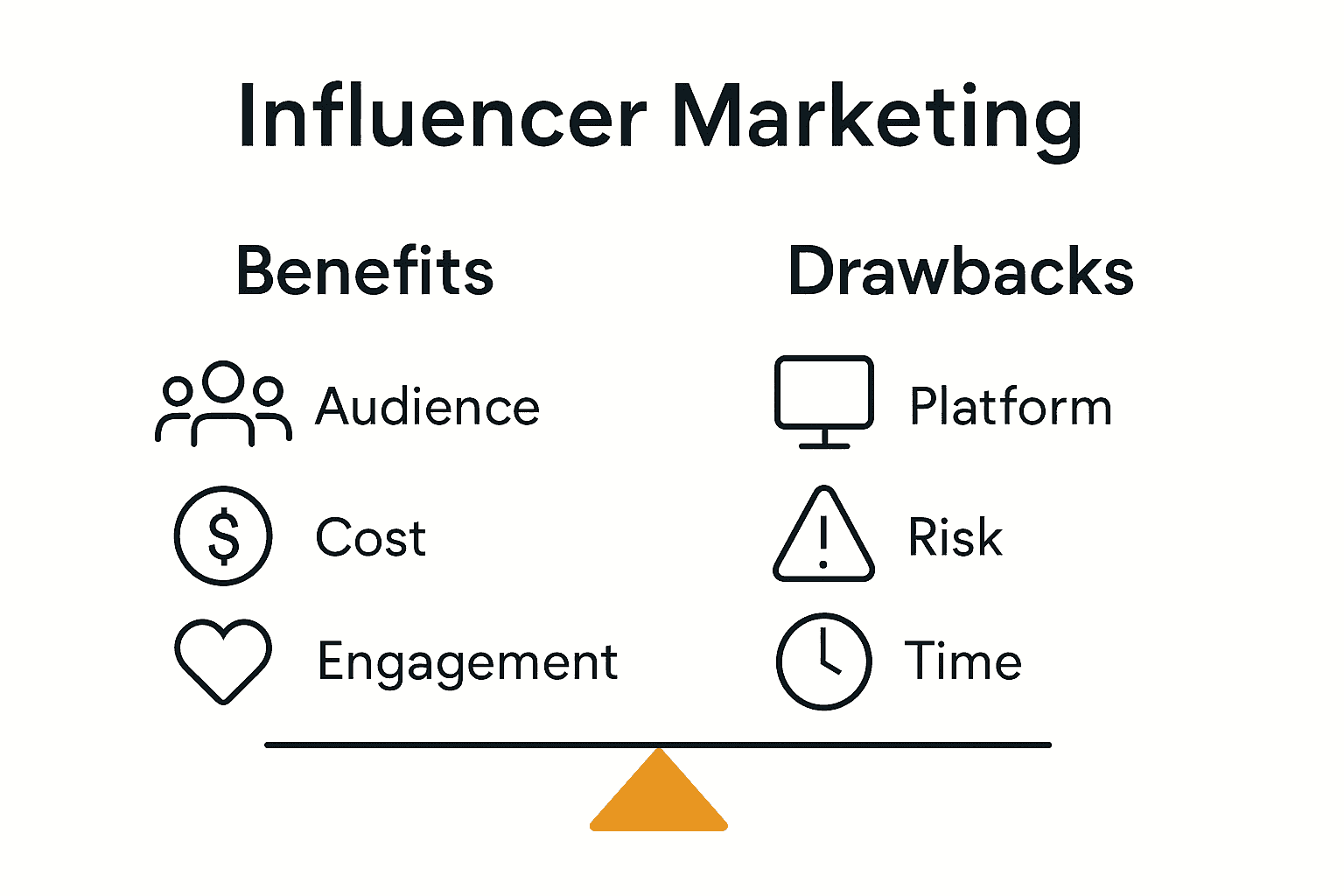
- Rapid Audience Expansion: Direct access to engaged reader communities
- Cost-Effective Marketing: Lower financial investment compared to traditional advertising
- Authentic Engagement: Personal connections with potential readers
- Platform Dependency: Risk of algorithm changes impacting visibility
- Inconsistent Results: Unpredictable promotional outcomes
- Time-Intensive Management: Significant effort required to maintain relationships
According to computational research from arxiv.org, indie authors must develop sophisticated methodologies for evaluating influencer performance.
 This involves carefully tracking engagement metrics, understanding audience alignment, and maintaining realistic expectations about collaboration outcomes.
Publishing independence strategies can help authors balance these complex dynamics, transforming potential challenges into strategic opportunities for building sustainable author brands.
Legal, Ethical, and Disclosure Requirements
Influencer marketing for authors demands rigorous adherence to legal and ethical standards that protect both content creators and their audiences. Transparency isn’t just a recommended practice – it’s a fundamental requirement in building trust and maintaining professional integrity.
Disclosure and Transparency Guidelines
According to research from the Journal of Public Policy & Marketing, marketing collaborations must prioritize clear communication about the nature of promotional relationships. For authors, this means explicitly disclosing any financial arrangements, free book copies, or potential conflicts of interest in influencer partnerships.
Key Legal and Ethical Considerations
Authors must navigate several critical compliance areas:
- Financial Transparency: Clearly indicate sponsored content or paid promotions
- Intellectual Property Rights: Ensure proper attribution and usage permissions
- Platform-Specific Regulations: Follow individual social media platform guidelines
- Authentic Representation: Maintain genuine enthusiasm and honest recommendations
- Audience Protection: Avoid misleading or manipulative marketing tactics
The landscape of ethical publishing requires constant vigilance. As Wikipedia highlights, unethical practices can undermine scholarly communication and reader trust, making transparent marketing crucial for long-term success.
Author brand growth strategies can help writers develop robust, ethical marketing approaches that respect both legal requirements and audience expectations. The goal is creating genuine connections, not exploitative promotions.
Avoiding Common Mistakes and Pitfalls
Influencer marketing for authors requires strategic navigation through complex promotional landscapes. Success demands more than simply connecting with popular content creators – it requires sophisticated understanding of potential missteps that can derail collaborative efforts.
Strategic Error Prevention
Research from Celebrity Studies highlights the critical importance of understanding nuanced interactions between authors and influencers. The most common mistakes often stem from misaligned expectations, inappropriate partnership selections, and inadequate communication strategies.
Critical Pitfalls to Avoid
Key mistakes indie authors frequently encounter include:
- Mismatched Audience Alignment: Partnering with influencers whose followers don’t match your book’s demographic
- Inauthentic Collaborations: Forcing relationships that feel transactional rather than genuine
- Unclear Performance Metrics: Failing to establish concrete collaboration goals
- Inconsistent Brand Representation: Allowing influencers to misrepresent your author brand
- Neglecting Legal Compliance: Overlooking disclosure and contractual requirements
According to computational research from arxiv.org, emerging technologies like generative AI are transforming marketing landscapes, emphasizing the need for ethical compliance and strategic human-technology collaboration. Authors must remain adaptable and informed about evolving marketing dynamics.
Email marketing strategies can complement influencer efforts, providing additional channels to mitigate potential promotional risks and create more comprehensive outreach approaches.
Unlock the Full Potential of Influencer Marketing for Your Author Brand
If you are struggling to build authentic connections with readers or feeling overwhelmed by the complex influencer landscape described in “Influencer Marketing for Authors: Complete Guide,” you are not alone. Many indie authors face challenges like finding the right influencers who truly align with their genre, managing collaborations that feel genuine, and navigating legal and ethical requirements. You want to grow your audience, boost book sales, and build lasting reader relationships without wasting precious time or money on trial and error.
At Digital Marketing Authors, founded by 13x #1 Amazon bestselling author C.T. Mitchell, we specialize in helping authors like you master influencer marketing and integrate it with powerful digital strategies. From crafting targeted influencer collaborations to leveraging AI tools that amplify your reach and automate your email marketing, our proven systems empower you to market smarter, sell faster, and scale your readership worldwide.
Don’t let the complexities of influencer marketing hold your author career back. Visit Digital Marketing Authors now to explore our game-changing strategies and start transforming your book promotion. When you combine authentic influencer partnerships with expert marketing guidance, success is within reach. Take control of your author brand and watch your audience grow today.
Frequently Asked Questions
What is influencer marketing for authors?
Influencer marketing for authors involves collaborating with content creators, book reviewers, and social media personalities to promote books to their engaged audiences, helping authors connect with potential readers authentically.
How do I find the right influencers for my book?
To find the right influencers, analyze their audience demographics, engagement rates, and alignment with your book’s genre and themes. Look for influencers who have a genuine passion for storytelling and a strong connection with their followers.
What are the benefits of collaborating with book influencers?
Collaborating with book influencers can provide rapid audience expansion, cost-effective marketing solutions, authentic engagement with potential readers, and increased visibility without traditional publishing constraints.
What legal and ethical considerations should I keep in mind when working with influencers?
When working with influencers, ensure financial transparency, proper attribution of intellectual property, adherence to platform-specific regulations, and maintain authentic representation in your marketing efforts.
FREE Resource – Build Your Reader Army
Download Reader Army Growth Free
Recommended
- Digital Marketing for Authors Guide: Boost Book Sales Fast – DigitalMarketingAuthors.com
- TikTok for authors Archives – DigitalMarketingAuthors.com
- writing journey Archives – DigitalMarketingAuthors.com
- social media marketing for writers Archives – DigitalMarketingAuthors.com
- 7 Top Digital Trends 2025 You Must Know for Growth

Digital Marketing for Writers: Grow and Sell More Books
Nearly 70% of self-published authors struggle to reach their ideal readers and grow book sales effectively. Without a clear marketing plan, even the best writing can go unnoticed. Understanding practical strategies for defining your audience, building an author platform, and using smart tools can help transform your book’s visibility and sales results.
Table of Contents
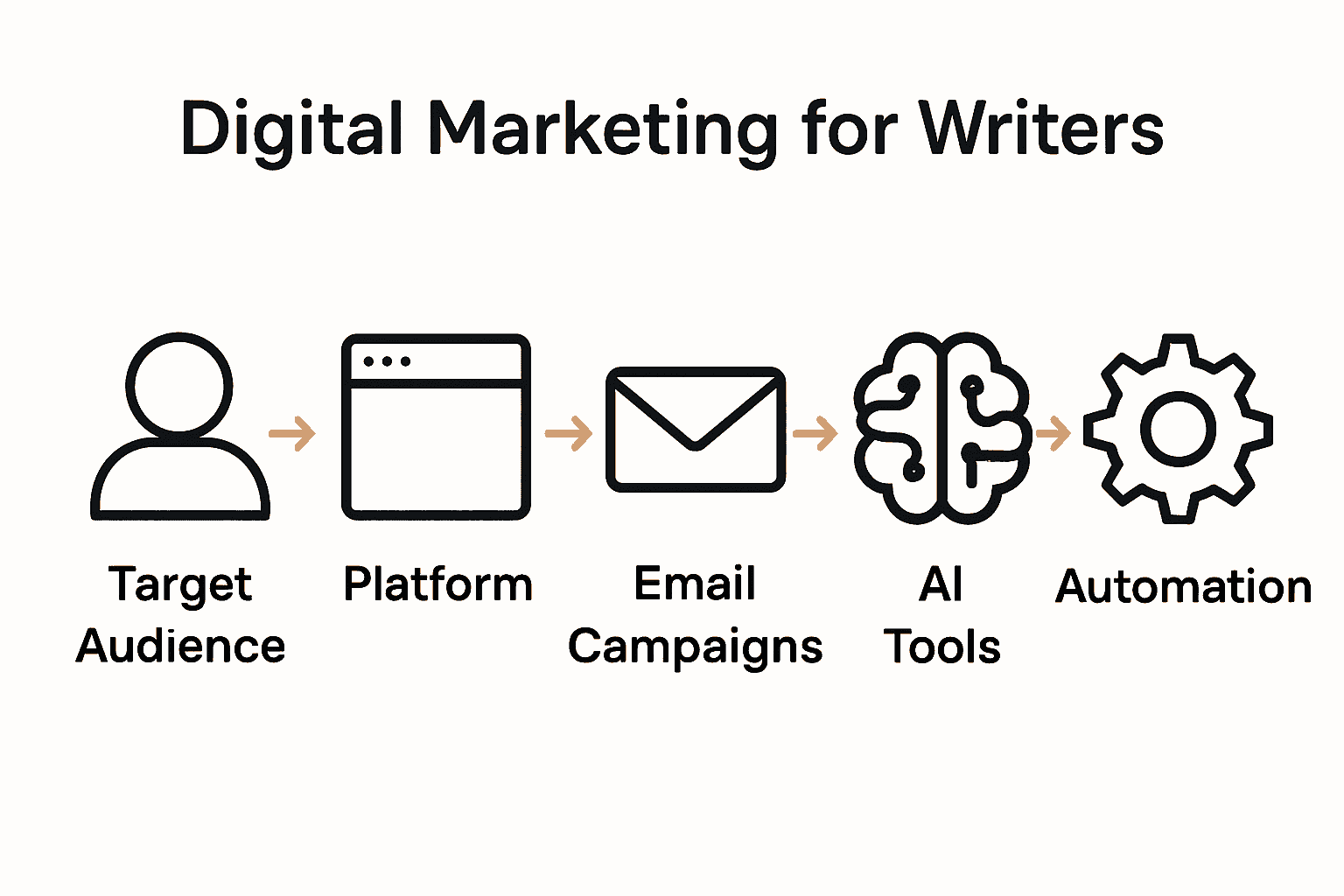
- Step 1: Define Your Target Audience And Author Goals
- Step 2: Build A Professional Author Platform
- Step 3: Craft Compelling Email Marketing Campaigns
- Step 4: Leverage Ai Tools To Boost Visibility
- Step 5: Automate Book Sales And Optimize Results
Quick Summary
| Key Point | Explanation |
|---|---|
| 1. Define your audience meticulously | Understand demographics and psychological traits to effectively target your book’s readers. |
| 2. Build a cohesive author platform | Create a professional website, active blog, and social media presence to connect with readers. |
| 3. Craft personalized email marketing | Segment your email list and create engaging content to convert casual readers into loyal fans. |
| 4. Leverage AI tools for efficiency | Use AI to automate tasks like content generation and ad optimization, freeing up your time for writing. |
| 5. Automate marketing processes | Set up automated systems for advertising and email marketing that work continuously without manual input. |
Step 1: Define your target audience and author goals
Successful book marketing starts with crystal clear understanding of who will read your book and what you want to achieve. This foundational step determines every subsequent marketing strategy you will develop.
Begin by creating a detailed reader persona that goes beyond basic demographics. According to research from digital marketing experts, effective audience targeting requires understanding not just age and location but deeper psychological characteristics like reading habits, interests, and pain points.
Ask yourself specific questions about your ideal reader: What motivates them to pick up a book like yours? What problems are they trying to solve? What emotional experience are they seeking? For instance, a romance novelist might target professional women aged 30-45 who want escapist literature after stressful workdays.
Align your specific author goals with your audience research. Are you aiming to:
- Build a loyal reader community
- Generate consistent book sales
- Establish yourself as an authority in your genre
- Create a sustainable author income stream
- Expand your readership internationally
Research indicates that authors who precisely define both audience and objectives are 67% more likely to create targeted marketing campaigns that actually work.
Pro Tip: Update your reader persona every six months as your writing career evolves and you gain more insights about your audience.
Next, you will map out a strategic marketing approach that speaks directly to your carefully defined reader persona.
Step 2: Build a professional author platform
Your author platform is your digital home base where readers discover and connect with your writing. It transforms you from an unknown writer to a recognized brand with consistent online presence.
According to digital marketing research from Elsevier’s marketing strategies guide, an effective author platform integrates multiple digital touchpoints to maximize audience reach. This means creating a cohesive online ecosystem that tells your unique storytelling narrative.
Start by establishing these core digital assets:
Here’s a comparison of the core elements of a professional author platform:
| Element | Purpose | Key Tips |
|---|---|---|
| Author Website | Main information hub | Clean design Clear branding |
| Blog | Showcases expertise and updates | Consistent posts Engage readers |
| Social Media Profiles | Builds community and discoverability | Focus on top 2-3 platforms |
| Email Newsletter | Direct reader connection and updates | Value-first Personal approach |
- Professional author website showcasing your books and biography
- Active blog demonstrating your writing expertise
- Consistent social media profiles on platforms where your target readers spend time
- Email newsletter for direct reader communication
Your website serves as the central hub. Make it clean, professional, and reflective of your writing genre. Include high quality author photos, book descriptions, purchase links, and ways for readers to connect with you.

Social media allows you to build personal connections. Choose 2-3 platforms where your ideal readers congregate. For fiction writers, this might mean Instagram and TikTok. For nonfiction authors, LinkedIn and Twitter could be more strategic.
Pro Tip: Consistency matters more than perfection. Regular small updates beat sporadic grand gestures.
Growing an author platform requires patience and strategic effort. Your next step involves creating compelling content that attracts and retains your ideal readers.
Step 3: Craft compelling email marketing campaigns
Email marketing transforms casual readers into loyal fans and consistent book buyers. Your goal is creating magnetic email sequences that readers actually want to open and engage with.
According to research from Automateed’s book marketing guide, successful email campaigns rely on personalized sequences that nurture readers through strategic touchpoints. This means designing emails that feel like personal conversations rather than generic broadcasts.
Start by segmenting your email list based on reader interests and behaviors. Fiction writers might create different tracks for romance versus thriller fans. Nonfiction authors could segment by professional interests or reading preferences.
Your email sequence should include:
- Welcome email introducing yourself and your writing
- Engagement emails sharing behind the scenes content- Promotional emails highlighting new book releases
- Value driven content that entertains or educates
Pay special attention to your subject lines. They are your first and sometimes only chance to capture a reader’s attention. Make them intriguing personal and specific to your reader’s interests.
As Automateed’s author email marketing research demonstrates, converting subscribers requires offering exclusive benefits. Think about providing special reader rewards like chapter previews bonus content or limited time discounts.
Pro Tip: Aim for an 80/20 balance. Spend 80% of your emails providing value and only 20% directly selling.
Effective email campaigns are an art form that develops with practice. Your next step involves analyzing your email performance and continuously refining your approach.
Step 4: Leverage AI tools to boost visibility
AI technology has transformed book marketing from a time consuming process to a strategic powerhouse. Your goal is using intelligent tools that amplify your reach while saving precious writing time.
According to Manuscript Report’s comprehensive AI publishing guide, AI can automate multiple visibility boosting tasks across different marketing channels. This means generating social media content email sequences and optimizing advertising with unprecedented precision.
Start exploring AI tools in these key areas:
- Social media content generation
- Email marketing optimization
- Amazon ad targeting
- Book description refinement
- Reader targeting analysis
For social media marketing AI can help draft engaging posts that sound authentically like your writing voice. These tools analyze your previous content and generate posts that match your style and resonate with your target audience.
In email marketing AI becomes your strategic partner. As Anyword’s marketing platform demonstrates, intelligent systems can generate email subject lines optimize send times and predict which messaging will most likely convert readers into book buyers.
When it comes to advertising AI tools can analyze complex data points to identify your most promising reader demographics. This means smarter ad spending and higher conversion rates.
Pro Tip: Always review and personalize AI generated content. The tool provides the framework but your unique voice makes it compelling.
AI book marketing represents the future of author promotion. Your next step involves experimenting with these tools and measuring their impact on your book sales and reader engagement.
Step 5: Automate book sales and optimize results
Automation transforms book marketing from a manual grind into a strategic growth engine. Your mission is creating systems that sell books while you focus on writing.
According to Automateed’s book marketing automation guide, successful automation requires setting up intelligent advertising platforms that monitor and adjust campaigns in real time. This means creating systems that work continuously without constant manual intervention.
Key automation strategies include:
- Setting up perpetual Amazon advertising campaigns
- Creating evergreen email marketing sequences
- Implementing retargeting ads for website visitors
- Developing automated social media content schedules
- Building reader acquisition funnels
Amazon advertising presents a prime opportunity for automation. Manuscript Report’s AI publishing analysis reveals that intelligent bid adjustment tools can dramatically reduce advertising costs while maintaining strong visibility.
Your email marketing should function like a silent sales team. Design sequences that automatically welcome new subscribers trigger follow up messages based on reader interactions and recommend books without constant oversight.
Track your key performance indicators religiously. Watch metrics like cost per click conversion rates and return on ad spend. These numbers tell you exactly how your automated systems perform.
Pro Tip: Review your automation systems monthly. Small tweaks can generate significant performance improvements.
Book sales funnel optimization is an ongoing process. Your next step involves continuously refining these automated systems to maximize your book sales potential.
Unlock Your Full Book Marketing Potential Today
If you’ve ever felt overwhelmed trying to connect with your ideal readers or struggled to turn casual interest into loyal fans, you are not alone. This article highlights the importance of defining your target audience, building a professional author platform, crafting magnetic email marketing, and harnessing AI tools to automate and amplify your book sales. These challenges often leave writers searching for clear, proven systems that can actually deliver results.
At DigitalMarketingAuthors.com, we understand these exact struggles and the critical goals you want to achieve: growing a dedicated reader community, automating sales, and scaling your author brand without wasting precious time or resources. Founded by 13x #1 Amazon bestselling author C.T. Mitchell, our platform offers step-by-step strategies and AI-powered solutions that turn ambitious marketing plans into consistent book sales and broader visibility.
Ready to stop guessing and start growing
Discover how to build your professional author platform and craft compelling email campaigns that truly resonate. Take control of your marketing journey right now and visit Digital Marketing Authors to access expert guidance and tools tailored for indie authors who want to market smarter, sell faster, and scale worldwide. Your next bestselling chapter begins with the right marketing system.
Frequently Asked Questions
How can I define my target audience for effective book marketing?
To define your target audience, create a detailed reader persona that includes not just demographics, but also psychological factors like interests and pain points. Start by asking specific questions about what motivates your ideal reader, what problems they want to solve, and what emotional connection they seek from your book.
What are the essential elements of a professional author platform?
A professional author platform should include a user-friendly website, an active blog, social media profiles, and an email newsletter. Focus on creating a cohesive online presence that reflects your genre and allows you to connect with readers effectively.
How should I structure my email marketing campaigns to engage readers?
Structure your email marketing campaigns around personalized sequences that nurture your readers. Include a warm welcome email, engaging content that offers behind-the-scenes glimpses, and promotional emails that announce new releases; aim for an 80/20 balance, providing value in 80% of your emails and selling in 20%.
What AI tools can I use to enhance my book marketing efforts?
Explore AI tools that can assist with generating social media content, optimizing email marketing, and refining book descriptions. Start using these tools to automate repetitive tasks, which can save you time and increase your promotional reach.
How can I automate my book sales to maximize results?
Automate your book sales by setting up continual advertising campaigns, creating evergreen email sequences, and implementing retargeting ads for website visitors. Review your automation processes monthly to identify areas for improvement and boost sales performance by about 20%.
Recommended

Understanding What is Digital Marketing for Writers
Writers today are tapping into digital marketing for writers to take control of their success. More than 70 percent of self-published authors say online platforms have helped them reach new audiences and boost sales. It might sound like digital marketing is just about more tweets and flashy book covers, but that barely scratches the surface. The real shift is that writers can now bypass the old publishing gatekeepers and build lasting careers by connecting with readers directly—something that was almost impossible just a decade ago.
Table of Contents
- Defining Digital Marketing In The Context Of Writing
- The Importance Of Digital Marketing For Writers
- Key Concepts In Digital Marketing For Authors
- How Writers Utilize Digital Marketing Strategies
- Real-World Examples Of Successful Digital Marketing In Writing
Quick Summary
| Takeaway | Explanation |
|---|---|
| Build an author website or blog. | A central hub helps you connect with readers directly and showcase your work effectively. |
| Utilize social media for engagement. | Engaging on social platforms keeps your audience updated and fosters community-building. |
| Implement targeted email marketing. | Email campaigns nurture reader relationships and personalize communication with your audience. |
| Create diverse content to attract readers. | Offering various content types maintains reader interest and addresses their specific needs and preferences. |
| Control your marketing and distribution. | Digital marketing empowers you to engage directly with audiences, bypassing traditional publishing barriers. |
Defining Digital Marketing in the Context of Writing
Digital marketing for writers represents a strategic approach to promoting, distributing, and monetizing written content through online channels. Unlike traditional publishing methods, digital marketing empowers authors to directly connect with readers, build audiences, and create sustainable writing careers.
Core Components of Digital Marketing for Writers
At its foundation, digital marketing for writers encompasses several interconnected strategies designed to increase visibility and engagement. These strategies leverage digital platforms to transform how authors reach and interact with potential readers. According to Nielsen Norman Group’s content strategy research, effective digital marketing requires understanding audience needs and creating targeted content experiences.
To help clarify the essential elements of digital marketing for writers, the table below outlines the core components featured in the article.
| Core Component | Description |
|---|---|
| Author Website or Blog | Serves as a central hub for connecting with readers and showcasing work. |
| Social Media Engagement | Platforms for sharing updates, building a following, and communicating directly with readers. |
| Email Marketing | Campaigns and newsletters that nurture relationships and provide personalized communication. |
| Content Marketing | Creating and sharing valuable content that highlights writing expertise and attracts target readers. |
| Platform-specific Strategy | Tailoring content to suit the unique characteristics and audiences of each digital platform used. |
Key digital marketing approaches for writers include:
- Building an author website or blog as a central hub for connecting with readers
- Utilizing social media platforms to share writing updates and engage with audiences
- Creating email marketing campaigns to nurture reader relationships
- Developing content marketing strategies that showcase writing expertise
Strategic Online Presence
Successful digital marketing transcends mere self-promotion. It involves creating genuine connections and providing value to potential readers. Writers must think strategically about their online presence, understanding that each digital interaction represents an opportunity to build credibility and trust. Learn more about building your author platform and transforming casual readers into dedicated fans.
By mastering digital marketing techniques, writers can expand their reach beyond traditional publishing constraints, control their narrative, and create sustainable writing careers in an increasingly digital marketplace.
The Importance of Digital Marketing for Writers
Digital marketing has revolutionized how writers connect with audiences, transforming traditional publishing paradigms and creating unprecedented opportunities for independent authors. By understanding and implementing strategic digital marketing techniques, writers can significantly enhance their visibility, reader engagement, and potential income streams.
Breaking Traditional Publishing Barriers
Historically, writers depended on publishing houses to distribute and market their work. Digital marketing dismantles these traditional barriers, allowing authors to become their own publishers and marketers. Research from the American Library Association indicates that digital platforms enable writers to bypass traditional gatekeepers and directly reach their target audiences.
Critical advantages of digital marketing for writers include:
- Complete control over publishing and distribution channels
- Direct relationship building with readers
- Cost-effective marketing strategies
- Global reach without geographical limitations
Economic and Professional Empowerment
Digital marketing is not just about promotion but represents a comprehensive strategy for professional growth. Writers can monetize their skills through multiple digital channels, creating diverse revenue streams beyond traditional book sales. Discover advanced author marketing strategies that transform writing from a passion into a sustainable career.
By embracing digital marketing, writers unlock the potential to build personal brands, cultivate loyal reader communities, and establish themselves as authoritative voices in their respective genres. The digital landscape offers writers unprecedented opportunities to turn their creative talents into successful, self-directed careers.
This table highlights key advantages of digital marketing for writers, making it easy to compare its benefits over traditional publishing methods.
| Advantage | Explanation |
|---|---|
| Direct Control | Writers have full ownership of publishing, marketing, and distribution channels. |
| Relationship Building | Enables direct communication and stronger connections with readers. |
| Cost Efficiency | Digital strategies reduce dependency on expensive traditional marketing and distribution models. |
| Global Reach | Authors can access readers worldwide without geographic barriers. |
| Multiple Revenue Streams | Supports diversification of income through e-books, merchandise, and online courses beyond book sales. |
Key Concepts in Digital Marketing for Authors
Digital marketing for authors involves a sophisticated set of strategies and tools designed to create meaningful connections between writers and their potential readers. Understanding these core concepts transforms digital platforms from mere communication channels into powerful author engagement mechanisms.
Content Strategy and Audience Targeting
Successful digital marketing begins with developing a precise content strategy that resonates with specific reader demographics. According to Content Marketing Institute’s research, targeted content that addresses reader interests dramatically increases engagement and conversion rates.
Essential audience targeting principles include:
- Identifying precise reader persona characteristics
- Understanding reader preferences and consumption habits
- Creating content that solves reader problems or fulfills specific needs
- Analyzing audience engagement metrics continuously

Digital Channel Optimization
Modern authors must strategically leverage multiple digital channels to maximize their visibility and reader interaction. Each platform offers unique opportunities for building author brands and connecting with potential readers. Learn more about optimizing your author marketing channels and expanding your digital presence effectively.
Key digital marketing channels for authors include social media platforms, personal websites, email newsletters, and content marketing blogs.
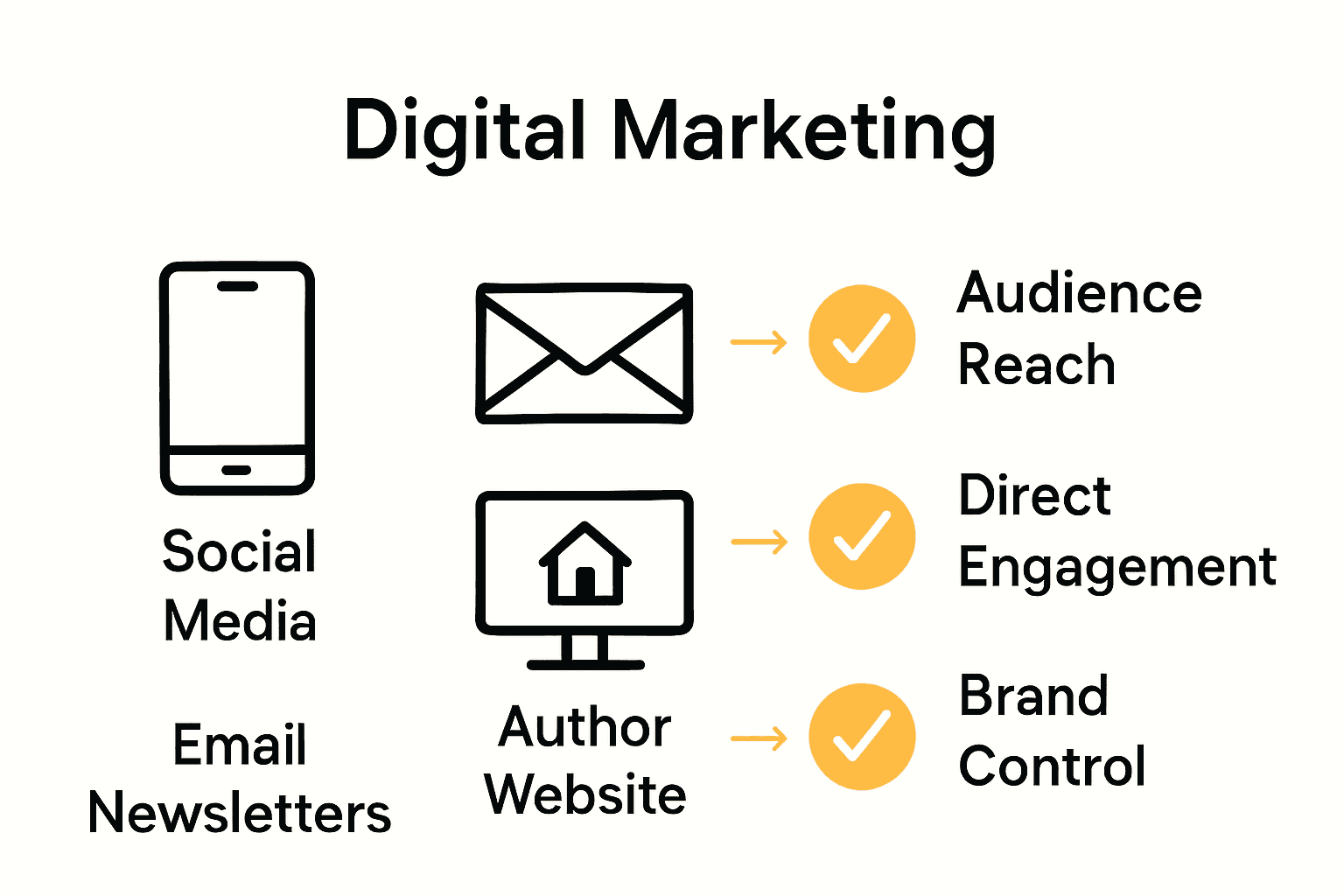 Successful writers understand how to craft platform-specific content that attracts and retains reader attention, transforming casual browsers into dedicated fans and long-term supporters of their writing journey.
How Writers Utilize Digital Marketing Strategies
Digital marketing strategies provide writers with sophisticated tools to transform their writing careers from isolated creative pursuits into dynamic, interactive reader experiences. By implementing targeted approaches, authors can effectively amplify their reach and build sustainable professional platforms.
Content Distribution and Community Building
Modern writers leverage digital platforms to create comprehensive engagement ecosystems around their work. Research from the University of Nebraska–Lincoln demonstrates that authors who strategically collaborate with influencers and use targeted advertising can significantly enhance their professional visibility.
Strategic content distribution techniques include:
- Creating serialized content across multiple digital platforms
- Developing consistent brand messaging
- Engaging directly with reader communities
- Utilizing cross-platform promotional strategies
Monetization and Professional Expansion
Digital marketing enables writers to diversify their income streams beyond traditional book sales. Explore advanced author marketing techniques to transform writing from a passion into a sustainable professional endeavor.
Successful writers understand that digital marketing is not about constant self-promotion but creating genuine connections. By sharing insights, behind-the-scenes content, and meaningful interactions, authors can convert casual readers into dedicated fans who actively support their creative journey.
Real-World Examples of Successful Digital Marketing in Writing
Digital marketing success for writers goes beyond theoretical strategies. Real authors have transformed their careers by implementing innovative digital approaches that connect directly with readers and create sustainable professional platforms.
Case Studies of Author Digital Engagement
Independent and traditional authors alike have demonstrated remarkable success through strategic digital marketing. According to Harvard Business Review’s publishing research, authors who effectively leverage digital channels can dramatically increase their visibility and reader engagement.
Characteristics of successful author digital marketing include:
- Creating authentic, consistent online personas
- Developing multi-platform content strategies
- Building interactive reader communities
- Utilizing data-driven marketing approaches
Strategic Platform Diversification
Successful writers understand that digital marketing requires more than just promoting books. Learn about advanced author marketing strategies that transform writing careers through strategic online positioning.
Authors like Hugh Howey, who built a massive science fiction readership through self-publishing platforms, and Amanda Hocking, who became a millionaire through digital marketing of young adult novels, demonstrate the transformative power of understanding and implementing sophisticated digital marketing techniques. These writers did not just sell books they created entire reader ecosystems that supported their ongoing creative work.
Ready to Turn Digital Strategy into Real Book Sales?
Are you struggling to break through the noise online, connect with real readers, or grow your author brand on your own terms? The article showed how mastering digital marketing can shatter old publishing barriers, help you build reader communities, and create consistent income without gatekeepers. But reading about effective content strategies and audience targeting is just the first step. What if you could put these proven methods into action right now—and watch your writing career transform?
Stop worrying about how to attract loyal fans or increase sales. At Digital Marketing Authors, we empower writers using step-by-step systems built for indie author success. Learn to automate your book sales, grow your fanbase with AI-powered tools, and stand out faster. Get started today and elevate your writing career by visiting our site or exploring advanced tips in our author platform guide and social media marketing strategy blog. Take action now and claim control over your author journey.
Frequently Asked Questions
What is digital marketing for writers?
Digital marketing for writers is a set of strategies that helps authors promote, distribute, and monetize their written content online. To get started, create an author website or blog that serves as a central hub for your work and connects you directly with readers.
How can I build an online presence as a writer?
You can build an online presence by using social media platforms to share updates on your writing and engage with your audience. Start by selecting two to three platforms that resonate with your target readers, and post regularly to keep them informed and connected.
What are effective content marketing strategies for authors?
Effective content marketing strategies for authors include showcasing your writing expertise through blog posts, articles, and engaging social media content. Prioritize consistency by creating a content calendar and aim to publish new content at least once a week to keep your audience engaged.
How can I nurture relationships with my readers through email marketing?
To nurture relationships with readers, implement email marketing campaigns that share insights, updates, and exclusive content. Start by building an email list and send personalized newsletters at least once a month to keep readers connected and informed about your writing journey.
What techniques can I use for audience targeting in my digital marketing?
You can target your audience effectively by identifying their specific interests and preferences, and tailoring your content to meet their needs. Conduct surveys or engage with your audience on social media to gather insights and refine your targeting strategies within 30 days.
How does digital marketing empower writers financially?
Digital marketing empowers writers financially by allowing them to diversify their income streams beyond traditional book sales, such as through e-books, merchandise, or online courses. To enhance your financial opportunities, explore at least three different monetization methods within the first six months of your digital marketing efforts.
Crucial first step in digital marketing for writers
Recommended
- Fiction Authors –
- An Author’s Successful Social Media Marketing Campaign – DigitalMarketingAuthors.com
- Marketing Archives – DigitalMarketingAuthors.com
- social media marketing for authors Archives – DigitalMarketingAuthors.com

Is Content Marketing Just Another Fad?
There’s a lot of noise out there in the digital marketing world that content marketing is the ‘big thing’ if you want to dominate your marketplace. But is it something new or has content marketing been around for awhile and now seems to be getting more airplay. For businesses and solepreneurs we look at this ‘latest’ rock star of digital marketing and ask if it really has value or is just another fad cooked up by a couple of slick marketers wanting to sell us more stuff. And let’s face it, as business owners we are already jammed pack with gizmos and gadgets to supposedly make us …..rich.
How Long Has Content Marketing Been Around?
Most likely it was not referred to as content marketing but Michelin tyres established a guide to dining out at restaurants over 100 years ago. The Michelin tyre company knew travellers would appreciate great knowledge on the best restaurants in an area as they motored around. The Michelin guide became famous and when the traveller needed new tyres the name Michelin was top of their mind. Ingenious marketing!
So should you adopt a content marketing plan to brand your company? Here’s 5 reasons why we say YES.
5 Ways Content Marketing Will Benefit You
- Outshine Your Competitors
A great way to distinguish yourself from your competitors is to produce keyword dense articles, blog posts and videos that deliver value to your targeted audience. Keywords sourced via free tools like Google’s Adwords Keyword Planner are great but it’s important to have a plan that shows relevancy for what you produce so you can connect with your audience. - Get More Website Visitors
Google loves traffic and rewards you with better rankings making it easier to be found. If you are an author in the mystery thriller genre, you need to produce content around that topic.But great articles aren’t enough to be found. It’s a long process for the natural algorithms to find your ‘brilliant work’. Great posts require a push and you’ll need to share your content on social media, article directory sites and even run some online ads to boost your reach. The good thing though is that once found, your content will continue to produce great traffic to your website for a long time (but not necessarily forever) - Build Your Brand
As your content marketing strategy takes shape you you start dominating your market, so too will your brand improve. Your name or company will become synonymous with highly valued content that people crave. - Getting Customers To Buy Easily
Content builds trust. Your audience likes you and they feel more secure when it comes to the time for them to buy something. Content that has already answered their questions gets them to the buying stage more quickly. A great read is They Ask, You Answer by Marcus Sheridan which spells out a great plan for you to follow. - Boost Your SEO
Great articles produce opportunities to create more links back to your site. Relevant backlinks are great for SEO.
Ok so we can see why content marketing is important and it doesn’t look like a fad since Michelin got ‘into it’ about a hundred years ago, but who’s using it today?
I’ve already mentioned Marcus Sheridan but there are a ton of companies and marketers using content marketing to build their business. Most major companies like McDonalds, Coca Cola, General Electric regularly produce great content. In my local area Hays Consulting, Brisbane Marketing, Universal Store, CANSTAR, John Wiley & Sons, MAX Solutions and MCM Digital just to name a few.
Online marketers like Neil Patel and Digital Marketer are leaders in producing great content that reaps outstanding rewards for them. And then there’s the direct response marketers Dan Kennedy and Frank Kern who’ve flooded the market for decades with their products and services.
Is content marketing a fad? Is it the next ‘big thing’. Time tells us NO! You had better jump on board
*********************************************************************************************
Discover How I Got 3069 Reader Subscribers In Just 7 Days – FREE Report out now!
*********************************************************************************************

How An Author Can ‘Steal’ Dollar Shave Club’s Viral Secrets
If you haven’t heard of Dollar Shave Club, that’s ok. You are obviously not one of the 24 million people who watched their launch video that sent their business to a new planet. If you don’t know what I’m talking about check out their video
There are some real gold nuggets in this video which can be ‘stolen’ legally by you to send your author business into the stratosphere. The video has some great bonuses which you may or may not be able to replicate. The boss used comedy to engage with the audience. Comedy is a great ice breaker, relaxes people and usually gets them engaging with you.
But not everybody is a born comedian and that’s alright. Mike Dubin, the CEO of Dollar Shave Club, also had some mates in the video production game that allowed him to produce this video for a tenth of the price.
Sure the video has had 24 million plus views, but you don’t need that many to boost your author business. Here’s the tips from Dollar Shave Club you can use to make it big.
Video
Video is extremely powerful. You can engage far more easily with your audience via via. HubSpot research tells us that:
- 92% of video’s watched on a mobile device is shared
- 80% of video watchers can recall at least one video they’ve watched in the past month.
- 33% of online activity involves watching a video.
But if you hate doing videos because you think you have a head for radio, get somebody else to do one for you or jump over to Fiverr.com and get a hand drawn animated video done.
Great Storytelling
Stories are great. If the narrative is captivating, audiences will get involved especially if it resonates with them. The more you show of yourself, the more your audience will trust you. And when people trust you, they buy from you.
Know Your Audience
Dollar Shave Club speaks directly to their audience; young men who are fed up the ‘closer shave’ approach. Who are your audience? If your audience is budget driven, they are happy to buy a book online for 99 cents or $2.99 and get an immediate download rather than going to a bookstore and paying $25 for a paperback. Target your message to your readers.
Content Is Funny
People like to laugh. People share laughs with others. That’s why the video above got shared so readily.
The Dollar Shave Club video launch experience can be replicated but should not be duplicated. Look at the tips above and incorporate them into your author business and you’ll build a strong author business

How To Create And Market Your Author Content Marketing System On Autopilot
If you’re sick and tired of paying out oodles of your hard earned cash on marketing and advertising, content marketing could be your answer for taking back control of your budget and getting more bang for your buck. Creating your very own author content marketing system will deliver an abundance of high quality leads, give your brand massive exposure, establish you as a leading expert; all for a far less financial investment than traditional advertising.
But there is a downside to content marketing. It takes time to be effective. There is also time involved in creating the content as well as marketing the content. This is where most content marketers stumble. Many are sole entrepreneurs are a ‘jack-of-all-trades’ trying to run a business on a shoe string budget. Creating and administrating a content marketing system is just another chore.
And even if they do get a system in place there’s no guarantee they will seen. Content marketers report their production is up 76% over last year with around 60% admitting they are creating a piece of content every day.
As an author the last thing you want to do is to create more writing tasks. And most authors hate the idea of marketing as well.
What To Do?
More and more authors are jumping onto the content marketing band wagon. Particularly indie or self publishers realise they have to create an inbound marketing system where leads come to them and not for them to be spending their meagre monthly Amazon cheques on Facebook or Google ads and getting poor results.
I have an author content marketing system that grows my brand, generates more readers (I got 3069 readers in just 7 days) and ultimately sells more of my books. The quality of the content is good and it runs on autopilot. Here’s what it look s like.
Author Content Marketing System Structure
I recommend a plan. If you are a sole operator (most authors are initially) work out what the goal of each campaign is. Are you wanting to build your email list via a free book giveaway? Are you aiming to sell more books via a cross promotion with another author? Have a clear outcome in mind before you start.
Your marketing system is like a funnel. A big open top into which your leads enter having devoured your content. They sift through the neck of the funnel and hopefully either buy your book or join your email list.
What works best for me is a visual representation of how my system will be structured and organisation. A diary is good ( I’m still an old paper book guy) but for the most part my diary is closed on my desk. I like to see my tasks visually and I therefore prefer to outline my plan on a calendar. The calendar sits close to my desk and I’m constantly reminded of my daily tasks in keeping my author content marketing system moving forward.
What To Write
It’s easy to come up with a few ideas on what you should be writing about. In my post fix a blog with no traffic I discussed how to use the Google Keyword Planner to get the best performing terms people are searching for in your space.
If you are fortunate to have a team around you you can brainstorm some ideas. If you don’t why not form a group of authors in your town to meet up monthly and discuss ideas on how to best marketing your books.
But on of my favourite sites is BuzzSumo which allows you to enter a keyword or phrase or an author and see what content is performing well. You can replicate this idea but not duplicate
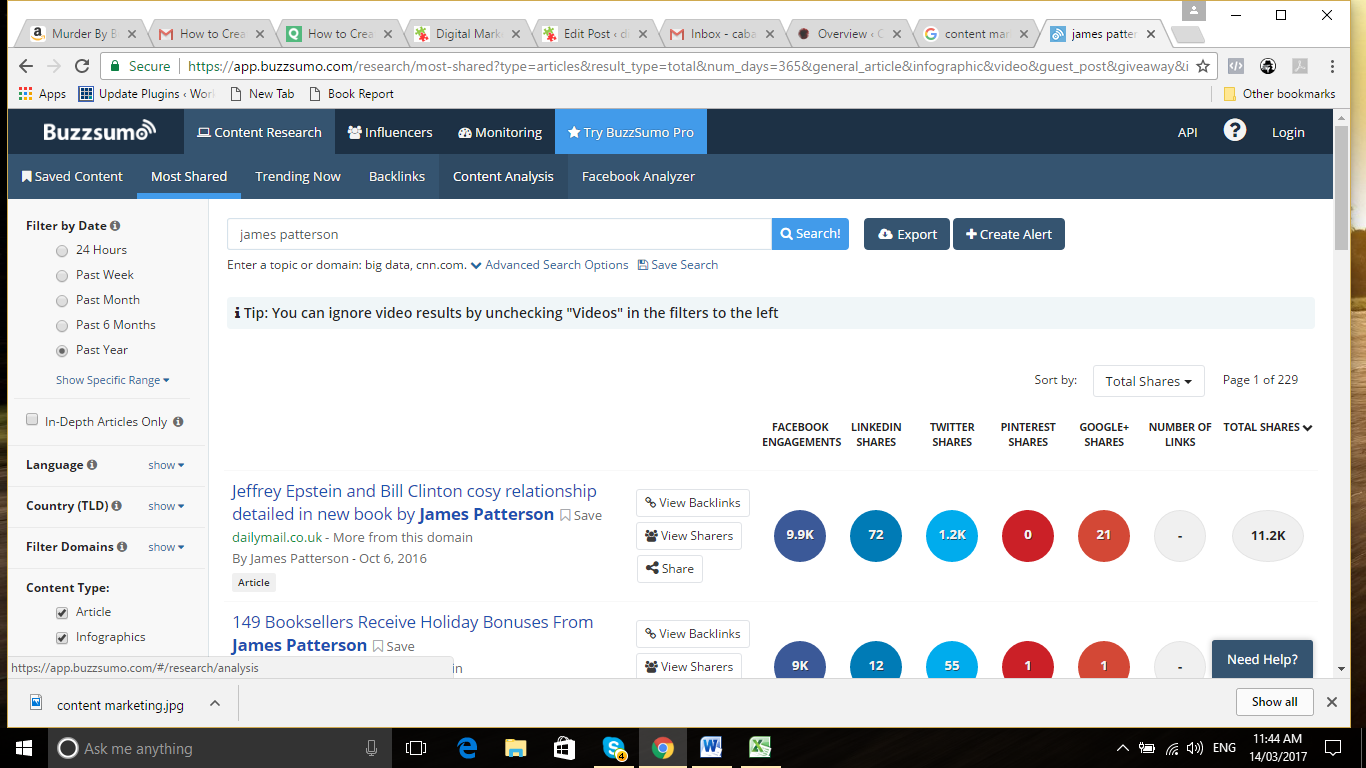
In the above picture you can see I’ve entered the term James Patterson and BuzzSumo has revealed each content piece’s Facbook likes, Twitter shares etc. If a topic is popular, use the concept to create your own award winning piece.
Creating The Content
As an author you are used to writing. And while this is writing it’s more about the style of writing that is needed. Good copy requires the correct usage of keywords and specially targets an audience with a definitive goal in mind. This is not about a masterpiece that could win you the Nobel prize.
If you are not comfortable about doing this yourself, you can hire a freelancer at Elance or Guru. Make sure however when hiring a freelance writer that they represent your voice to the letter. Your brand is at stake here.
Texbroker is a service I’ve used in the past and found their quality to be quite good. You pay for each word, the price is determined on the quality you expect. Higher the price the better the quality. A 500 word article will cost you around $8-10 for reasonably good quality. I run my eye over the final draft before I accept their work. This service allows you to get say 10 articles done quickly to post to your blog for around $100. Add it to your monthly promotional budget and you’ll have 60 keyword rich, seo compliant articles on your blog in six months establishing you as the authority. Pretty cheap.
Content Compilation
If you don’t want to write an article or outsource it but want a high quality, keyword rich piece of content that pulls readers in faster than a speeding bullet train, search Google for high performing information and videos on your topic and then simply compile all the data into one post.
It feels like you are cheating or plagiarising somebody else’s work BUT as long as you credit your sources including pictures, it’ll be ok. So if you were writing about the best romance writers in America and you found some great posts and videos, you can make your very own post and acknowledge your sources. Create a link so your readers can check out the other content as well.
Automating Your Posts
You’ve written your masterpiece or compiled a great post from existing content, now it’s time to share it with the world. Most blogs have share buttons on each post for both authors and readers to share their content. But if you want to stagger the release of content for different time zones or even days, you’ll need to use a scheduler.
My favourite is Post Planner. I schedule all my posts to my social media sites via this programme. They even give me thousands of the best performing posts for me to share with my followers as well. And I do this automated task in just 15 minutes a week, allowing me to connect with my platforms 28 times a week for just $9/mth.
And that’s how I create and market my author content marketing system on autopilot. Leave me a comment below and let me know what you think