
- You are here:
- Home »
- digital book marketing
Tag Archives for " digital book marketing "

Cross-Promotion for Authors: Complete Guide
Did you know that authors who work together can see up to 40 percent more engagement from readers compared to those who go it alone? Finding new fans is a challenge for any writer, and even the best stories can get lost without the right support. Cross-promotion has become a smart way for authors to lift each other up and reach fresh audiences, making every book launch more powerful and every connection count.
Table of Contents
- Defining Cross-Promotion For Authors
- Major Types And Key Distinctions
- How Cross-Promotion Works In Practice
- Proven Strategies And Real-World Examples
- Benefits, Risks, And Common Mistakes
Key Takeaways
| Point | Details |
|---|---|
| Cross-Promotion Strategy | Authors can enhance book visibility by collaborating with peers to leverage each other’s audiences. |
| Collaborative Techniques | Effective methods include joint newsletters, book bundles, and reciprocal recommendations to expand reach. |
| Mutual Benefits | Successful cross-promotion offers reduced marketing costs and increased networking opportunities among authors. |
| Cautions and Mistakes | Authors should avoid incompatible partnerships and ensure clear expectations to maximize the effectiveness of their collaborations. |
Defining Cross-Promotion for Authors
Cross-promotion represents a strategic marketing approach where authors collaborate to expand their collective readership and amplify book visibility. Cross-promotion involves mutually beneficial advertising techniques that leverage each author’s existing audience to introduce new potential readers to multiple works.
According to Merriam-Webster, cross-promotion is fundamentally about “advertising or publicizing something by means of another product or service.” For authors, this translates into creative partnerships that allow writers to reach readers who might not have discovered their books through traditional marketing channels.
The core mechanics of cross-promotion for authors typically involve several collaborative strategies:
- Sharing newsletter subscriber lists with permission
- Recommending each other’s books in author bios or afterwords
- Creating joint promotional events or book bundles
- Hosting collaborative online or in-person author panels
- Writing guest blog posts or featuring reciprocal book reviews
Unlike traditional advertising, cross-promotion focuses on building genuine connections between authors with complementary writing styles or genres. This approach creates a win-win scenario where multiple authors can organically expand their reach without significant additional marketing expenses. By strategically partnering with fellow writers, authors can tap into new reader communities and create mutually beneficial promotional ecosystems.

Major Types and Key Distinctions
Cross-promotion for authors encompasses several strategic approaches, each offering unique opportunities for expanding readership and building collaborative networks. Understanding these distinct types can help writers make informed decisions about their marketing strategies.
Here’s a summary of the major types of cross-promotion for authors:
| Type | Main Method | Author Benefits |
|---|---|---|
| Cobranding | Joint projects Shared campaigns |
Combined audiences Enhanced credibility |
| Brand Licensing | Leveraging reputation Audience trust |
Access to established reader base Increased exposure |
| Cross Marketing | Reciprocal promotions Multi-channel efforts |
Broader reach Diversified promotion |
| Cross-Media Marketing | Multi-platform campaigns Interconnected channels |
Multiple touchpoints Wider audience engagement |
According to research on brand alliances, three primary types of collaborative marketing emerge that authors can adapt to their promotional efforts:
- Cobranding: Joint book projects or shared promotional campaigns where multiple authors combine their audiences
- Brand Licensing: Authors leveraging each other’s established reader recognition and reputation
- Cross Marketing: Reciprocal promotion through multiple channels and platforms
Cross-media marketing adds another sophisticated dimension to cross-promotion. As defined by Wikipedia, this approach goes beyond traditional advertising techniques by creating multiple touchpoints and appeals across different media platforms.
For authors, this might translate into diverse promotional strategies like simultaneous podcast interviews, coordinated social media campaigns, shared newsletter features, or collaborative online events that reach audiences through multiple interconnected channels.
The goal remains consistent: expanding reach, creating value for readers, and building mutually beneficial professional relationships that extend beyond individual book marketing efforts.
How Cross-Promotion Works in Practice
Cross-promotion transforms traditional marketing by creating strategic partnerships that amplify authors’ collective reach. According to GrowANN, this approach involves two or more entities promoting each other’s products to maximize their individual strengths and audience potential.
In practical terms for authors, cross-promotion manifests through several collaborative techniques:
- Reciprocal book recommendations in each other’s works
- Joint email newsletter features
- Coordinated social media campaigns
- Shared book launch events or online panels
- Cross-genre anthology projects
- Bundled book promotions
The mechanics of successful cross-promotion rely on finding authors with complementary audiences and aligned genres. Wikipedia emphasizes that the core principle involves mutual benefit, where each participant gains expanded visibility without significant additional marketing investment.
Effective cross-promotion requires careful partner selection, clear communication, and a genuine commitment to creating value for readers. By thoughtfully connecting with fellow authors, writers can break through traditional marketing limitations, reach new reader communities, and build sustainable promotional ecosystems that extend far beyond individual book marketing efforts.
Proven Strategies and Real-World Examples
Cross-promotion offers authors multiple innovative approaches to expand their readership and create meaningful collaborative opportunities. According to BookBub Insights, authors have several strategic methods to cross-promote their work effectively.
Some of the most powerful cross-promotion strategies include:
- Multi-author book bundle giveaways
- Joint video interviews
- Collaborative author panel discussions
- Virtual book launch events
- Reciprocal newsletter features
- Co-authored book projects
From IPPY Awards research, successful cross-promotion often involves creative collaborations that go beyond traditional marketing approaches. By strategically bundling books, organizing shared events, and creating interconnected promotional campaigns, authors can significantly amplify their collective visibility.
The key to successful cross-promotion lies in finding compatible authors with complementary audiences, establishing clear mutual expectations, and designing strategies that provide genuine value to readers. When executed thoughtfully, these collaborative efforts can transform individual marketing attempts into powerful, community-driven promotional ecosystems that benefit everyone involved.
Benefits, Risks, and Common Mistakes
Cross-promotion presents a powerful yet nuanced marketing strategy for authors that requires careful navigation. While the potential rewards are significant, writers must approach collaborative efforts with strategic awareness and professional caution.
The primary benefits of cross-promotion include:
- Expanded audience reach
- Reduced individual marketing costs
- Enhanced networking opportunities
- Increased credibility through peer associations
- Diversified promotional channels
- Potential for long-term collaborative relationships
According to Book Bolt, leveraging platforms like Amazon’s KDP Select Program can provide additional promotional tools that amplify cross-promotion efforts. Similarly, Writer’s Life suggests that collaborative content creation, such as joint blog posts or articles, can effectively expose authors to new audiences.
Common mistakes to avoid include selecting incompatible promotional partners, failing to establish clear expectations, neglecting audience alignment, and overlooking potential legal or intellectual property considerations. Successful cross-promotion requires thoughtful partner selection, mutual respect, and a genuine commitment to creating value for readers beyond individual marketing objectives.
Unlock Your Book’s Full Potential with Smart Cross-Promotion
Authors often face the challenge of expanding their readership without overspending on marketing or relying on luck. This guide highlights key pain points such as finding compatible partners, creating authentic connections, and managing multiple promotional channels effectively. If you want to elevate your cross-promotion efforts using proven digital marketing and AI-powered strategies, there is a clear path forward.
At DigitalMarketingAuthors.com, we specialize in teaching writers how to harness cutting-edge tools to automate book sales, grow loyal reader communities, and build profitable author brands. From crafting magnetic email sequences that engage your audience to leveraging AI systems that save time and boost your book’s visibility, our methods turn these challenges into opportunities.
Looking to break through traditional marketing limits? Discover how to cross-promote smarter by visiting Digital Marketing Authors. Start building sustainable, value-driven partnerships that will expand your reach and sales.
Take control of your book marketing today with strategies designed specifically for indie authors. Visit DigitalMarketingAuthors.com now and learn how you can market smarter, sell faster, and scale your readership worldwide.
Frequently Asked Questions
What is cross-promotion for authors?
Cross-promotion for authors is a marketing strategy where writers collaborate to promote each other’s works, leveraging their existing audiences to gain new readers and expand book visibility.
How does cross-promotion work in practice?
Cross-promotion works through various collaborative techniques like reciprocal book recommendations, joint email newsletter features, coordinated social media campaigns, and shared book launch events that amplify each author’s reach.
What are the benefits of cross-promotion for authors?
The benefits of cross-promotion include expanded audience reach, reduced marketing costs, enhanced networking opportunities, increased credibility, and the potential for long-term collaborative relationships.
What common mistakes should authors avoid in cross-promotion?
Authors should avoid selecting incompatible partners, failing to establish clear expectations, neglecting audience alignment, and overlooking legal or intellectual property considerations when engaging in cross-promotion.
Recommended

Why Self Publishing Works: Complete Author’s Guide
Did you know that nearly half of self-published authors earn over $20,000 each year from their books? The world of self-publishing is expanding fast, giving writers real financial potential and creative freedom that traditional publishing rarely offers. Understanding both the opportunities and challenges of this path can help you navigate the myths and make smarter decisions for your book’s success.
Key Takeaways
| Point | Details |
|---|---|
| Author Control | Self-publishing grants authors complete creative and business control over their work, from editing to marketing. |
| Financial Advantages | Authors can earn higher royalties (35-70%) compared to traditional publishing (8-15%), increasing their overall income potential. |
| Quality Challenges | Despite the benefits, authors must invest in professional services like editing and design to maintain quality in a competitive market. |
| Market Speed | Self-publishing allows for faster time to market, enabling authors to respond swiftly to trends and feedback. |
Table of Contents
- Self Publishing Defined: Core Concepts And Myths
- Types Of Self Publishing Platforms Explained
- How Self Publishing Empowers Author Control
- Financial Realities: Royalties, Costs, And Earnings
- Comparing Self Publishing And Traditional Publishing
- Common Pitfalls And How To Succeed
Self Publishing Defined: Core Concepts and Myths
Self-publishing represents a powerful revolution in book production where authors take complete control of their publishing journey. Unlike traditional publishing routes, self-publishing allows writers to bypass corporate gatekeepers and directly connect with readers through digital platforms and print-on-demand technologies.
According to research from The Guardian, this publishing model has significant economic potential. A 2023 survey revealed remarkable income opportunities: nearly half of self-published authors earned over $20,000, with 28% surpassing $50,000 in annual book revenue. This data challenges traditional publishing narratives about financial sustainability for writers.
Key characteristics of indie publishing include:
- Complete creative control
- Higher royalty percentages
- Faster time to market
- Direct reader engagement
- Flexible pricing strategies
However, self-publishing isn’t without challenges. While democratizing book production, the market faces quality concerns due to reduced editorial gatekeeping. Successful published authors must invest in professional editing, cover design, and strategic marketing to stand out in an increasingly crowded marketplace. Self Publish Archives offer deeper insights into navigating these nuanced publishing landscapes.
Types of Self Publishing Platforms Explained
Indie publishing platforms have revolutionized how authors bring their work to market, offering multiple avenues to transform manuscripts into published books. According to research from Wikipedia, these platforms range from direct DIY digital publishing to more complex service models that provide comprehensive support for writers.
Print-on-demand technology has been a game-changer in non traditional publishing. This innovative approach allows authors to print books only when orders are placed, dramatically reducing upfront inventory costs and financial risk. With best self-publishing platforms, writers can now distribute books globally without maintaining expensive print inventories.
The primary types of self-publishing platforms include:
- DIY Digital Platforms: Direct online publishing with minimal support
- Assisted Self-Publishing: Bundled services with professional guidance
- Hybrid Publishing: Cost-sharing models with partial publisher involvement
- Print-on-Demand Services: Technology-driven printing solutions
Each platform offers unique advantages, but authors must carefully evaluate their specific needs. While some platforms provide extensive marketing support, others focus purely on distribution. Understanding the nuanced differences helps writers select the most appropriate publishing route for their individual goals and budget constraints.
How Self Publishing Empowers Author Control
Author autonomy has been dramatically transformed by indie publishing, giving writers unprecedented control over their creative and professional journeys. According to research from Best Seller Ghostwriting, self-publishing enables creators to make independent decisions about every aspect of their book’s production and distribution.
Traditional publishing barriers have been dismantled, allowing authors to retain complete creative freedom. Self Publish A Book To Boost Your Career highlights how writers can now control critical elements like:
- Book cover design
- Pricing strategies
- Release timelines
- Marketing approaches
- Content editing
The most transformative aspect of self-publishing is its rapid turnaround potential. Authors can potentially complete their entire publishing process in under 90 days, compared to the years-long traditional publishing cycle. This speed empowers writers to respond quickly to market trends, reader feedback, and their own creative impulses, turning publishing from a gatekept process into a dynamic, author-driven experience.
Financial Realities: Royalties, Costs, and Earnings
Self-publishing economics represent a dramatic shift from traditional publishing models, offering authors significantly more favorable financial opportunities. According to research from The Guardian, a 2023 survey of 2,000 self-published authors revealed impressive income potential: nearly half earned over $20,000, with 28% surpassing $50,000 in annual book revenue.
Royalty structures in self-publishing are substantially more lucrative compared to traditional publishing.
 17 Best Self Publishing Companies In 2025 highlights that self-published authors typically earn between 35-70% royalties, compared to traditional publishing’s meager 8-15% range. This dramatic difference means authors retain more of their book’s earnings.
Key financial considerations for self-published authors include:
- Initial production costs (editing, cover design)
- Platform-specific fee structures
- Marketing and promotional expenses
- Potential for higher per-book earnings
- Flexibility in pricing strategies
Successful self-publishing requires treating your book as a business. While the potential for substantial earnings exists, authors must be prepared to invest in professional editing, compelling cover design, and strategic marketing to maximize their book’s financial potential and reader appeal.
Comparing Self Publishing and Traditional Publishing
Publishing pathways represent two distinct approaches for authors seeking to bring their work to readers. According to research from Best Seller Ghostwriting, each route offers unique advantages and challenges that writers must carefully evaluate.
Traditional publishing provides established infrastructure and professional support, including advance payments and industry connections. In contrast, self-publishing empowers authors with complete creative control and significantly higher royalty rates. Self-publishing companies highlight the dramatic differences in financial potential, with self-published authors typically earning 35-70% royalties compared to traditional publishing’s 8-15%.
Key comparative elements include:
Here’s a side-by-side comparison of self-publishing and traditional publishing models:
| Factor | Self-Publishing | Traditional Publishing |
|---|---|---|
| Creative Control | Full author autonomy | Publisher-driven decisions |
| Royalty Percentage | 35-70% | 8-15% |
| Speed to Market | Weeks to months | 1-2 years |
| Upfront Costs | Author-funded | Publisher-funded |
| Distribution | Author-managed | Established networks |
| Marketing | Author responsibility | Publisher support (varies) |
- Speed to Market: Self-publishing (weeks) vs Traditional (years)
- Creative Control: Full author autonomy vs Publisher-driven decisions
- Financial Investment: Author-funded vs Publisher-funded
- Royalty Percentages: Higher (self-publishing) vs Lower (traditional)
- Distribution Channels: Author-managed vs Established publishing networks
Ultimately, the choice between self-publishing and traditional publishing depends on an author’s specific goals, resources, and willingness to manage their own publishing journey.
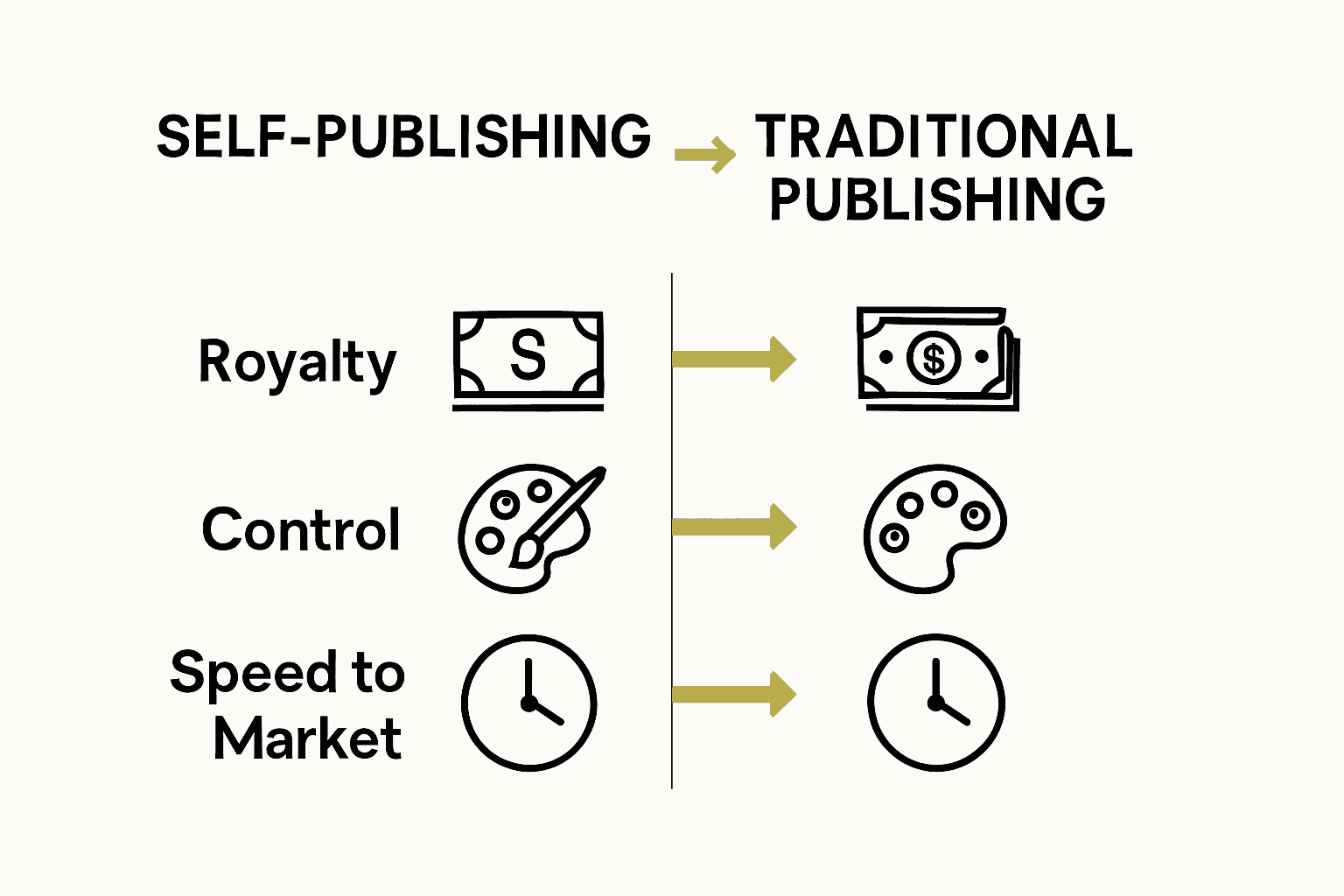 While traditional publishing offers prestige and established support, self-publishing provides unprecedented freedom and potential for direct reader engagement.
Common Pitfalls and How to Succeed
Self-publishing success requires more than simply uploading a manuscript to an online platform. According to The Guardian, the current publishing landscape is incredibly crowded, with millions of titles competing for reader attention.
Authors must approach self-publishing as a professional endeavor, not just a creative outlet. Professional production quality becomes critical—this means investing in:
- High-quality cover design
- Professional editing
- Targeted marketing strategies
- Consistent author branding
- Strategic pricing and distribution
The most common mistakes self-published authors make involve underestimating the business side of publishing. Email Marketing Archives suggest that building a robust reader communication strategy is just as important as the book itself. Successful self-publishers treat their books like a business, continuously learning, adapting, and investing in their craft and market understanding. Visibility isn’t guaranteed—it’s earned through persistent, strategic effort and a commitment to producing exceptional work that resonates with your target readers.
Ready to Master Self Publishing and Grow Your Author Brand?
You already know self publishing gives you creative control and better royalties, but turning your manuscript into a bestseller takes more than just uploading your book. If you feel overwhelmed by marketing, building a loyal reader base, or using the right technology to cut through competition, you are not alone. Many writers hit the same roadblocks featured in our guide: standing out, connecting with readers, and creating reliable book sales.
Now is the perfect time to transform your strategy and reach more readers. Discover how Digital Marketing Authors makes it simple to automate sales, grow your fanbase, and scale your author business with proven digital marketing and AI solutions. If you are ready to take charge of your publishing results instead of relying on luck or noisy marketplaces, visit our site for expert guidance. Claim your path to sustainable book profits and author independence today.
Frequently Asked Questions
What are the key advantages of self-publishing for authors?
Self-publishing offers several significant advantages, including complete creative control, higher royalty rates (35-70% vs 8-15% in traditional publishing), a faster time to market, and the opportunity for direct engagement with readers.
What challenges do self-published authors face?
Self-published authors often encounter challenges such as quality control issues due to reduced editorial oversight, the need for professional services (like editing and cover design), and the responsibility of handling marketing and distribution themselves.
How do self-publishing royalties compare to traditional publishing royalties?
Self-published authors typically earn between 35-70% in royalties, while traditional publishers generally offer only 8-15%. This substantial difference highlights the financial benefits of self-publishing for authors.
What are the primary types of self-publishing platforms available?
The main types of self-publishing platforms include DIY digital platforms for direct publishing, assisted self-publishing services that offer professional support, hybrid publishing models that involve shared costs, and print-on-demand services that print books as orders are placed.
Recommended

Understanding What is Digital Marketing for Writers
Writers today are tapping into digital marketing for writers to take control of their success. More than 70 percent of self-published authors say online platforms have helped them reach new audiences and boost sales. It might sound like digital marketing is just about more tweets and flashy book covers, but that barely scratches the surface. The real shift is that writers can now bypass the old publishing gatekeepers and build lasting careers by connecting with readers directly—something that was almost impossible just a decade ago.
Table of Contents
- Defining Digital Marketing In The Context Of Writing
- The Importance Of Digital Marketing For Writers
- Key Concepts In Digital Marketing For Authors
- How Writers Utilize Digital Marketing Strategies
- Real-World Examples Of Successful Digital Marketing In Writing
Quick Summary
| Takeaway | Explanation |
|---|---|
| Build an author website or blog. | A central hub helps you connect with readers directly and showcase your work effectively. |
| Utilize social media for engagement. | Engaging on social platforms keeps your audience updated and fosters community-building. |
| Implement targeted email marketing. | Email campaigns nurture reader relationships and personalize communication with your audience. |
| Create diverse content to attract readers. | Offering various content types maintains reader interest and addresses their specific needs and preferences. |
| Control your marketing and distribution. | Digital marketing empowers you to engage directly with audiences, bypassing traditional publishing barriers. |
Defining Digital Marketing in the Context of Writing
Digital marketing for writers represents a strategic approach to promoting, distributing, and monetizing written content through online channels. Unlike traditional publishing methods, digital marketing empowers authors to directly connect with readers, build audiences, and create sustainable writing careers.
Core Components of Digital Marketing for Writers
At its foundation, digital marketing for writers encompasses several interconnected strategies designed to increase visibility and engagement. These strategies leverage digital platforms to transform how authors reach and interact with potential readers. According to Nielsen Norman Group’s content strategy research, effective digital marketing requires understanding audience needs and creating targeted content experiences.
To help clarify the essential elements of digital marketing for writers, the table below outlines the core components featured in the article.
| Core Component | Description |
|---|---|
| Author Website or Blog | Serves as a central hub for connecting with readers and showcasing work. |
| Social Media Engagement | Platforms for sharing updates, building a following, and communicating directly with readers. |
| Email Marketing | Campaigns and newsletters that nurture relationships and provide personalized communication. |
| Content Marketing | Creating and sharing valuable content that highlights writing expertise and attracts target readers. |
| Platform-specific Strategy | Tailoring content to suit the unique characteristics and audiences of each digital platform used. |
Key digital marketing approaches for writers include:
- Building an author website or blog as a central hub for connecting with readers
- Utilizing social media platforms to share writing updates and engage with audiences
- Creating email marketing campaigns to nurture reader relationships
- Developing content marketing strategies that showcase writing expertise
Strategic Online Presence
Successful digital marketing transcends mere self-promotion. It involves creating genuine connections and providing value to potential readers. Writers must think strategically about their online presence, understanding that each digital interaction represents an opportunity to build credibility and trust. Learn more about building your author platform and transforming casual readers into dedicated fans.
By mastering digital marketing techniques, writers can expand their reach beyond traditional publishing constraints, control their narrative, and create sustainable writing careers in an increasingly digital marketplace.
The Importance of Digital Marketing for Writers
Digital marketing has revolutionized how writers connect with audiences, transforming traditional publishing paradigms and creating unprecedented opportunities for independent authors. By understanding and implementing strategic digital marketing techniques, writers can significantly enhance their visibility, reader engagement, and potential income streams.
Breaking Traditional Publishing Barriers
Historically, writers depended on publishing houses to distribute and market their work. Digital marketing dismantles these traditional barriers, allowing authors to become their own publishers and marketers. Research from the American Library Association indicates that digital platforms enable writers to bypass traditional gatekeepers and directly reach their target audiences.
Critical advantages of digital marketing for writers include:
- Complete control over publishing and distribution channels
- Direct relationship building with readers
- Cost-effective marketing strategies
- Global reach without geographical limitations
Economic and Professional Empowerment
Digital marketing is not just about promotion but represents a comprehensive strategy for professional growth. Writers can monetize their skills through multiple digital channels, creating diverse revenue streams beyond traditional book sales. Discover advanced author marketing strategies that transform writing from a passion into a sustainable career.
By embracing digital marketing, writers unlock the potential to build personal brands, cultivate loyal reader communities, and establish themselves as authoritative voices in their respective genres. The digital landscape offers writers unprecedented opportunities to turn their creative talents into successful, self-directed careers.
This table highlights key advantages of digital marketing for writers, making it easy to compare its benefits over traditional publishing methods.
| Advantage | Explanation |
|---|---|
| Direct Control | Writers have full ownership of publishing, marketing, and distribution channels. |
| Relationship Building | Enables direct communication and stronger connections with readers. |
| Cost Efficiency | Digital strategies reduce dependency on expensive traditional marketing and distribution models. |
| Global Reach | Authors can access readers worldwide without geographic barriers. |
| Multiple Revenue Streams | Supports diversification of income through e-books, merchandise, and online courses beyond book sales. |
Key Concepts in Digital Marketing for Authors
Digital marketing for authors involves a sophisticated set of strategies and tools designed to create meaningful connections between writers and their potential readers. Understanding these core concepts transforms digital platforms from mere communication channels into powerful author engagement mechanisms.
Content Strategy and Audience Targeting
Successful digital marketing begins with developing a precise content strategy that resonates with specific reader demographics. According to Content Marketing Institute’s research, targeted content that addresses reader interests dramatically increases engagement and conversion rates.
Essential audience targeting principles include:
- Identifying precise reader persona characteristics
- Understanding reader preferences and consumption habits
- Creating content that solves reader problems or fulfills specific needs
- Analyzing audience engagement metrics continuously

Digital Channel Optimization
Modern authors must strategically leverage multiple digital channels to maximize their visibility and reader interaction. Each platform offers unique opportunities for building author brands and connecting with potential readers. Learn more about optimizing your author marketing channels and expanding your digital presence effectively.
Key digital marketing channels for authors include social media platforms, personal websites, email newsletters, and content marketing blogs.
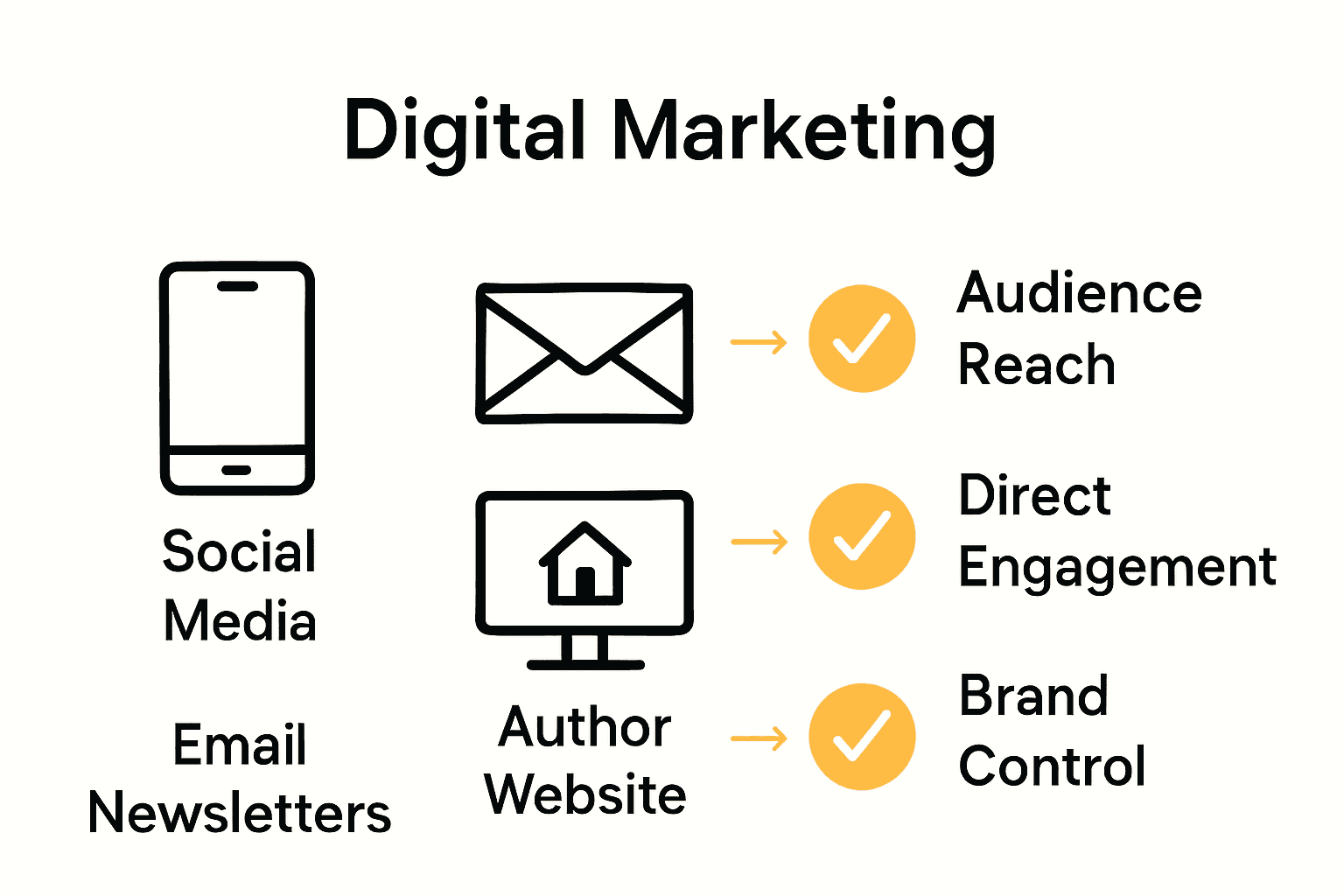 Successful writers understand how to craft platform-specific content that attracts and retains reader attention, transforming casual browsers into dedicated fans and long-term supporters of their writing journey.
How Writers Utilize Digital Marketing Strategies
Digital marketing strategies provide writers with sophisticated tools to transform their writing careers from isolated creative pursuits into dynamic, interactive reader experiences. By implementing targeted approaches, authors can effectively amplify their reach and build sustainable professional platforms.
Content Distribution and Community Building
Modern writers leverage digital platforms to create comprehensive engagement ecosystems around their work. Research from the University of Nebraska–Lincoln demonstrates that authors who strategically collaborate with influencers and use targeted advertising can significantly enhance their professional visibility.
Strategic content distribution techniques include:
- Creating serialized content across multiple digital platforms
- Developing consistent brand messaging
- Engaging directly with reader communities
- Utilizing cross-platform promotional strategies
Monetization and Professional Expansion
Digital marketing enables writers to diversify their income streams beyond traditional book sales. Explore advanced author marketing techniques to transform writing from a passion into a sustainable professional endeavor.
Successful writers understand that digital marketing is not about constant self-promotion but creating genuine connections. By sharing insights, behind-the-scenes content, and meaningful interactions, authors can convert casual readers into dedicated fans who actively support their creative journey.
Real-World Examples of Successful Digital Marketing in Writing
Digital marketing success for writers goes beyond theoretical strategies. Real authors have transformed their careers by implementing innovative digital approaches that connect directly with readers and create sustainable professional platforms.
Case Studies of Author Digital Engagement
Independent and traditional authors alike have demonstrated remarkable success through strategic digital marketing. According to Harvard Business Review’s publishing research, authors who effectively leverage digital channels can dramatically increase their visibility and reader engagement.
Characteristics of successful author digital marketing include:
- Creating authentic, consistent online personas
- Developing multi-platform content strategies
- Building interactive reader communities
- Utilizing data-driven marketing approaches
Strategic Platform Diversification
Successful writers understand that digital marketing requires more than just promoting books. Learn about advanced author marketing strategies that transform writing careers through strategic online positioning.
Authors like Hugh Howey, who built a massive science fiction readership through self-publishing platforms, and Amanda Hocking, who became a millionaire through digital marketing of young adult novels, demonstrate the transformative power of understanding and implementing sophisticated digital marketing techniques. These writers did not just sell books they created entire reader ecosystems that supported their ongoing creative work.
Ready to Turn Digital Strategy into Real Book Sales?
Are you struggling to break through the noise online, connect with real readers, or grow your author brand on your own terms? The article showed how mastering digital marketing can shatter old publishing barriers, help you build reader communities, and create consistent income without gatekeepers. But reading about effective content strategies and audience targeting is just the first step. What if you could put these proven methods into action right now—and watch your writing career transform?
Stop worrying about how to attract loyal fans or increase sales. At Digital Marketing Authors, we empower writers using step-by-step systems built for indie author success. Learn to automate your book sales, grow your fanbase with AI-powered tools, and stand out faster. Get started today and elevate your writing career by visiting our site or exploring advanced tips in our author platform guide and social media marketing strategy blog. Take action now and claim control over your author journey.
Frequently Asked Questions
What is digital marketing for writers?
Digital marketing for writers is a set of strategies that helps authors promote, distribute, and monetize their written content online. To get started, create an author website or blog that serves as a central hub for your work and connects you directly with readers.
How can I build an online presence as a writer?
You can build an online presence by using social media platforms to share updates on your writing and engage with your audience. Start by selecting two to three platforms that resonate with your target readers, and post regularly to keep them informed and connected.
What are effective content marketing strategies for authors?
Effective content marketing strategies for authors include showcasing your writing expertise through blog posts, articles, and engaging social media content. Prioritize consistency by creating a content calendar and aim to publish new content at least once a week to keep your audience engaged.
How can I nurture relationships with my readers through email marketing?
To nurture relationships with readers, implement email marketing campaigns that share insights, updates, and exclusive content. Start by building an email list and send personalized newsletters at least once a month to keep readers connected and informed about your writing journey.
What techniques can I use for audience targeting in my digital marketing?
You can target your audience effectively by identifying their specific interests and preferences, and tailoring your content to meet their needs. Conduct surveys or engage with your audience on social media to gather insights and refine your targeting strategies within 30 days.
How does digital marketing empower writers financially?
Digital marketing empowers writers financially by allowing them to diversify their income streams beyond traditional book sales, such as through e-books, merchandise, or online courses. To enhance your financial opportunities, explore at least three different monetization methods within the first six months of your digital marketing efforts.
Crucial first step in digital marketing for writers
Recommended
- Fiction Authors –
- An Author’s Successful Social Media Marketing Campaign – DigitalMarketingAuthors.com
- Marketing Archives – DigitalMarketingAuthors.com
- social media marketing for authors Archives – DigitalMarketingAuthors.com