
- You are here:
- Home »
- kindle direct publishing
Tag Archives for " kindle direct publishing "

Why Self Publishing Works: Complete Author’s Guide
Did you know that nearly half of self-published authors earn over $20,000 each year from their books? The world of self-publishing is expanding fast, giving writers real financial potential and creative freedom that traditional publishing rarely offers. Understanding both the opportunities and challenges of this path can help you navigate the myths and make smarter decisions for your book’s success.
Key Takeaways
| Point | Details |
|---|---|
| Author Control | Self-publishing grants authors complete creative and business control over their work, from editing to marketing. |
| Financial Advantages | Authors can earn higher royalties (35-70%) compared to traditional publishing (8-15%), increasing their overall income potential. |
| Quality Challenges | Despite the benefits, authors must invest in professional services like editing and design to maintain quality in a competitive market. |
| Market Speed | Self-publishing allows for faster time to market, enabling authors to respond swiftly to trends and feedback. |
Table of Contents
- Self Publishing Defined: Core Concepts And Myths
- Types Of Self Publishing Platforms Explained
- How Self Publishing Empowers Author Control
- Financial Realities: Royalties, Costs, And Earnings
- Comparing Self Publishing And Traditional Publishing
- Common Pitfalls And How To Succeed
Self Publishing Defined: Core Concepts and Myths
Self-publishing represents a powerful revolution in book production where authors take complete control of their publishing journey. Unlike traditional publishing routes, self-publishing allows writers to bypass corporate gatekeepers and directly connect with readers through digital platforms and print-on-demand technologies.
According to research from The Guardian, this publishing model has significant economic potential. A 2023 survey revealed remarkable income opportunities: nearly half of self-published authors earned over $20,000, with 28% surpassing $50,000 in annual book revenue. This data challenges traditional publishing narratives about financial sustainability for writers.
Key characteristics of indie publishing include:
- Complete creative control
- Higher royalty percentages
- Faster time to market
- Direct reader engagement
- Flexible pricing strategies
However, self-publishing isn’t without challenges. While democratizing book production, the market faces quality concerns due to reduced editorial gatekeeping. Successful published authors must invest in professional editing, cover design, and strategic marketing to stand out in an increasingly crowded marketplace. Self Publish Archives offer deeper insights into navigating these nuanced publishing landscapes.
Types of Self Publishing Platforms Explained
Indie publishing platforms have revolutionized how authors bring their work to market, offering multiple avenues to transform manuscripts into published books. According to research from Wikipedia, these platforms range from direct DIY digital publishing to more complex service models that provide comprehensive support for writers.
Print-on-demand technology has been a game-changer in non traditional publishing. This innovative approach allows authors to print books only when orders are placed, dramatically reducing upfront inventory costs and financial risk. With best self-publishing platforms, writers can now distribute books globally without maintaining expensive print inventories.
The primary types of self-publishing platforms include:
- DIY Digital Platforms: Direct online publishing with minimal support
- Assisted Self-Publishing: Bundled services with professional guidance
- Hybrid Publishing: Cost-sharing models with partial publisher involvement
- Print-on-Demand Services: Technology-driven printing solutions
Each platform offers unique advantages, but authors must carefully evaluate their specific needs. While some platforms provide extensive marketing support, others focus purely on distribution. Understanding the nuanced differences helps writers select the most appropriate publishing route for their individual goals and budget constraints.
How Self Publishing Empowers Author Control
Author autonomy has been dramatically transformed by indie publishing, giving writers unprecedented control over their creative and professional journeys. According to research from Best Seller Ghostwriting, self-publishing enables creators to make independent decisions about every aspect of their book’s production and distribution.
Traditional publishing barriers have been dismantled, allowing authors to retain complete creative freedom. Self Publish A Book To Boost Your Career highlights how writers can now control critical elements like:
- Book cover design
- Pricing strategies
- Release timelines
- Marketing approaches
- Content editing
The most transformative aspect of self-publishing is its rapid turnaround potential. Authors can potentially complete their entire publishing process in under 90 days, compared to the years-long traditional publishing cycle. This speed empowers writers to respond quickly to market trends, reader feedback, and their own creative impulses, turning publishing from a gatekept process into a dynamic, author-driven experience.
Financial Realities: Royalties, Costs, and Earnings
Self-publishing economics represent a dramatic shift from traditional publishing models, offering authors significantly more favorable financial opportunities. According to research from The Guardian, a 2023 survey of 2,000 self-published authors revealed impressive income potential: nearly half earned over $20,000, with 28% surpassing $50,000 in annual book revenue.
Royalty structures in self-publishing are substantially more lucrative compared to traditional publishing.
 17 Best Self Publishing Companies In 2025 highlights that self-published authors typically earn between 35-70% royalties, compared to traditional publishing’s meager 8-15% range. This dramatic difference means authors retain more of their book’s earnings.
Key financial considerations for self-published authors include:
- Initial production costs (editing, cover design)
- Platform-specific fee structures
- Marketing and promotional expenses
- Potential for higher per-book earnings
- Flexibility in pricing strategies
Successful self-publishing requires treating your book as a business. While the potential for substantial earnings exists, authors must be prepared to invest in professional editing, compelling cover design, and strategic marketing to maximize their book’s financial potential and reader appeal.
Comparing Self Publishing and Traditional Publishing
Publishing pathways represent two distinct approaches for authors seeking to bring their work to readers. According to research from Best Seller Ghostwriting, each route offers unique advantages and challenges that writers must carefully evaluate.
Traditional publishing provides established infrastructure and professional support, including advance payments and industry connections. In contrast, self-publishing empowers authors with complete creative control and significantly higher royalty rates. Self-publishing companies highlight the dramatic differences in financial potential, with self-published authors typically earning 35-70% royalties compared to traditional publishing’s 8-15%.
Key comparative elements include:
Here’s a side-by-side comparison of self-publishing and traditional publishing models:
| Factor | Self-Publishing | Traditional Publishing |
|---|---|---|
| Creative Control | Full author autonomy | Publisher-driven decisions |
| Royalty Percentage | 35-70% | 8-15% |
| Speed to Market | Weeks to months | 1-2 years |
| Upfront Costs | Author-funded | Publisher-funded |
| Distribution | Author-managed | Established networks |
| Marketing | Author responsibility | Publisher support (varies) |
- Speed to Market: Self-publishing (weeks) vs Traditional (years)
- Creative Control: Full author autonomy vs Publisher-driven decisions
- Financial Investment: Author-funded vs Publisher-funded
- Royalty Percentages: Higher (self-publishing) vs Lower (traditional)
- Distribution Channels: Author-managed vs Established publishing networks
Ultimately, the choice between self-publishing and traditional publishing depends on an author’s specific goals, resources, and willingness to manage their own publishing journey.
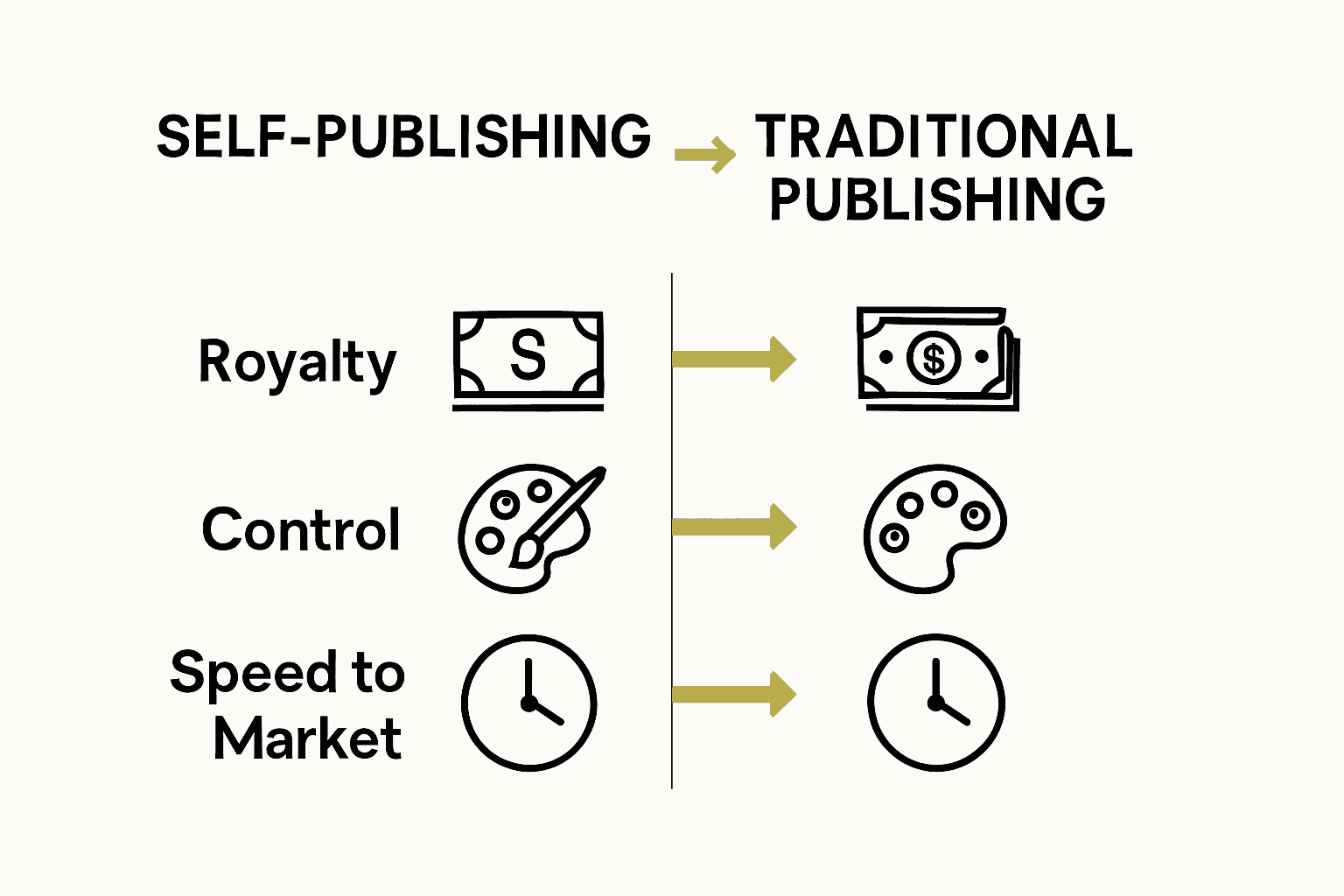 While traditional publishing offers prestige and established support, self-publishing provides unprecedented freedom and potential for direct reader engagement.
Common Pitfalls and How to Succeed
Self-publishing success requires more than simply uploading a manuscript to an online platform. According to The Guardian, the current publishing landscape is incredibly crowded, with millions of titles competing for reader attention.
Authors must approach self-publishing as a professional endeavor, not just a creative outlet. Professional production quality becomes critical—this means investing in:
- High-quality cover design
- Professional editing
- Targeted marketing strategies
- Consistent author branding
- Strategic pricing and distribution
The most common mistakes self-published authors make involve underestimating the business side of publishing. Email Marketing Archives suggest that building a robust reader communication strategy is just as important as the book itself. Successful self-publishers treat their books like a business, continuously learning, adapting, and investing in their craft and market understanding. Visibility isn’t guaranteed—it’s earned through persistent, strategic effort and a commitment to producing exceptional work that resonates with your target readers.
Ready to Master Self Publishing and Grow Your Author Brand?
You already know self publishing gives you creative control and better royalties, but turning your manuscript into a bestseller takes more than just uploading your book. If you feel overwhelmed by marketing, building a loyal reader base, or using the right technology to cut through competition, you are not alone. Many writers hit the same roadblocks featured in our guide: standing out, connecting with readers, and creating reliable book sales.
Now is the perfect time to transform your strategy and reach more readers. Discover how Digital Marketing Authors makes it simple to automate sales, grow your fanbase, and scale your author business with proven digital marketing and AI solutions. If you are ready to take charge of your publishing results instead of relying on luck or noisy marketplaces, visit our site for expert guidance. Claim your path to sustainable book profits and author independence today.
Frequently Asked Questions
What are the key advantages of self-publishing for authors?
Self-publishing offers several significant advantages, including complete creative control, higher royalty rates (35-70% vs 8-15% in traditional publishing), a faster time to market, and the opportunity for direct engagement with readers.
What challenges do self-published authors face?
Self-published authors often encounter challenges such as quality control issues due to reduced editorial oversight, the need for professional services (like editing and cover design), and the responsibility of handling marketing and distribution themselves.
How do self-publishing royalties compare to traditional publishing royalties?
Self-published authors typically earn between 35-70% in royalties, while traditional publishers generally offer only 8-15%. This substantial difference highlights the financial benefits of self-publishing for authors.
What are the primary types of self-publishing platforms available?
The main types of self-publishing platforms include DIY digital platforms for direct publishing, assisted self-publishing services that offer professional support, hybrid publishing models that involve shared costs, and print-on-demand services that print books as orders are placed.
Recommended

Book Marketing Strategies 2025: Sell More Books Globally
Over 4 million books are published each year, making it more challenging than ever for authors to capture readers’ attention. Standing out in such a saturated market takes more than great storytelling. Authors now need smart branding, reliable audience connections, and innovative marketing tactics to build real visibility. Discover practical strategies and evidence-based tips for growing your author platform and turning readers into lifelong fans.
Quick Summary
| Key Point | Explanation |
|---|---|
| 1. Define Your Unique Author Brand | Understand your writing style and core message to stand out in the marketplace. |
| 2. Identify Your Target Audience | Pinpoint demographics like age and genre preferences to tailor your approach effectively. |
| 3. Build an Engaging Email List | Use reader magnets and automation to convert casual readers into loyal fans effortlessly. |
| 4. Utilize AI for Marketing Strategies | Leverage AI tools to create compelling content and enhance your marketing efficiency. |
| 5. Track Metrics for Continuous Improvement | Monitor key performance indicators to optimize your marketing efforts and adapt strategies as needed. |
Table of Contents
- Step 1: Define Your Author Brand And Target Audience
- Step 2: Build Your Reader Email List With Automation
- Step 3: Create AI-Powered Book Marketing Campaigns
- Step 4: Leverage Global Platforms For Wider Reach
- Step 5: Track Metrics And Optimize Marketing Efforts
Step 1: Define your author brand and target audience
Your author brand is your secret weapon for standing out in a crowded book marketplace. Think of it as your literary fingerprint – the unique combination of your writing style, personality, and core message that distinguishes you from every other writer out there.
To start defining your author brand, first understand who you are as a writer. What themes consistently appear in your work? What emotional experience do you want readers to have? Your brand goes far beyond book genre it represents your authentic storytelling voice.
Identifying your target audience requires strategic thinking. According to research from AuthorHouse, you need to map out precise demographic details like age group, reading interests, and genre preferences.
Are you writing young adult fantasy for 14 to 22 year olds? Romance novels for women aged 35 to 55? Nonfiction business books for entrepreneurs? Each audience segment demands a tailored approach.
Visual consistency becomes crucial in building recognition. This means developing a cohesive look across your author website, social media profiles, and book covers.
Pick colour schemes and design elements that reflect your brand personality. A sci-fi author might use sleek metallic tones while a children’s book writer could opt for playful bright colors.
Pro Tip: Create an audience persona document that details your ideal reader’s characteristics, challenges, and reading motivations.
Research indicates that consistent branding increases reader trust and loyalty. By delivering a predictable yet compelling experience, you transform casual readers into committed fans who eagerly anticipate your next release.
As you refine your brand, remember authenticity matters most. Readers can sense when an author is genuinely passionate versus trying to manufacture an image. Stay true to your unique voice and storytelling strengths.
Here’s a summary of the elements to define your author brand and audience:
| Element | Key Considerations | Examples |
|---|---|---|
| Writing Style | Tone Voice Consistency |
Humorous Dark Conversational |
| Core Message | Themes Emotional experience |
Empowerment Adventure Hope |
| Target Audience | Age Gender Genre preferences |
Teens 14–22 Women 35–55 |
| Visual Identity | Color scheme Design elements |
Metallic tones Bright colors |
| Authenticity | Genuine voice Personal strengths |
Unique perspective Passion |
In the next step, we will explore how to communicate your brand effectively across different marketing channels and create a compelling narrative that attracts your ideal readers.
Step 2: Build your reader email list with automation
Building an email list is your most powerful tool for turning casual readers into loyal fans who will buy every book you publish. Automated email systems can transform how you connect with your audience making list growth almost effortless.
Start by creating an irresistible reader magnet something that provides genuine value and makes potential subscribers think “I absolutely need this”. This could be a free short story related to your book series, an exclusive chapter preview, or a comprehensive guide relevant to your genre. According to research from KDP Kit, the key is designing a signup process that feels seamless and offers clear immediate value.
Place your signup forms strategically across your digital platforms. Your website should have prominent opt in areas above the fold where visitors cant miss them. Consider embedding signup forms in your book back matter social media profiles and even within blog content. The goal is making subscription feel like an exciting opportunity rather than an obligation.
Pro Tip: Keep signup forms minimal asking only for essential information like name and email address.
Once someone subscribes your welcome sequence becomes critical. Design an automated email flow that delivers value over the first week. Send a welcome message introducing yourself share your reader magnet immediately and create anticipation for future communications. Each email should feel personal engaging and aligned with your author brand.
Automation tools can help you segment subscribers based on interests allowing you to send targeted content. A romance author might create different tracks for contemporary versus historical romance readers. A nonfiction writer could segment by professional interests.
Remember that growing an email list is about relationship building. Every subscriber represents a potential lifelong reader who might recommend your books to others. Treat them like valued friends not just potential sales.
In our next section we will explore how to craft compelling email content that keeps readers eagerly opening every message you send.
Step 3: Create AI-powered book marketing campaigns
AI has transformed book marketing from a complex guessing game into a precise strategic operation. Your marketing toolkit now includes powerful AI technologies that can generate compelling content craft targeted campaigns and dramatically increase your book’s visibility.
Start by exploring AI tools designed specifically for authors. According to research from Keemiya Creatives, platforms like ChatGPT Jasper and Canva AI can help you generate everything from book blurbs to social media graphics. Imagine creating multiple ad variations in minutes instead of hours testing different messaging and visuals to see what resonates most with your audience.
For book cover design and marketing graphics use AI image generation tools like MidJourney or Adobe Firefly. These platforms can create stunning visuals that match your book’s genre and mood helping you stand out in crowded online marketplaces. You can generate dozens of design concepts quickly and affordably.
Pro Tip: Always review and customize AI generated content to maintain your unique author voice and brand.
Predictive analytics become your secret weapon for targeting readers. As highlighted by research from Nancy Rubin marketing platforms now use AI to analyze reader behaviors predict engagement patterns and create hyper personalized content. This means your marketing messages can be tailored precisely to readers most likely to enjoy your specific book.
Chatbots powered by AI can transform reader interaction on your website. They can answer questions recommend books provide personalized reading suggestions and capture contact information seamlessly. These intelligent assistants work 24/7 helping you build relationships with potential readers without constant personal intervention.
A/B testing becomes incredibly efficient with AI. Generate multiple campaign versions test them simultaneously and let machine learning algorithms identify which messaging graphics and approaches generate the best results. This data driven approach eliminates guesswork and helps you optimize your marketing spend.

In our next section we will explore how to integrate these AI tools into a comprehensive author marketing strategy that feels authentic and engaging.
Step 4: Leverage global platforms for wider reach
Breaking out of your local book market and reaching readers worldwide requires strategic platform selection and smart international marketing approaches. Global digital platforms can transform your book from a local publication into an international sensation.
BookBub stands out as a powerful global book discovery service. According to Wikipedia research BookBub offers authors incredible promotional tools across multiple countries including the US UK Canada and Australia. Their personalized newsletters and featured deals can dramatically increase your international visibility making your book discoverable to millions of potential readers.
Consider diverse distribution platforms that support multilingual and multinational book publishing. The African Books Collective provides an excellent model for international distribution offering print on demand and electronic book services that connect publishers with global audiences. These platforms understand the nuanced needs of authors seeking to expand beyond traditional publishing boundaries.
Pro Tip: Optimize your book metadata with keywords in multiple languages to improve international searchability.
International book platforms like Amazon Kindle Direct Publishing Kobo Writing Life and Apple Books provide direct access to global markets. Each platform offers unique features for international authors including translation services localized marketing and region specific promotional opportunities.
Understand cultural nuances when marketing internationally. What works in one country might not resonate in another. Research reader preferences in your target markets and adjust your book description cover design and marketing language accordingly.
Engage with international reader communities through Goodreads NetGalley and similar platforms.
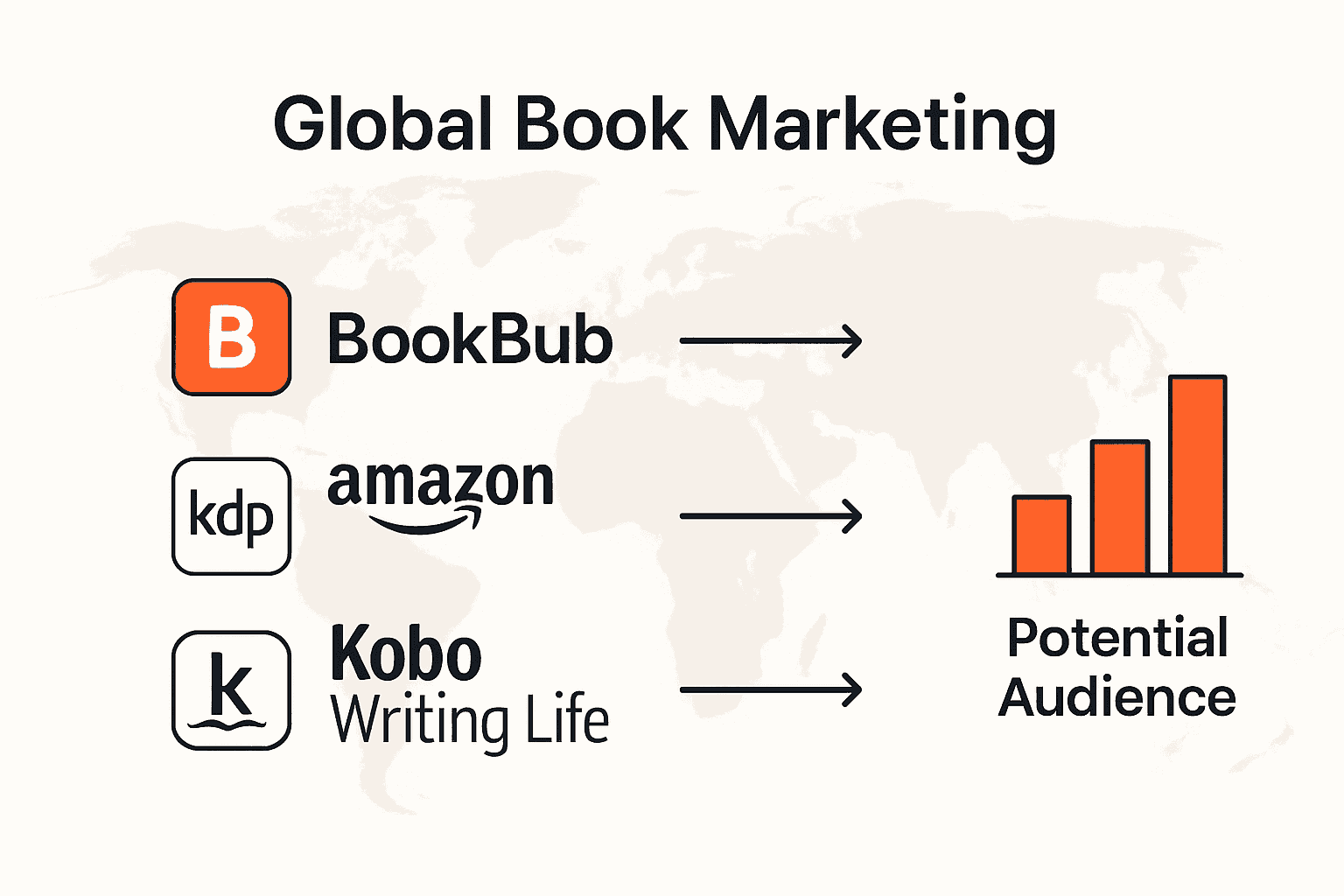 These websites connect authors directly with readers across different countries allowing you to build a truly global fan base.
In our next section we will explore how to create compelling multilingual marketing content that speaks directly to international readers.
Step 5: Track metrics and optimize marketing efforts
Transforming raw data into actionable marketing insights is how successful authors turn good books into bestsellers. Tracking the right metrics allows you to understand exactly what resonates with your readers and continuously improve your marketing strategy.
AI powered predictive analytics have revolutionized performance tracking. According to research from Nancy Rubin these advanced tools can increase email open rates by 25 to 30% and boost conversions up to 50%. This means you are not just collecting data you are gaining intelligent insights that help you make smarter marketing decisions.
Start by setting up comprehensive tracking for your email campaigns. According to KDP Kit monitoring performance of signup forms email sequences and automation is crucial. Pay attention to metrics like open rates click through rates subscriber growth and conversion rates. Each of these numbers tells a story about how effectively you are connecting with potential readers.
Pro Tip: Use UTM parameters in your marketing links to track exactly which channels and content drive the most engagement.
Dont just collect metrics analyze them strategically. Look for patterns in when readers engage most with your content. Are morning emails more effective? Do certain subject lines generate higher open rates? Do readers from specific demographics respond better to particular types of content?
Segmentation becomes your secret weapon. Break down your audience into smaller groups based on reading preferences purchasing behavior and engagement levels. This allows you to create hyper targeted marketing messages that feel personal and relevant.
Regularly review and adjust your marketing strategies based on these insights. What worked six months ago might not work today. The book marketing landscape evolves rapidly and your ability to adapt quickly will set you apart from other authors.
In our final section we will explore how to build a sustainable long term author marketing ecosystem that grows with your career.
Ready to Transform Your Book Sales Strategy for 2025?
Are you feeling overwhelmed by the challenges of building an author brand, developing a loyal global audience, and mastering complex AI marketing tools? The latest article highlighted the crucial steps to succeed in the fast-changing book market. Topics like email automation, predictive analytics, and international outreach can feel daunting without clear guidance. But you do not have to figure this out alone.
Take the next step to sell more books worldwide. Discover proven systems and hands-on support at Digital Marketing Authors, where 13x #1 Amazon bestselling author C.T. Mitchell teaches you how to automate reader list-building, leverage AI for smarter campaigns, and create a brand that truly stands out. Go beyond guesswork. Start building your enduring author business today with step-by-step training and expert resources. Don’t let another month slip by—visit Digital Marketing Authors now and gain the real competitive edge.
Frequently Asked Questions
How can I define my author brand to reach a global audience?
To define your author brand, identify the unique aspects of your writing style, core message, and visual identity. Create an audience persona document that outlines the demographics and interests of your ideal readers, focusing on how you can resonate with them globally.
What types of reader magnets work best for building my email list?
Effective reader magnets include free short stories, exclusive chapter previews, or genre-specific guides. Develop a compelling reader magnet that provides immediate value to potential subscribers, encouraging them to join your email list within days of your book’s release.
How can I effectively use AI for my book marketing campaigns?
Utilize AI tools to generate engaging content, create targeted ad campaigns, and design eye-catching graphics for your book. Start by experimenting with AI-generated ads and analyze which variations drive the most engagement, optimizing your approach over a month-long testing period.
What should I include in my international book marketing strategy?
In your international strategy, focus on diverse distribution platforms, cultural preferences, and localized marketing content. Research and adapt your book’s metadata and marketing language to resonate with different cultures, aiming for a significant increase in global visibility.
How do I track the success of my book marketing efforts?
Track engagement metrics such as email open rates, click-through rates, and subscriber growth to gauge your marketing success. Set up a review process every month to analyze this data, allowing you to refine your strategies based on what resonates best with your audience.
What are the best practices for optimizing my book’s metadata?
Optimize your book’s metadata by using relevant keywords, including those in multiple languages if targeting international readers. Review and update your metadata regularly to improve searchability and visibility across various platforms, aiming for an increase in visibility in global markets.
Recommended
- How To Sell More Books In 2018
- bestselling author strategy Archives – DigitalMarketingAuthors.com
- book marketing Archives – DigitalMarketingAuthors.com
- book marketing strategies for authors Archives – DigitalMarketingAuthors.com
- Top Content Promotion Strategies for 2025 Success
- DIY Artbook Publishing: Create Stunning Visual Collections – The Mansion Press

Understanding What is Digital Marketing for Writers
Writers today are tapping into digital marketing for writers to take control of their success. More than 70 percent of self-published authors say online platforms have helped them reach new audiences and boost sales. It might sound like digital marketing is just about more tweets and flashy book covers, but that barely scratches the surface. The real shift is that writers can now bypass the old publishing gatekeepers and build lasting careers by connecting with readers directly—something that was almost impossible just a decade ago.
Table of Contents
- Defining Digital Marketing In The Context Of Writing
- The Importance Of Digital Marketing For Writers
- Key Concepts In Digital Marketing For Authors
- How Writers Utilize Digital Marketing Strategies
- Real-World Examples Of Successful Digital Marketing In Writing
Quick Summary
| Takeaway | Explanation |
|---|---|
| Build an author website or blog. | A central hub helps you connect with readers directly and showcase your work effectively. |
| Utilize social media for engagement. | Engaging on social platforms keeps your audience updated and fosters community-building. |
| Implement targeted email marketing. | Email campaigns nurture reader relationships and personalize communication with your audience. |
| Create diverse content to attract readers. | Offering various content types maintains reader interest and addresses their specific needs and preferences. |
| Control your marketing and distribution. | Digital marketing empowers you to engage directly with audiences, bypassing traditional publishing barriers. |
Defining Digital Marketing in the Context of Writing
Digital marketing for writers represents a strategic approach to promoting, distributing, and monetizing written content through online channels. Unlike traditional publishing methods, digital marketing empowers authors to directly connect with readers, build audiences, and create sustainable writing careers.
Core Components of Digital Marketing for Writers
At its foundation, digital marketing for writers encompasses several interconnected strategies designed to increase visibility and engagement. These strategies leverage digital platforms to transform how authors reach and interact with potential readers. According to Nielsen Norman Group’s content strategy research, effective digital marketing requires understanding audience needs and creating targeted content experiences.
To help clarify the essential elements of digital marketing for writers, the table below outlines the core components featured in the article.
| Core Component | Description |
|---|---|
| Author Website or Blog | Serves as a central hub for connecting with readers and showcasing work. |
| Social Media Engagement | Platforms for sharing updates, building a following, and communicating directly with readers. |
| Email Marketing | Campaigns and newsletters that nurture relationships and provide personalized communication. |
| Content Marketing | Creating and sharing valuable content that highlights writing expertise and attracts target readers. |
| Platform-specific Strategy | Tailoring content to suit the unique characteristics and audiences of each digital platform used. |
Key digital marketing approaches for writers include:
- Building an author website or blog as a central hub for connecting with readers
- Utilizing social media platforms to share writing updates and engage with audiences
- Creating email marketing campaigns to nurture reader relationships
- Developing content marketing strategies that showcase writing expertise
Strategic Online Presence
Successful digital marketing transcends mere self-promotion. It involves creating genuine connections and providing value to potential readers. Writers must think strategically about their online presence, understanding that each digital interaction represents an opportunity to build credibility and trust. Learn more about building your author platform and transforming casual readers into dedicated fans.
By mastering digital marketing techniques, writers can expand their reach beyond traditional publishing constraints, control their narrative, and create sustainable writing careers in an increasingly digital marketplace.
The Importance of Digital Marketing for Writers
Digital marketing has revolutionized how writers connect with audiences, transforming traditional publishing paradigms and creating unprecedented opportunities for independent authors. By understanding and implementing strategic digital marketing techniques, writers can significantly enhance their visibility, reader engagement, and potential income streams.
Breaking Traditional Publishing Barriers
Historically, writers depended on publishing houses to distribute and market their work. Digital marketing dismantles these traditional barriers, allowing authors to become their own publishers and marketers. Research from the American Library Association indicates that digital platforms enable writers to bypass traditional gatekeepers and directly reach their target audiences.
Critical advantages of digital marketing for writers include:
- Complete control over publishing and distribution channels
- Direct relationship building with readers
- Cost-effective marketing strategies
- Global reach without geographical limitations
Economic and Professional Empowerment
Digital marketing is not just about promotion but represents a comprehensive strategy for professional growth. Writers can monetize their skills through multiple digital channels, creating diverse revenue streams beyond traditional book sales. Discover advanced author marketing strategies that transform writing from a passion into a sustainable career.
By embracing digital marketing, writers unlock the potential to build personal brands, cultivate loyal reader communities, and establish themselves as authoritative voices in their respective genres. The digital landscape offers writers unprecedented opportunities to turn their creative talents into successful, self-directed careers.
This table highlights key advantages of digital marketing for writers, making it easy to compare its benefits over traditional publishing methods.
| Advantage | Explanation |
|---|---|
| Direct Control | Writers have full ownership of publishing, marketing, and distribution channels. |
| Relationship Building | Enables direct communication and stronger connections with readers. |
| Cost Efficiency | Digital strategies reduce dependency on expensive traditional marketing and distribution models. |
| Global Reach | Authors can access readers worldwide without geographic barriers. |
| Multiple Revenue Streams | Supports diversification of income through e-books, merchandise, and online courses beyond book sales. |
Key Concepts in Digital Marketing for Authors
Digital marketing for authors involves a sophisticated set of strategies and tools designed to create meaningful connections between writers and their potential readers. Understanding these core concepts transforms digital platforms from mere communication channels into powerful author engagement mechanisms.
Content Strategy and Audience Targeting
Successful digital marketing begins with developing a precise content strategy that resonates with specific reader demographics. According to Content Marketing Institute’s research, targeted content that addresses reader interests dramatically increases engagement and conversion rates.
Essential audience targeting principles include:
- Identifying precise reader persona characteristics
- Understanding reader preferences and consumption habits
- Creating content that solves reader problems or fulfills specific needs
- Analyzing audience engagement metrics continuously

Digital Channel Optimization
Modern authors must strategically leverage multiple digital channels to maximize their visibility and reader interaction. Each platform offers unique opportunities for building author brands and connecting with potential readers. Learn more about optimizing your author marketing channels and expanding your digital presence effectively.
Key digital marketing channels for authors include social media platforms, personal websites, email newsletters, and content marketing blogs.
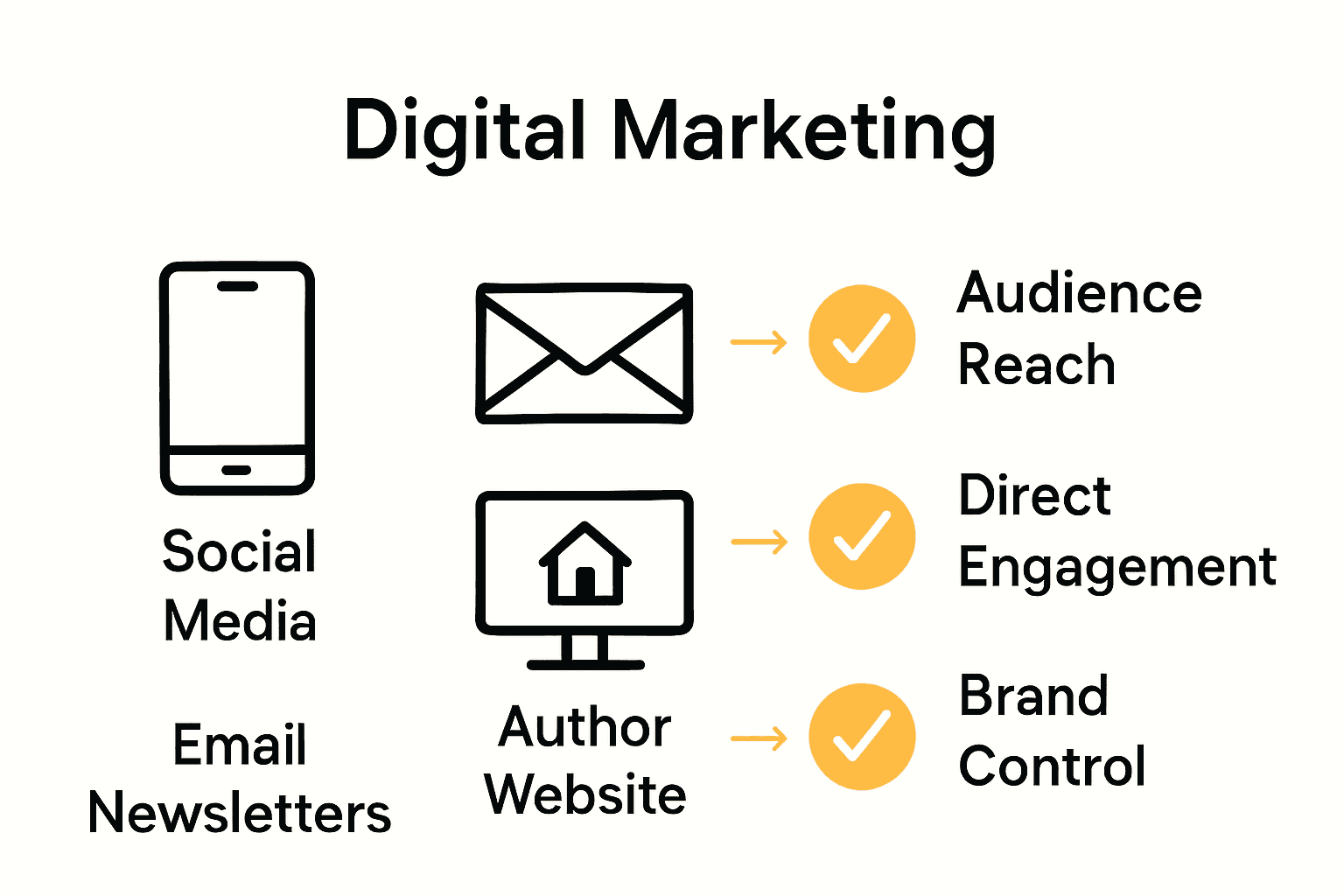 Successful writers understand how to craft platform-specific content that attracts and retains reader attention, transforming casual browsers into dedicated fans and long-term supporters of their writing journey.
How Writers Utilize Digital Marketing Strategies
Digital marketing strategies provide writers with sophisticated tools to transform their writing careers from isolated creative pursuits into dynamic, interactive reader experiences. By implementing targeted approaches, authors can effectively amplify their reach and build sustainable professional platforms.
Content Distribution and Community Building
Modern writers leverage digital platforms to create comprehensive engagement ecosystems around their work. Research from the University of Nebraska–Lincoln demonstrates that authors who strategically collaborate with influencers and use targeted advertising can significantly enhance their professional visibility.
Strategic content distribution techniques include:
- Creating serialized content across multiple digital platforms
- Developing consistent brand messaging
- Engaging directly with reader communities
- Utilizing cross-platform promotional strategies
Monetization and Professional Expansion
Digital marketing enables writers to diversify their income streams beyond traditional book sales. Explore advanced author marketing techniques to transform writing from a passion into a sustainable professional endeavor.
Successful writers understand that digital marketing is not about constant self-promotion but creating genuine connections. By sharing insights, behind-the-scenes content, and meaningful interactions, authors can convert casual readers into dedicated fans who actively support their creative journey.
Real-World Examples of Successful Digital Marketing in Writing
Digital marketing success for writers goes beyond theoretical strategies. Real authors have transformed their careers by implementing innovative digital approaches that connect directly with readers and create sustainable professional platforms.
Case Studies of Author Digital Engagement
Independent and traditional authors alike have demonstrated remarkable success through strategic digital marketing. According to Harvard Business Review’s publishing research, authors who effectively leverage digital channels can dramatically increase their visibility and reader engagement.
Characteristics of successful author digital marketing include:
- Creating authentic, consistent online personas
- Developing multi-platform content strategies
- Building interactive reader communities
- Utilizing data-driven marketing approaches
Strategic Platform Diversification
Successful writers understand that digital marketing requires more than just promoting books. Learn about advanced author marketing strategies that transform writing careers through strategic online positioning.
Authors like Hugh Howey, who built a massive science fiction readership through self-publishing platforms, and Amanda Hocking, who became a millionaire through digital marketing of young adult novels, demonstrate the transformative power of understanding and implementing sophisticated digital marketing techniques. These writers did not just sell books they created entire reader ecosystems that supported their ongoing creative work.
Ready to Turn Digital Strategy into Real Book Sales?
Are you struggling to break through the noise online, connect with real readers, or grow your author brand on your own terms? The article showed how mastering digital marketing can shatter old publishing barriers, help you build reader communities, and create consistent income without gatekeepers. But reading about effective content strategies and audience targeting is just the first step. What if you could put these proven methods into action right now—and watch your writing career transform?
Stop worrying about how to attract loyal fans or increase sales. At Digital Marketing Authors, we empower writers using step-by-step systems built for indie author success. Learn to automate your book sales, grow your fanbase with AI-powered tools, and stand out faster. Get started today and elevate your writing career by visiting our site or exploring advanced tips in our author platform guide and social media marketing strategy blog. Take action now and claim control over your author journey.
Frequently Asked Questions
What is digital marketing for writers?
Digital marketing for writers is a set of strategies that helps authors promote, distribute, and monetize their written content online. To get started, create an author website or blog that serves as a central hub for your work and connects you directly with readers.
How can I build an online presence as a writer?
You can build an online presence by using social media platforms to share updates on your writing and engage with your audience. Start by selecting two to three platforms that resonate with your target readers, and post regularly to keep them informed and connected.
What are effective content marketing strategies for authors?
Effective content marketing strategies for authors include showcasing your writing expertise through blog posts, articles, and engaging social media content. Prioritize consistency by creating a content calendar and aim to publish new content at least once a week to keep your audience engaged.
How can I nurture relationships with my readers through email marketing?
To nurture relationships with readers, implement email marketing campaigns that share insights, updates, and exclusive content. Start by building an email list and send personalized newsletters at least once a month to keep readers connected and informed about your writing journey.
What techniques can I use for audience targeting in my digital marketing?
You can target your audience effectively by identifying their specific interests and preferences, and tailoring your content to meet their needs. Conduct surveys or engage with your audience on social media to gather insights and refine your targeting strategies within 30 days.
How does digital marketing empower writers financially?
Digital marketing empowers writers financially by allowing them to diversify their income streams beyond traditional book sales, such as through e-books, merchandise, or online courses. To enhance your financial opportunities, explore at least three different monetization methods within the first six months of your digital marketing efforts.
Crucial first step in digital marketing for writers
Recommended
- Fiction Authors –
- An Author’s Successful Social Media Marketing Campaign – DigitalMarketingAuthors.com
- Marketing Archives – DigitalMarketingAuthors.com
- social media marketing for authors Archives – DigitalMarketingAuthors.com